
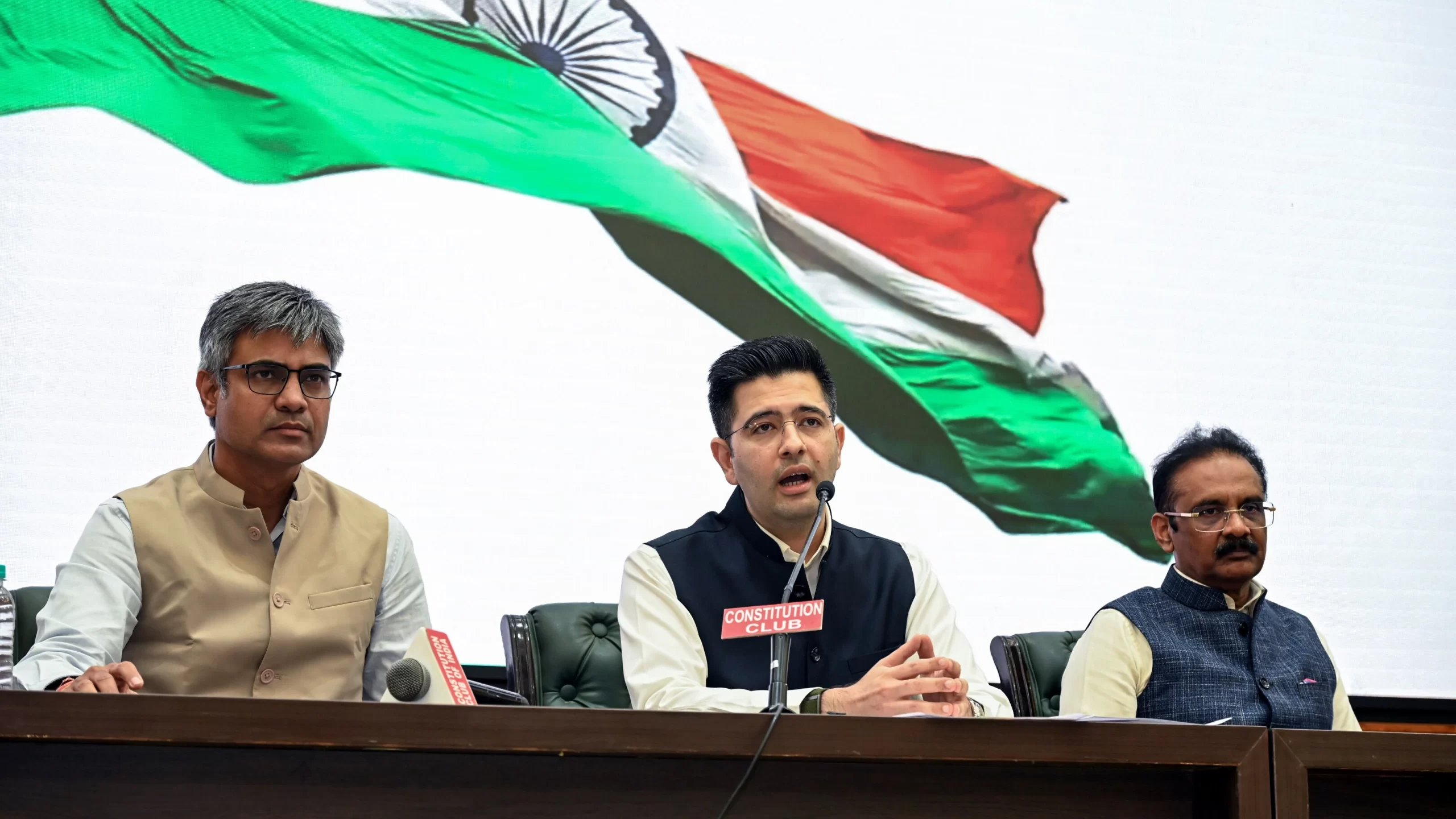
In a major political development that could significantly alter the balance of power in Parliament, seven Members of Parliament (MPs) from the Aam Aadmi Party (AAP), led by Rajya Sabha MP Raghav Chadha, have announced their decision to part ways with the party and align with the Bharatiya Janata Party (BJP). The move marks one of the most consequential shifts in recent Indian political history, particularly in the Upper House.
The development unfolded after Chadha publicly declared his resignation from AAP, stating that six other Rajya Sabha MPs would accompany him in joining the BJP. This group reportedly includes prominent leaders such as Sandeep Pathak, Ashok Mittal, Harbhajan Singh, Rajinder Gupta, Vikram Sahney, and Swati Maliwal.
Constitutional Leverage and Anti-Defection Shield
A critical aspect of this political shift lies in the numbers. AAP currently holds 10 seats in the Rajya Sabha, and with seven MPs moving together, the group meets the two-thirds threshold required under the Tenth Schedule of the Constitution. This provision allows legislators to merge with another party without facing disqualification under the anti-defection law.
By strategically ensuring this numerical requirement, the defecting MPs are likely to retain their positions in the Upper House, making the transition both politically and legally significant.

Boost for BJP in the Upper House
The addition of seven MPs is expected to strengthen the BJP-led National Democratic Alliance (NDA) in the Rajya Sabha, where numbers often play a decisive role in passing legislation. Prior to this development, the NDA had a considerable presence, but the inclusion of these MPs further consolidates its position, potentially easing the passage of key bills and reforms.
Beyond numbers, the BJP also gains experienced and relatively young leaders, adding both political weight and strategic depth to its parliamentary bench.
Setback for AAP’s National Ambitions
For AAP, the exodus represents a serious blow to its national political ambitions. The party, which once projected itself as a strong alternative in Indian politics, now faces a sharp reduction in its parliamentary strength and influence.
The departure of Raghav Chadha—considered one of the party’s most prominent national faces—signals deeper internal challenges within AAP. Reports suggest that internal disagreements and leadership tensions had been building over time, ultimately culminating in this large-scale exit.

Wider Political Implications
The ramifications of this development extend beyond immediate parliamentary arithmetic. It reflects shifting political loyalties, internal fractures within opposition parties, and the BJP’s continued ability to expand its influence.
The move could also impact upcoming electoral strategies, alliances, and regional equations, particularly in states like Punjab, where several of the departing MPs were elected.
As the situation evolves, all eyes will be on how AAP restructures itself and how effectively the BJP integrates these leaders into its broader political framework.