
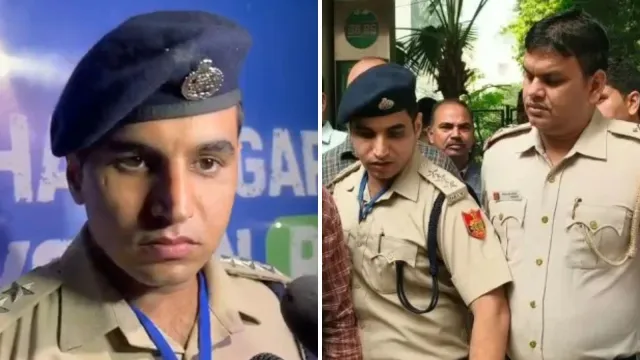
Vashistha, a 2019-batch officer of the Delhi, Andaman and Nicobar Islands Police Service (DANIPS), was placed under suspension on November 2, shortly after more than 100 police personnel gathered outside the Delhi Police Headquarters to protest against the transfer of two officers. The protesting personnel demanded the withdrawal of the transfer orders involving Vashistha and Shahdara police station house officer (SHO) Inspector Arun Kumar.
The suspension has brought attention to an ongoing dispute involving police personnel and members of the legal fraternity following a confrontation at Shahdara police station in October.
Who Is Manasvi Vashistha? His Educational and Professional Background
Manasvi Vashistha has an academic background in engineering and a professional career spanning multiple security and police assignments. Born and raised in Jaipur, Rajasthan, he belongs to a family of doctors.
He completed his mechanical engineering degree from IIT Kharagpur between 2009 and 2013. After completing his education, he joined the Sashastra Seema Bal (SSB) in 2016.
Vashistha served in the central armed police force for approximately four years. During this period, he was posted in Jammu and Kashmir and Bihar, gaining experience in different security-related responsibilities.
He subsequently joined DANIPS as part of the 2019-20 batch. Following his initial training and posting in Delhi, he was transferred to the Andaman and Nicobar Islands in 2022.
During his tenure in the island territory, he served as Deputy Superintendent of Police (DSP) in Diglipur and Havelock. He returned to Delhi in December 2024 and subsequently received several assignments within the Delhi Police.
Former Personal Security Officer to Jagdeep Dhankhar
One of the notable assignments in Vashistha’s career was his role as the personal security officer to former Vice-President Jagdeep Dhankhar.
He continued in this position until Dhankhar resigned from the office of Vice-President in 2025. The assignment placed Vashistha in an important security-related role involving the protection of a senior constitutional functionary.
Apart from this responsibility, he was also associated with the Delhi Police Security Unit. According to sources, he participated in security arrangements connected with major national and international engagements, including the AI Summit and the visit of Russian President Vladimir Putin.
These assignments formed part of his professional experience before the latest controversy surrounding his transfer and subsequent suspension.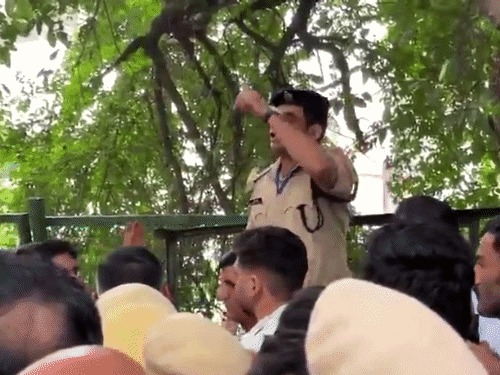
Vashistha’s Postings in Delhi Police
After returning to Delhi in December 2024, Vashistha served in different capacities within the police administration.
In December 2025, he was appointed ACP of Gandhi Nagar, where he served for approximately three months. He was subsequently assigned to the Delhi Police Security Unit.
In March 2026, he was again posted as ACP, Gandhi Nagar.
His career came under public attention following a confrontation involving lawyers and police personnel at Shahdara police station on October 23, which eventually led to his transfer and suspension.
What Triggered the Controversy at Shahdara Police Station?
The sequence of events began on October 23, when advocate Lalit Bansal sustained a serious head injury during a confrontation between lawyers and police personnel at Shahdara police station.
The confrontation reportedly originated from a parking-related dispute. Following the incident, a First Information Report (FIR) was registered at the police station.
According to the Coordination Committee of All District Courts Bar Associations of Delhi, several advocates subsequently visited the police station seeking action against individuals named in the case.
The committee alleged that ACP Manasvi Vashistha and SHO Inspector Arun Kumar assured the advocates that the accused persons, who were present at the police station, would be arrested.
However, the lawyers later learnt that the individuals had allegedly not been arrested and had reportedly been released. This development prompted the advocates to return to the police station.
A second confrontation reportedly took place between lawyers and police personnel on October 24, further escalating tensions between the two sides.
The incident subsequently became a matter of concern for both the police administration and the legal community.
Transfer Orders Trigger Protest by Police Personnel
Following the developments at Shahdara police station, ACP Manasvi Vashistha and SHO Inspector Arun Kumar were transferred on October 28.
However, the transfer decisions triggered an unusual protest within the Delhi Police. On November 2, more than 100 police personnel, including women officers, assembled outside the Delhi Police Headquarters.
The protesting personnel demanded the withdrawal of the transfer orders and the reinstatement of the two officers.
Their demonstration brought the internal disagreement into public view and attracted attention to the circumstances surrounding the Shahdara police station incident.
A delegation representing the protesting personnel also met Delhi Police Commissioner Anurag Kumar and submitted a list of five demands.
Among their demands were action against lawyers allegedly involved in the Shahdara incident and the registration of FIRs against lawyers accused of engaging in acts of hooliganism.
The protest reflected the growing dissatisfaction among sections of the police force over the action taken against the two transferred officers.
Ministry of Home Affairs Suspends Manasvi Vashistha
Amid the controversy, the Ministry of Home Affairs issued an order placing Vashistha under suspension on November 2.
The ministry stated that departmental proceedings against the officer were contemplated. His suspension was ordered with immediate effect under Rule 10 of the Central Civil Services (Classification, Control and Appeal) Rules, 1965.
The order also specified restrictions concerning his official headquarters and movement.
According to the directions, Vashistha’s headquarters would remain in Delhi, and he would not be permitted to leave without obtaining prior approval from the competent authority.
The suspension represents a significant administrative development in the matter. However, the departmental proceedings are expected to examine the circumstances and responsibilities associated with the controversy.
What Did Vashistha Say After His Suspension?
Reacting to the suspension, Manasvi Vashistha expressed confidence and said the action had not affected his courage or professional commitment.
Addressing colleagues and supporters, he thanked them for organising a Sampark Sabha and described the discussion as productive. He also expressed hope that the issues raised during the meeting would be resolved.
Vashistha acknowledged that his suspension was genuine but maintained that it had not reduced his confidence or determination.
He emphasised that his focus, commitment and resolve should become stronger despite the ongoing developments.
He also described suspension as a departmental action rather than something that should automatically be considered unjust. Expressing faith in the administrative process, he said he believed the system would conduct a fair inquiry and arrive at a fair judgment.
His response indicated that he intended to cooperate with the departmental process while maintaining confidence in the outcome.
Delhi Police and Lawyers Discuss Grievance Redressal Mechanism
Alongside the developments involving Vashistha, efforts were also made to address the growing tensions between police personnel and lawyers.
On October 30, Delhi Police Commissioner Anurag Kumar held a meeting with representatives of the Bar Council of Delhi and various district court bar associations.
Following the discussions, a joint coordination and grievance redressal mechanism was proposed.
The proposed arrangement is intended to provide a structured platform for addressing complaints and resolving disagreements between the police and legal professionals.
The Shahdara incident has highlighted the importance of communication and coordination between the two institutions, particularly when disputes arise during police investigations or at police stations.
A Career Now Under Administrative Scrutiny
Manasvi Vashistha’s professional journey has included engineering education at IIT Kharagpur, service in the Sashastra Seema Bal, assignments in the Andaman and Nicobar Islands, and security responsibilities involving a former Vice-President.
However, the recent developments at Shahdara police station have placed his career under administrative scrutiny.
His suspension, the protest by police personnel and the disagreement involving lawyers have created a wider institutional issue that extends beyond the transfer of two individual officers.
The departmental proceedings against Vashistha will be important in determining the administrative aspects of the matter. Meanwhile, the proposed coordination mechanism between the police and legal fraternity could play a role in preventing similar confrontations in the future.
Vashistha is married and has two children. As the inquiry process moves forward, the focus will remain on the circumstances surrounding the Shahdara incident, the decisions taken by the police administration and the concerns raised by both police personnel and lawyers.