
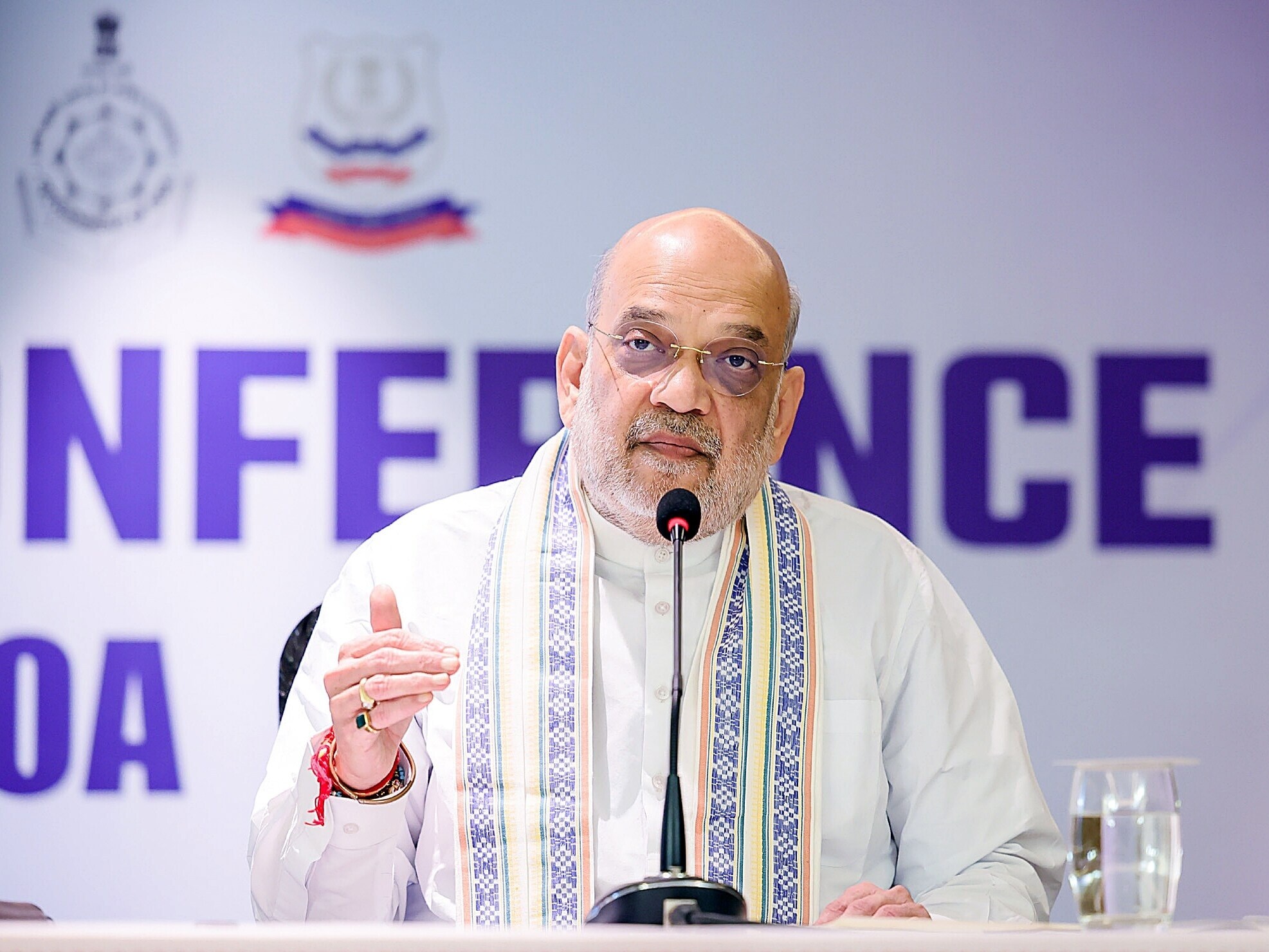
The Union government has sought detailed reports from the Punjab government on three recent deaths allegedly connected to opposition to the state’s drug trade, intensifying an already heated political dispute over the handling of narcotics and organised crime in the state.
The Union home ministry has asked Punjab’s chief secretary to provide information on three separate cases involving individuals who had allegedly raised concerns about drug-related activities. The move comes amid a public confrontation between Union Home Minister Amit Shah and Punjab Chief Minister Bhagwant Mann over drug trafficking, border security, organised crime and political accountability.
The Centre’s intervention comes at a politically sensitive time, with Punjab’s drug problem emerging as a major issue ahead of the state assembly elections expected early next year.
Centre seeks details of three cases
According to the communications sent to the Punjab government, the Union home ministry has sought reports on three incidents.
The first case concerns the killing of anti-drug activist Parvinder Singh, popularly known as Jhota, who was shot dead inside a pharmacy in Mansa. Jhota had been publicly associated with efforts against drug trafficking, and his death has triggered questions about the safety of people campaigning against narcotics in Punjab.
The second case involves the death by suicide of a 50-year-old man in Dirba in Sangrur district. The man had reportedly questioned the state finance minister about the availability of drugs in the local area. Allegations were subsequently raised that he faced harassment and caste-based abuse.
The third case relates to the killing of a 40-year-old man in Madi Pannwan village near Sri Hargobindpur in Batala. The man had reportedly objected to the sale of drugs in the area.
The Centre has sought details from the state authorities regarding the circumstances surrounding the incidents and the action taken by law-enforcement agencies.
Amit Shah targets Punjab government
The demand for reports followed a sharp political exchange between Amit Shah and Bhagwant Mann over Punjab’s drug crisis.
Shah accused the Punjab government of failing to adequately control the state’s growing problems involving narcotics, gang activity and organised crime. He also raised concerns over allegations surrounding the killing of Jhota and called for accountability.
The Union home minister said the people of Punjab needed concrete results rather than political assurances, while stressing the need for stronger action against drug networks and an impartial investigation into allegations of political protection for criminals.
The BJP has increasingly highlighted the drug issue in Punjab as part of its political campaign, arguing that the scale of narcotics trafficking requires stronger action from the state administration.
Bhagwant Mann hits back at Centre
Mann responded by shifting the focus towards the Centre’s responsibilities in preventing drugs from entering the country.
The Punjab chief minister pointed to the role of the Border Security Force in areas within the 50-kilometre belt along the international border and questioned the Centre over the movement of narcotics through ports and other entry points.
Mann also referred to large quantities of suspected heroin being seized at Kandla port in Gujarat, arguing that the Centre should address drug trafficking routes before blaming the Punjab government alone.
The exchange underlined the long-running dispute between the Centre and Punjab over responsibility for the state’s drug problem. While the state government has emphasised its policing and enforcement efforts, the Centre has repeatedly stressed the need to tackle trafficking routes, organised networks and the broader supply chain.
Kejriwal also enters the dispute
AAP national convener Arvind Kejriwal also joined the political debate, accusing the Centre of failing to prevent narcotics from entering the country through ports.
Kejriwal argued that drugs reaching Punjab are part of a larger national trafficking network and said the government must focus on stopping narcotics at their points of entry.
The competing allegations have turned the drug crisis into a broader political confrontation, with both sides attempting to place responsibility for the persistence of narcotics trafficking on the other.
BJP intensifies attack over Punjab drug crisis
The BJP has stepped up its criticism of the Punjab government following the recent killings.
BJP president Nitin Nabin described the situation as alarming and questioned how people who speak publicly against drugs could feel unsafe.
The party has also highlighted its recent anti-drug campaign in Punjab. Its 13-day campaign covered all 117 assembly constituencies and focused on the need for stronger measures against drug trafficking.
The BJP has promised that, if voted to power in Punjab, it would seek to eliminate the state’s drug trade by the end of 2029.
Punjab announces 60-day crackdown
Amid the political controversy, the Punjab government has announced a targeted 60-day campaign against drug networks.
Mann chaired a high-level review meeting of the state’s anti-drug campaign at the Punjab Police Academy in Phillaur. Senior police and administrative officials, including deputy commissioners, senior superintendents of police, sub-divisional magistrates and deputy superintendents of police, participated in the review.
The new strategy focuses on 435 identified drug hotspots across the state.
Police officials said the approach would move beyond simply arresting individual drug peddlers and instead concentrate on dismantling the wider networks involved in the supply and distribution of narcotics.
According to the state police, intelligence assessments and information gathered at the district and village levels helped identify the hotspots. Authorities have mapped 2,913 listed drug peddlers and 312 major suppliers in these areas.
The strategy is intended to disrupt supply chains and target the financial structures that allow drug networks to continue operating.
Drug crisis becomes key political issue
The latest developments have placed Punjab’s narcotics problem at the centre of the political debate ahead of the assembly elections.
The deaths of people allegedly involved in challenging local drug activity have added another dimension to the issue, shifting attention from drug consumption and trafficking to the safety of activists and ordinary citizens who oppose the trade.
The Centre’s decision to seek reports on the three cases is also likely to increase scrutiny of the Punjab government’s handling of drug-related crime.
For the state administration, the immediate challenge is to demonstrate that its enforcement measures can disrupt organised trafficking networks while ensuring that allegations surrounding violence against anti-drug voices are investigated effectively.
With the Centre and state government continuing to trade accusations, the coming months are expected to see increased political and administrative focus on Punjab’s drug networks, border security and law-enforcement response.