
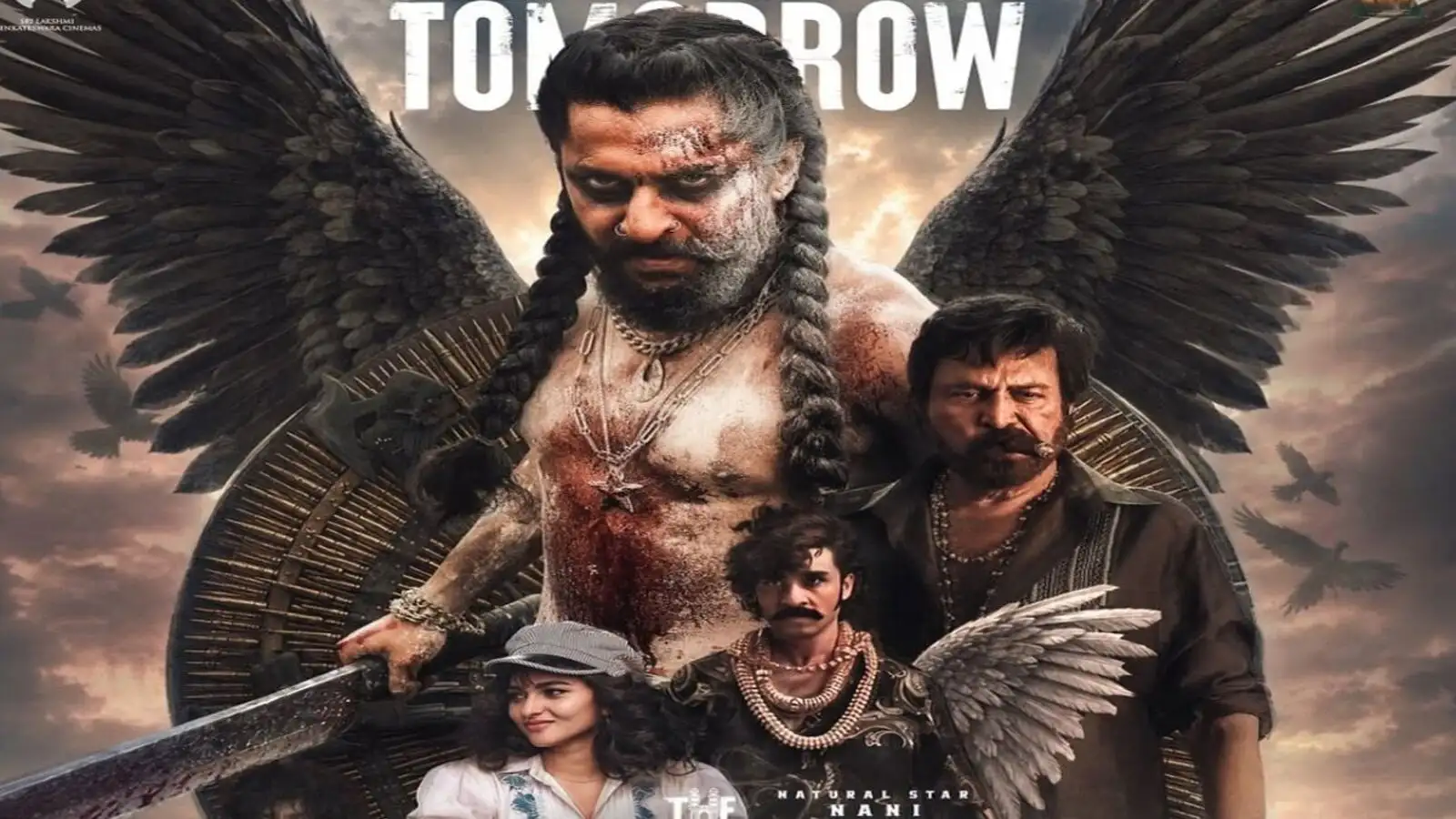
Nani-starrer The Paradise has become the centre of an online discussion after ratings and audience reviews for the Telugu film were disabled on BookMyShow shortly after its theatrical release. The development comes amid a wider debate over genuine audience feedback, online review campaigns and concerns about the manipulation of movie ratings.
Directed by Srikanth Odela, The Paradise opened in theatres with considerable attention and recorded a strong opening for Nani. However, the film subsequently received mixed reactions from viewers and critics, with discussions around its storyline, presentation and performances gaining momentum on social media.
The disabling of ratings and reviews has now added another point of discussion around the film’s reception.
BookMyShow disables ratings and reviews
The ratings and reviews section for The Paradise was available around the time of its release but was later disabled. Visitors to the film’s page could no longer access the usual audience-rating and review section.
The development has attracted attention because it happened soon after the release of the film and during an ongoing discussion about online criticism surrounding the project.
No detailed explanation has been publicly provided regarding the specific reason for disabling the ratings and reviews. As a result, the move has generated speculation among moviegoers and social media users.
Online ratings have become an important part of the way audiences decide whether to watch a film. Many viewers check ratings and user reviews before purchasing tickets, making such platforms an influential part of a movie’s digital reception.
Nani had addressed concerns over reviews
The development also comes after Nani spoke about concerns surrounding reviews and criticism of The Paradise.
During a promotional interaction, the actor clarified that genuine audience opinions were not being targeted. His comments came amid discussions about legal action and concerns over content circulating online in connection with the film.
Nani’s position was that viewers who genuinely watch the movie should be able to express their opinions. At the same time, concerns have been raised in the industry over coordinated campaigns, manipulated reviews and other forms of artificial online activity that can potentially affect a film’s reputation.
The distinction between genuine criticism and organised attempts to influence public perception has consequently become an important part of the conversation surrounding the film.
The Paradise receives mixed audience response
The Paradise opened with strong expectations and marked an important release in Nani’s career. The film reportedly recorded his biggest opening at the box office, indicating significant interest among audiences at the beginning of its theatrical run.
However, the response became more divided after the initial release. While some viewers appreciated the film’s performances, action sequences and ambitious storytelling, others criticised aspects of its narrative and execution.
The differing opinions have resulted in extensive discussions across social media, with audiences sharing both positive and negative reactions.
Nani also acknowledged the mixed response to the film. The actor indicated that he had seen the reactions from audiences and was aware of the criticism surrounding the project.
He also suggested that filmmakers can learn from genuine criticism and use audience feedback to understand the strengths and shortcomings of their work.
What is The Paradise about?
Directed by Srikanth Odela, The Paradise is set against the backdrop of the 1980s and focuses on the struggles of the Savaari community.
The story deals with social inequality, discrimination, political and social power structures, and the community’s efforts to secure recognition and justice.
Nani plays the central character, while the film also features Mohan Babu, Kayadu Lohar, Sonali Kulkarni and Raghav Juyal in important roles.
The film attempts to combine social themes with action and drama, creating a narrative centred on marginalised communities and their confrontation with powerful forces.
Online ratings become part of the film’s controversy
The controversy surrounding the disabled ratings has once again highlighted the growing influence of digital platforms on the film industry.
Audience ratings can have a considerable impact on a movie’s online image. A large number of positive reviews can encourage viewers to watch a film, while a sudden wave of negative ratings can potentially affect public perception.
Because of this, filmmakers and producers have increasingly expressed concerns about fake accounts, coordinated review campaigns and manipulated ratings.
At the same time, genuine audience reviews remain an important part of the modern entertainment ecosystem. Viewers routinely use online platforms to share their experiences immediately after watching a movie.
This creates a difficult balance for digital platforms. They need to prevent artificial manipulation while also ensuring that genuine viewers are able to express their opinions freely.
Debate continues over genuine criticism
The situation involving The Paradise has therefore shifted attention beyond the film itself and towards the larger question of how movies are reviewed in the digital era.
The film’s ratings being disabled does not, by itself, establish why the feature was removed. Without a specific explanation, it remains unclear whether the decision was connected directly to concerns surrounding The Paradise or to broader measures concerning online ratings.
Meanwhile, the film continues its theatrical run, with its box-office performance and audience response being closely followed.
For Nani and the makers, the focus will now remain on how the film performs in the coming days and how audiences ultimately respond to its story, performances and overall presentation.
The discussion surrounding The Paradise also demonstrates how online reviews have become an important part of a film’s journey, with audience feedback, social-media conversations and ticket-booking platforms increasingly shaping the public conversation around new releases.