
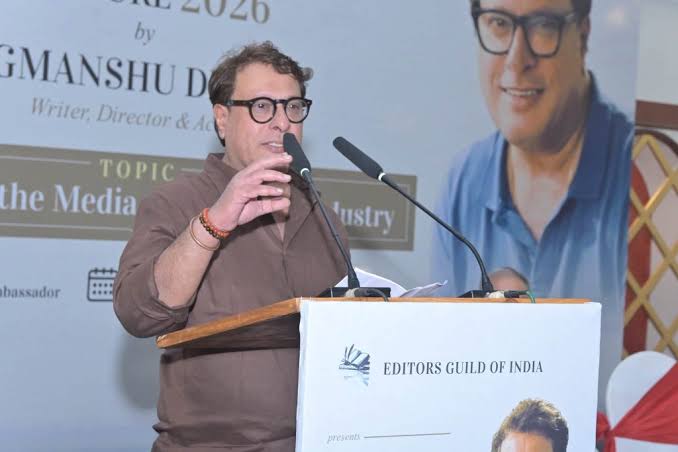
Filmmaker Tigmanshu Dhulia has criticised the way projects are approved and developed in the Hindi film industry, arguing that filmmakers often face significant hurdles when they attempt to tell stories differently. According to Dhulia, the process of getting films made has become a constant struggle, particularly for directors who want to move beyond established formulas.
Dhulia, known for films such as Haasil, Paan Singh Tomar and Saheb Biwi Aur Gangster, said the industry often makes it difficult for storytellers to experiment with their ideas. He argued that the people responsible for approving film projects frequently lack the vision required to understand or support unconventional creative approaches.
Tigmanshu Dhulia questions Bollywood’s dependence on formulas
Dhulia’s comments come amid a wider discussion about the balance between commercial cinema and creative storytelling in Hindi films. The filmmaker questioned the industry’s continued reliance on established formulas, particularly when following those formulas does not necessarily guarantee commercial success.
He said that making every film can become a difficult process when a filmmaker wants to present a story in a different manner. In his view, creative decisions are often restricted during the development and approval stages, making it harder for directors to pursue the kind of cinema they originally envision.
Dhulia also questioned why filmmakers are discouraged from taking creative risks when conventional approaches can also result in films failing at the box office. His criticism was directed particularly at those involved in deciding which projects receive approval and financial backing.
‘Every film is a struggle’, says the filmmaker
Reflecting on his own experiences, Dhulia described filmmaking as a challenging process. He said that artists who want to communicate stories in their own way can encounter resistance within the industry.
The director’s comments highlight a longstanding tension in commercial filmmaking: producers and studios must consider budgets, audience expectations and financial returns, while filmmakers often seek greater creative freedom. Dhulia’s remarks suggest that, in his experience, the commercial decision-making process can sometimes come at the expense of creative experimentation.
For Dhulia, the issue is not simply about making unconventional films. He argued that even stories with familiar commercial elements can face difficulties if decision-makers fail to recognise their potential.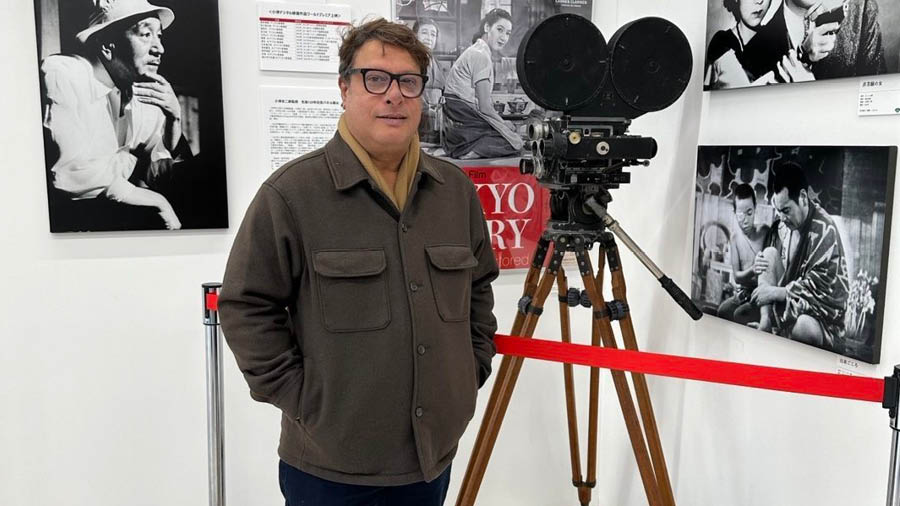
Dhulia discusses Ghamasaan and its release
Dhulia also spoke about his latest film, Ghamasaan, starring Arshad Warsi and Pratik Gandhi. The filmmaker said he was disappointed that the project, which was initially intended for a theatrical release, eventually arrived on an OTT platform.
According to Dhulia, Ghamasaan should not be viewed as an experimental or unconventional project. He described it as a straightforward commercial film built around familiar elements such as action, guns, bullets and a conventional storyline.
The film features Arshad Warsi in a dark role and Pratik Gandhi in the cast, with Rajpal Yadav also appearing in the gangster drama. The project was released on September 11 and is currently available for streaming on ZEE5.
Dhulia’s comments about the film reflect his broader argument that the industry’s understanding of what qualifies as a commercial movie can itself become a barrier. He suggested that there can be uncertainty among decision-makers about how to categorise and market films that do not fit neatly into established expectations.
A continuing concern about creative freedom
Dhulia’s criticism raises questions about the role of producers, financiers and studios in shaping Hindi cinema. While commercial considerations remain important to the film business, filmmakers have frequently argued that excessive dependence on formulas can limit experimentation.
The director’s own filmography has largely focused on grounded characters, crime, politics, rural India and stories involving people operating on the margins of society. His filmmaking has often explored subjects that rely on realistic settings and complex characters rather than conventional Bollywood storytelling.
His latest remarks therefore continue a broader conversation about how Hindi cinema can balance commercial requirements with the creative ambitions of filmmakers.
Dhulia’s upcoming projects
Beyond Ghamasaan, Dhulia is also working on Wo Phir Kabhi Dikha Nahin, an adaptation of Hindi writer Uday Prakash’s short story Dilli Ki Deewar. The film stars Nawazuddin Siddiqui in the lead role and is reportedly set against the backdrop of a Delhi slum.
Dhulia has also been developing a long-gestating biographical film about legendary filmmaker K. Asif, the director of Mughal-e-Azam. He has previously revealed that he has written around 100 scenes for the project and continues to work on its development.
Through his recent comments, Dhulia has once again brought attention to the creative challenges faced by filmmakers attempting to make films outside rigid industry expectations. His remarks add to the ongoing debate over whether commercial filmmaking and artistic freedom can coexist without one limiting the other.