
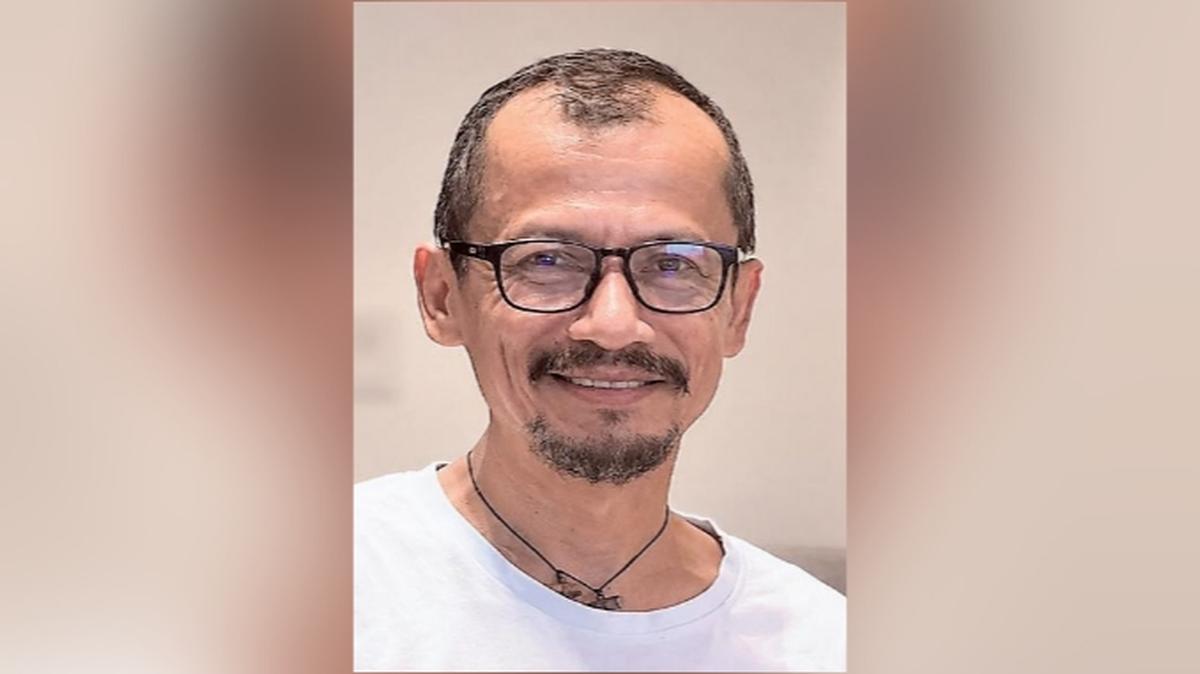
The killing of renowned Manipuri musician and music teacher Chongtham Vikram Singh in southeast Delhi has triggered widespread outrage and renewed concerns over the safety of people from the Northeast living in the national capital.
The 54-year-old musician was allegedly beaten by a group of men near his residence in Kilokari on the night of September 6 after he objected to a group creating noise outside his home. Singh sustained severe injuries in the assault and died while undergoing treatment the following day.
The incident has not only shocked Singh’s family, friends and the music community but has also raised broader questions about public safety, intolerance and the treatment of people from the Northeastern states in Delhi.
Assault followed an argument over noise
According to the police investigation and the complaint filed by Singh’s son, the incident took place at around 11.30 pm on September 6.
Singh had reportedly stepped outside his home to object to a group of people who were allegedly shouting and creating a disturbance near his residence. The group reportedly included people working at nearby eateries and delivery workers.
The disagreement escalated rapidly. Singh was allegedly chased and attacked by several people inside the building. His son, who was at home at the time, heard his father shouting and came outside.
The son reportedly saw several men assaulting Singh. He raised an alarm, following which the attackers fled from the area.
Singh suffered serious injuries during the assault. His family members rushed him to Holy Family Hospital, where doctors treated him for severe trauma. However, his condition remained critical and he died the following morning.
The preliminary medical findings indicated that Singh died from haemorrhagic shock caused by blunt-force trauma.
Police arrest accused in murder case
Delhi Police launched an investigation soon after receiving information about the assault.
Seven men were arrested while a juvenile was also apprehended in connection with the case. The accused reportedly include people working as delivery agents and employees associated with nearby eateries.
Police are examining CCTV footage and other evidence to establish the exact sequence of events and determine the individual role of each accused.
The case has been registered under provisions of the Bharatiya Nyaya Sanhita relating to group murder and common intention.
Investigators are also examining the allegation that Singh had previously objected to disturbances near his residence and had allegedly been threatened by some of the people involved.
According to the complaint, Singh told his son while being taken to hospital that some of the attackers had come from an eatery located opposite their residence. He reportedly said that some of them had threatened him previously after he objected to the noise.
These allegations have become an important part of the investigation as authorities seek to determine whether the fatal assault was the result of a neighbourhood dispute that escalated into violence or whether other factors were involved.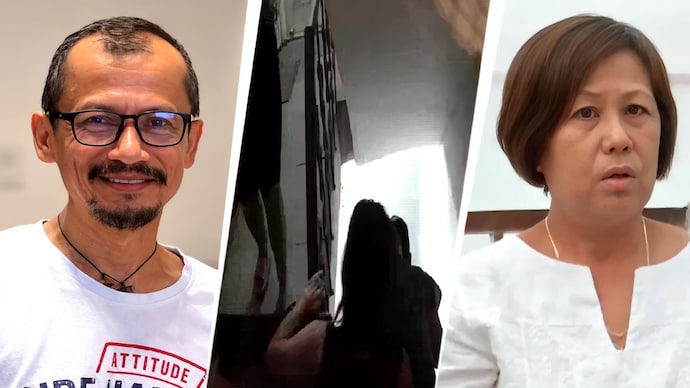
Questions over possible racial angle
Singh’s killing has sparked a wider debate about the safety of Northeastern residents in Delhi.
People from Manipur and other Northeastern states have for years raised concerns about racial stereotyping, discrimination and harassment in different parts of the country. The death of a well-known Manipuri musician in the national capital has once again brought those concerns into public discussion.
However, authorities have indicated that the motive must be established through evidence. While community representatives have raised concerns about a possible racial dimension, political figures have differed on whether the incident should be classified as a hate crime.
The Delhi administration and police are facing pressure to conduct a transparent and impartial investigation and ensure that no aspect of the case is overlooked.
For the Northeast community, the issue extends beyond the circumstances of one killing. Many residents say the incident has revived concerns about whether people from the region can feel secure while living, studying and working in major Indian cities.
Family demands justice, not revenge
Singh’s family has appealed for a fair and impartial investigation.
His wife, Jyotsna Laikhuram Chongtham, described him as a loving husband, father and son and said the family was seeking justice rather than revenge.
The family has urged authorities to hold everyone responsible for the assault accountable under the law.
Singh’s death has left his wife and son devastated. His son was reportedly present during the attack and later helped take his injured father to hospital.
For the family, the tragedy has been made even more painful by the circumstances in which Singh lost his life — outside the home where he had lived with his family for years.
A musician with a long career
Chongtham Vikram Singh was a respected figure in Manipur’s music community and had made significant contributions to the state’s rock music movement.
He began his musical career with the band Ultra Vires and later became associated with prominent groups including Phoenix and Eastern Dark. He was known for his skills as a guitarist and his involvement in different musical genres.
After moving to Delhi, Singh continued working in music and became a teacher. He taught students and remained connected to the artistic community.
Those who knew him remember him as a skilled and humble musician who often worked behind the scenes rather than seeking public attention.
His death has therefore been viewed as a major loss not only for his family but also for the Manipuri music fraternity.
A family rooted in music
Singh came from a family with a strong musical legacy.
His mother, Chongtham Kamala, is a respected classical singer from Manipur and has made a significant contribution to Manipuri music and cinema.
She was associated with the first Manipuri feature film and has also worked as a broadcast singer. Her contribution to the state’s cultural landscape has made the Chongtham family well known within Manipur’s artistic circles.
Vikram Singh continued that musical tradition through his own career as a guitarist, performer and teacher.
Friends and relatives have recalled his passion for both contemporary and traditional forms of music. He was known to have an interest in rock, heavy metal, jazz, Hindustani music and folk traditions.
His death has consequently been mourned as the loss of an artist who contributed to several generations of music lovers.
Political leaders express concern
The killing has drawn reactions from political leaders and representatives of the Northeast community.
Manipur Chief Minister Y Khemchand Singh condemned the incident and called for a fair and prompt investigation. He stressed that no person should lose their life simply for seeking peace and order in their own neighbourhood.
Union minister Kiren Rijiju also expressed concern over the death and emphasised the importance of ensuring the safety and dignity of people from the Northeast.
Congress leader Rahul Gandhi criticised the killing and highlighted the anxiety it has created among Northeastern families living in Delhi. He questioned whether people from the region feel safe in the national capital following repeated incidents that have raised concerns about discrimination and violence.
Delhi BJP president Harsh Malhotra, meanwhile, said the incident was horrifying but stated that there was no established racial angle to the killing. He also indicated that efforts would be made for speedy legal proceedings.
The differing political responses have added to the public debate over how the case should be understood and investigated.
Community groups demand accountability
Members of the Northeast community in Delhi have demanded a thorough and impartial investigation.
Student organisations, community representatives and activists have expressed concern over Singh’s death and called for those responsible to face the full force of the law.
For many Northeastern residents, the case has become symbolic of wider concerns about their safety in metropolitan areas.
Delhi is home to thousands of people from Manipur, Assam, Mizoram, Nagaland, Meghalaya, Arunachal Pradesh, Tripura and other Northeastern states. They come to the capital for education, employment, business and professional opportunities.
Community representatives argue that incidents involving Northeastern residents should be investigated with particular sensitivity when allegations of racial discrimination or identity-based targeting arise.
CCTV footage and witness accounts crucial to probe
Investigators are examining CCTV footage from the building and surrounding area as part of the investigation.
Video footage reportedly shows several people moving down the stairs following the assault. Another video reportedly shows Singh’s son carrying his injured father down the staircase with the help of family members and neighbours.
Such evidence could prove important in establishing the sequence of events and identifying the roles of the accused.
The testimony of Singh’s son is also expected to remain central to the investigation because he reportedly witnessed the assault and later spoke to his father while he was being taken to hospital.
Police are expected to examine the background of the accused, previous disputes, available video evidence and statements from witnesses before completing the investigation.
Wider concerns over safety in Delhi
The incident has once again placed the safety of Northeast Indians in Delhi under the spotlight.
Although Delhi is one of India’s most diverse cities, residents from the Northeast have periodically reported experiences involving racial slurs, stereotyping and harassment.
The killing of Singh has revived those concerns at a time when community members are already calling for stronger mechanisms to address discrimination and violence.
At the same time, establishing the exact motive remains the responsibility of investigators and the courts. Any conclusion about racial motivation must be supported by evidence gathered during the investigation.
The priority now is to ensure that the investigation remains impartial, that every accused person’s role is established properly and that the family receives justice.
A loss that extends beyond one family
Vikram Singh’s death has left a significant impact on Manipur’s artistic community.
For those who knew him, he was more than a musician. He was a teacher, father, husband, friend and mentor who spent decades contributing to music.
His death has also become a reminder of the vulnerability that many members of the Northeast community say they experience outside their home states.
The case has now moved beyond a local neighbourhood dispute and become a matter of wider public concern. The investigation will determine what led to the fatal assault, whether previous threats were connected to the attack and whether any discriminatory motive was involved.
For Singh’s family and supporters, however, the immediate demand remains straightforward: a fair investigation, accountability for those responsible and justice for a musician whose life ended in a violent attack outside his own home.