
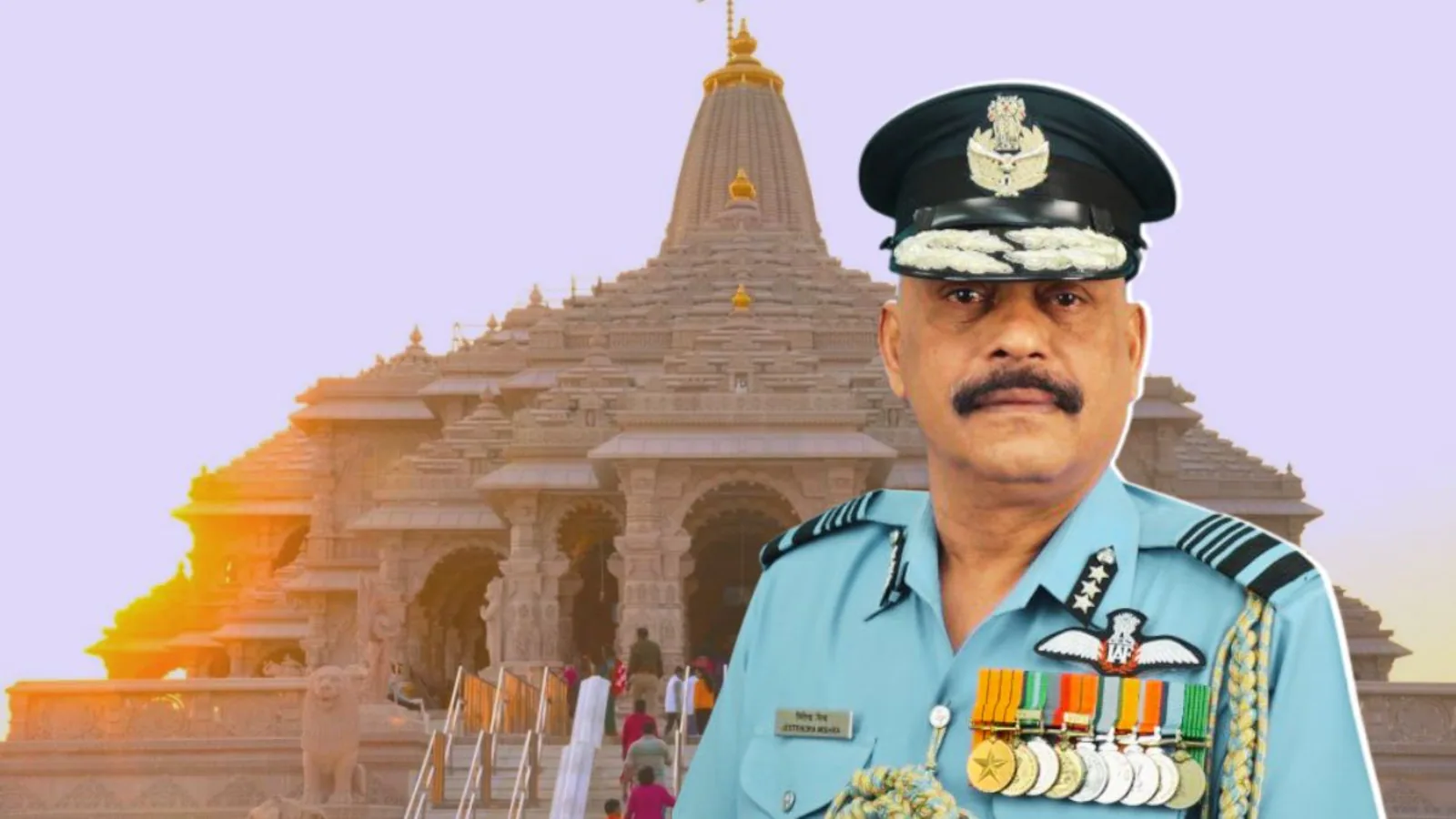
The Shri Ram Janmabhoomi Teerth Kshetra Trust has appointed retired Air Marshal Jeetendra Mishra as the first Chief Executive Officer (CEO) of the Ram Temple in Ayodhya, marking a significant change in the administrative structure of the institution.
Mishra, who previously headed the Indian Air Force’s Western Air Command, has been brought into the temple administration at a time when the Trust is seeking to strengthen its organisational and financial systems. His appointment is being seen as an effort to introduce a more professional and structured approach to the management of the temple and its expanding activities.
The decision was taken at a meeting of the Trust in Ayodhya. Along with appointing Mishra as CEO, the Trust also approved changes in its senior leadership and inducted three new trustees.
The restructuring comes against the backdrop of controversy surrounding alleged irregularities involving temple donations. The allegations and subsequent arrests have brought increased attention to the need for stronger financial controls, accountability and administrative supervision within the organisation.
Jeetendra Mishra to Become Ram Temple Trust’s First CEO
The appointment of Mishra is significant because the CEO position is being created as a dedicated executive-level post within the temple Trust.
The Ram Temple has evolved into a major religious and cultural institution since its inauguration, attracting devotees from across India and abroad. Managing such a large and continuously developing complex requires extensive coordination involving temple operations, infrastructure, security, crowd management, finances and various development projects.
The Trust is therefore moving towards a more clearly defined administrative structure, with the CEO expected to play a central role in coordinating these responsibilities.
Mishra’s appointment follows a selection process in which thousands of applications were reportedly received. According to details emerging after the Trust meeting, as many as 5,585 applications were considered during the process before the list was narrowed down and the final candidate was selected.
His selection places a former senior military commander at the centre of the temple’s administrative operations.
Nearly Four Decades of Service in the Indian Air Force
Mishra brings extensive experience from a long career in the Indian Air Force. He served for nearly four decades and held several important positions during his military career.
A fighter pilot by background, Mishra rose through the ranks and eventually became Air Officer Commanding-in-Chief of the Western Air Command, one of the Indian Air Force’s major operational commands.
He also served as Deputy Chief of Integrated Defence Staff (Operations), giving him experience in strategic planning, operational coordination and senior-level decision-making.
His military career included responsibilities associated with some of India’s major security challenges. He also served during the Kargil conflict and later held important command responsibilities.
One of his most prominent recent assignments was his role as the commander of the Western Air Command during Operation Sindoor, the military operation conducted by India in May 2025 following the Pahalgam terror attack.
Mishra retired from the Indian Air Force in April 2026. His transition from a senior military leadership position to the administration of the Ram Temple represents a notable change in his professional career.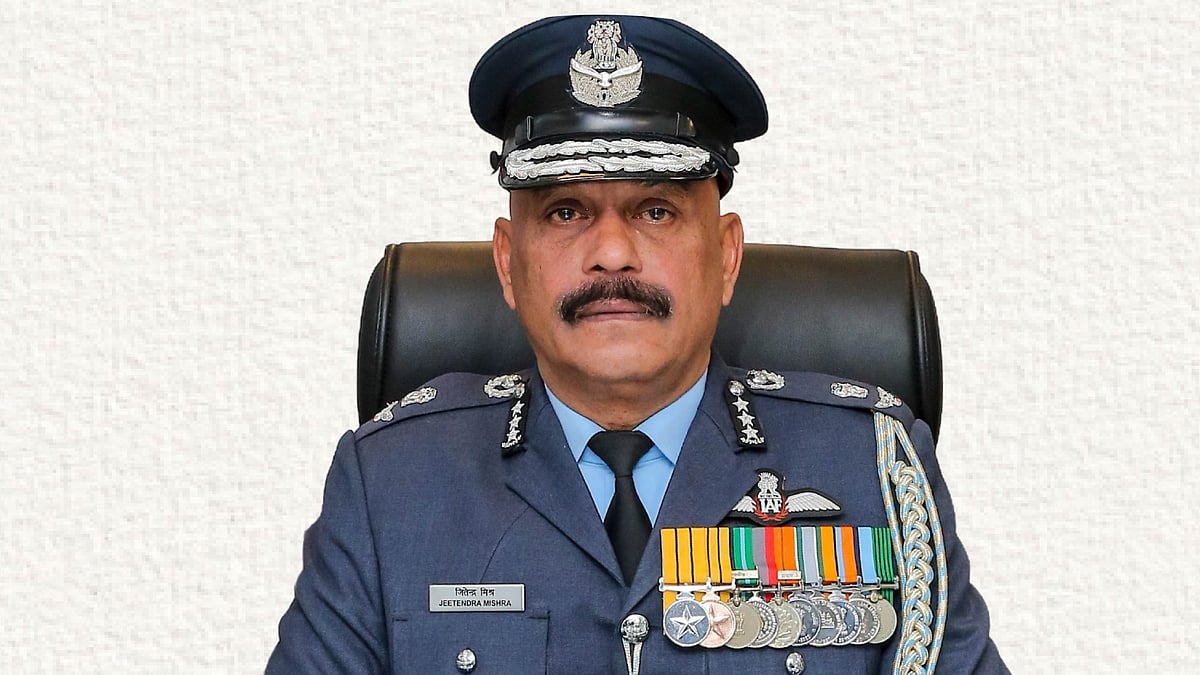
Appointment Comes Amid Donation Controversy
The decision to appoint a full-time CEO comes at a sensitive time for the temple Trust.
The organisation has faced controversy over allegations concerning the alleged embezzlement or misuse of temple donations. The matter resulted in the arrest of several people and raised questions about the systems used to manage funds associated with the temple.
Although the appointment of the CEO is part of a broader administrative restructuring, the timing has placed additional attention on the Trust’s plans to improve financial supervision and internal accountability.
A professional executive structure could help establish clearer responsibilities for financial administration, operational management and implementation of decisions taken by the Trust.
The new CEO is expected to work within the framework determined by the Trust, with the exact responsibilities and operating procedures of the post to be finalised.
Major Changes in Trust Leadership
Mishra’s appointment was accompanied by several other changes in the Trust’s organisational structure.
Former treasurer Govind Dev Giri has been appointed as the new general secretary. He takes over the position as the Trust reshapes its senior leadership.
The Trust has also inducted three new trustees: Madan Mohan Pandey, Mahesh Bhagchandka and Dr Nirmala Yadav.
Bhagchandka has been appointed treasurer, adding responsibility for the Trust’s financial administration to his role.
Pandey, a lawyer and former additional advocate general of Uttar Pradesh, has been associated with legal matters connected with the Ram Janmabhoomi case.
Dr Nirmala Yadav, a retired college principal, has become the first woman to join the Trust as a member. Her inclusion represents a notable change in the composition of the organisation.
The appointments collectively indicate an attempt to strengthen the Trust by bringing in individuals with backgrounds in administration, law, finance and education.
Why the CEO Position Matters
The creation of a full-time CEO position reflects the changing nature of the Ram Temple project.
The temple is no longer only a construction project. Since its inauguration, it has become one of India’s most prominent pilgrimage destinations, drawing large numbers of visitors.
The Trust consequently faces a wide range of administrative responsibilities. These include managing temple operations, maintaining facilities, coordinating infrastructure development, overseeing finances, ensuring visitor services and working with government agencies on security and other public arrangements.
A dedicated CEO can provide a single executive authority responsible for coordinating these functions and implementing decisions taken by the Trust.
The position could also help separate strategic decision-making by the trustees from the day-to-day management of the temple and its associated facilities.
Mishra’s Military Experience Could Shape Temple Administration
Mishra’s background is particularly noteworthy because of the organisational discipline associated with his military career.
As a senior Air Force commander, he was responsible for managing large teams, coordinating complex operations and making decisions under demanding circumstances. These skills could be relevant to the administrative challenges faced by the Ram Temple Trust.
However, temple administration is fundamentally different from military command. The CEO will have to manage a religious institution with a large public presence, multiple stakeholders and significant cultural and spiritual importance.
His responsibilities will therefore extend beyond conventional administrative management. He will need to coordinate with trustees, religious representatives, officials, employees, contractors and other stakeholders involved in the temple’s functioning.
Focus on Professional and Transparent Management
The Trust’s latest decisions suggest a broader attempt to establish a more formal management system for the Ram Temple.
The appointment of a full-time CEO, changes in the general secretary’s position, the selection of a new treasurer and the induction of new trustees collectively represent a significant organisational restructuring.
For the Trust, one of the major priorities will be ensuring that the new structure improves transparency and accountability while allowing the temple administration to function efficiently.
Financial management is likely to remain an important area of attention, particularly following the controversy over alleged donation irregularities.
The effectiveness of the new system will depend on how clearly the responsibilities of different office-bearers are defined and how effectively internal checks and reporting mechanisms are implemented.
A New Phase for the Ram Temple Administration
The appointment of Jeetendra Mishra as the first CEO comes at an important stage in the development of the Ram Temple.
The temple’s construction and surrounding infrastructure continue to evolve, while Ayodhya itself is undergoing significant development as a major religious tourism destination.
With increasing numbers of visitors, the need for efficient administration is expected to grow. Issues such as crowd management, facilities for pilgrims, security coordination, maintenance, financial oversight and expansion of infrastructure will require sustained attention.
Mishra’s appointment signals that the Trust intends to place greater emphasis on professional executive management as it prepares for these responsibilities.
His nearly four decades of military experience, including senior operational command, gives him a distinctive administrative background. The challenge now will be to apply that experience to the very different environment of religious and public institution management.
The Trust’s latest restructuring could therefore mark the beginning of a new administrative phase for the Ram Temple, with the first CEO expected to play a central role in establishing systems for efficient, accountable and coordinated management.