
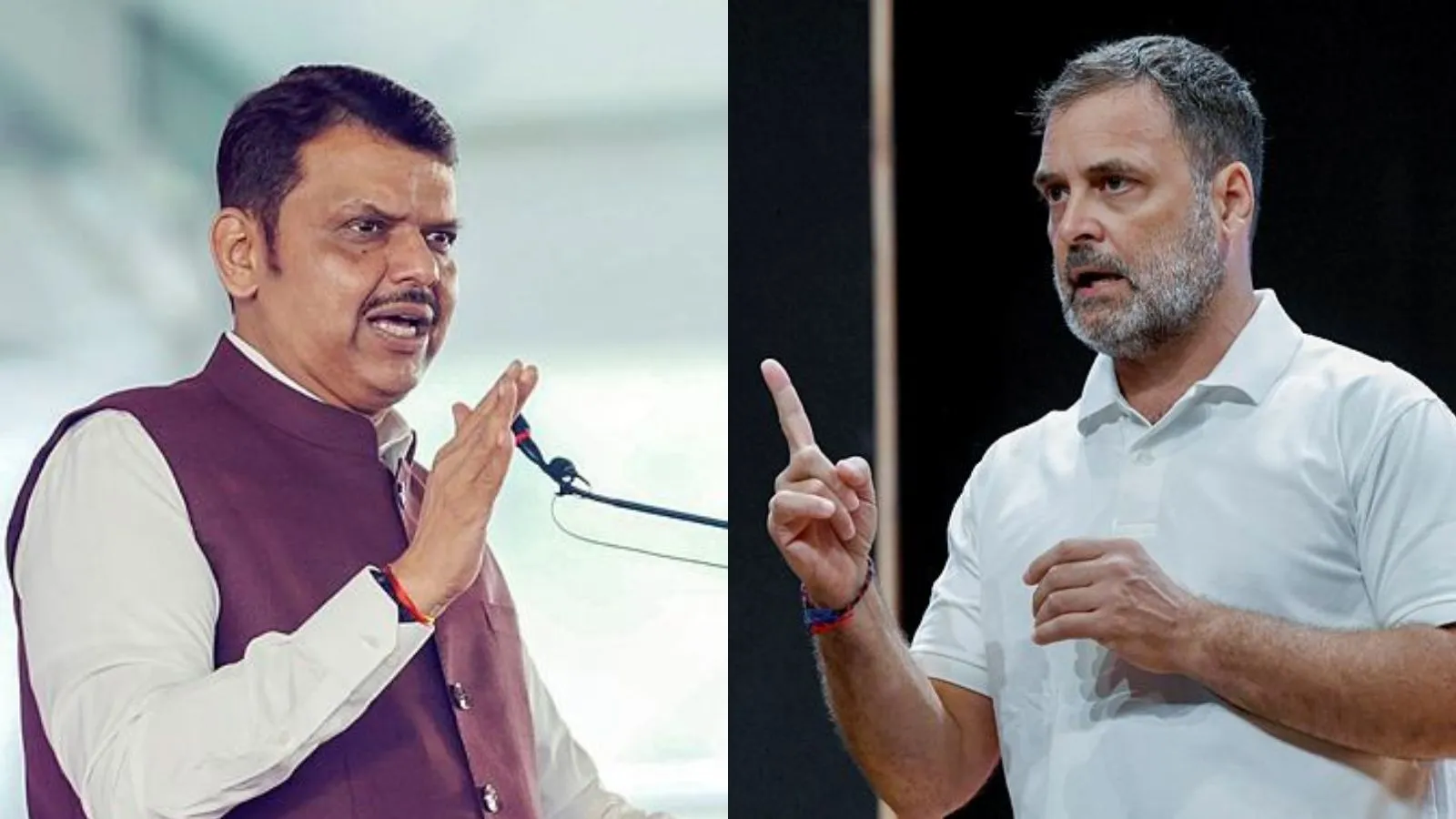
The Bharatiya Janata Party (BJP) in Maharashtra is placing renewed emphasis on maintaining unity within the ruling Mahayuti alliance as political competition in the state intensifies. Chief Minister Devendra Fadnavis has begun efforts to strengthen coordination among the BJP, Shiv Sena and Nationalist Congress Party (NCP), with the alliance seeking to prevent internal disagreements from affecting its political and electoral position.
The renewed focus on alliance management comes at a time when Congress leader Rahul Gandhi has been increasing his political engagement in Maharashtra, particularly among young people. His recent outreach in Pune and the attention generated by his interactions with students have added another dimension to the BJP’s political calculations.
The BJP’s concern is not necessarily about an immediate threat to its numbers in the Maharashtra Assembly. Instead, the larger issue is whether differences within the Mahayuti could create political opportunities for the Opposition if they remain unresolved.
Fadnavis seeks greater coordination among alliance partners
Fadnavis has taken the initiative to improve communication among the three principal constituents of the Mahayuti. A coordination meeting involving senior leaders of the alliance was held to discuss issues affecting the functioning of the government as well as the alliance’s broader political strategy.
Deputy Chief Ministers Eknath Shinde and Sunetra Pawar were among the senior leaders involved in the discussions.
The meeting is significant because disagreements between alliance partners have increasingly become a matter of public discussion. The BJP leadership appears keen to ensure that differences over administrative decisions, political appointments, allocation of resources and electoral strategy are addressed internally rather than through public statements.
The alliance has also stressed the need for its leaders to avoid publicly criticising one another. The objective is to project a more unified government and prevent individual disputes from developing into larger political controversies.
BJP’s approach reflects changing political calculations
The BJP remains the strongest party within the Mahayuti and has considerable numerical strength in the state Assembly. However, the party’s decision to actively strengthen relations with its allies indicates that political arithmetic is only one part of the coalition’s strategy.
The Shiv Sena and NCP factions that are part of the Mahayuti bring their own organisational networks, regional influence and voter bases. Maintaining these structures under one political umbrella can be particularly valuable during elections.
For the BJP, therefore, keeping the alliance intact can provide advantages beyond simply securing a majority in the Assembly. A united coalition can offer greater organisational reach and reduce the possibility of votes being divided among parties that otherwise share power.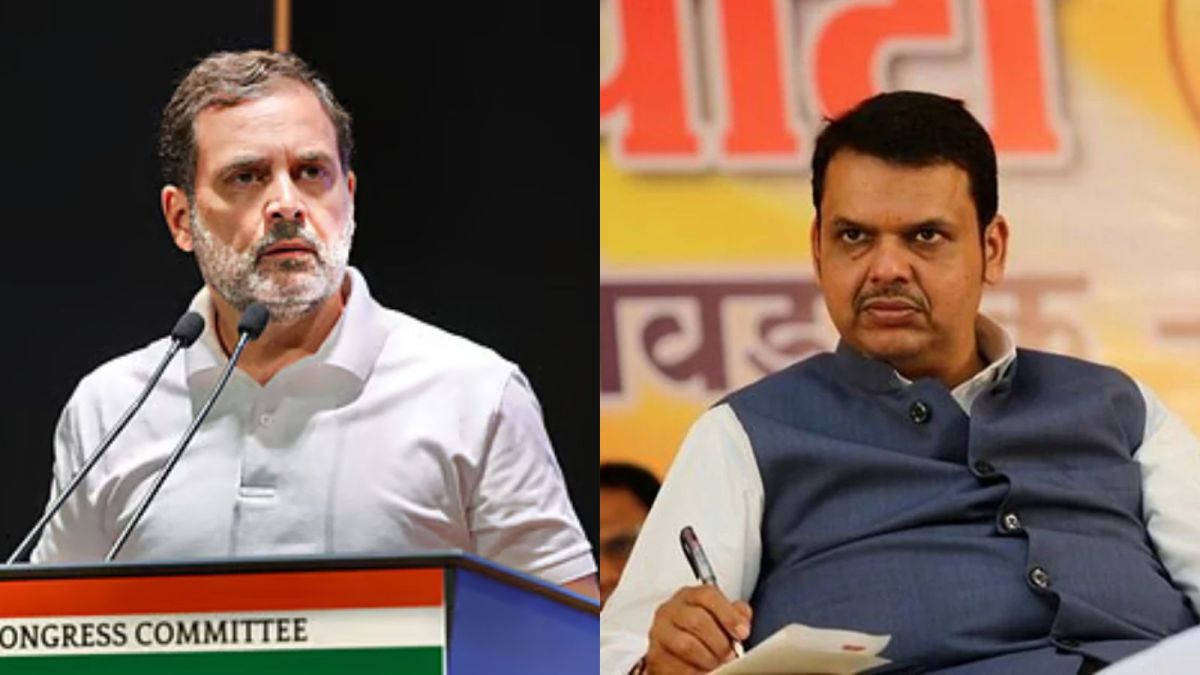
Rahul Gandhi’s Maharashtra outreach draws BJP attention
Rahul Gandhi’s growing engagement with Maharashtra has become one of the factors influencing the political environment.
His interaction with students in Pune has received attention because of its focus on young people and their concerns. The Congress leader’s outreach provides the Opposition with an opportunity to build a direct connection with sections of the youth electorate.
For the BJP, this is an area that requires close attention. Young voters represent an increasingly important political constituency, and political parties are competing to shape the narrative around education, employment, opportunities, social mobility and governance.
The BJP has criticised Gandhi’s approach and questioned the political nature of some of his programmes. Nevertheless, the attention generated by his Maharashtra activities has reinforced the importance of maintaining a strong and coordinated ruling alliance.
Local elections make alliance unity more important
The Mahayuti’s decision to work together in upcoming local elections is another indication of the BJP’s preference for greater coordination.
Local elections are particularly important in Maharashtra because they provide parties with an opportunity to strengthen their grassroots organisations and build networks ahead of larger electoral contests. Municipal bodies, district-level institutions, panchayats and other local organisations play a significant role in maintaining political influence.
Separate contests among alliance partners could lead to competition for the same voter base and potentially create friction between workers at the local level.
By seeking to contest elections together, the Mahayuti leadership is attempting to minimise such conflicts and ensure that the combined strength of the alliance is used against its political opponents.
Distribution of political appointments remains a sensitive issue
One of the major challenges facing the alliance is the distribution of political appointments.
Several positions in state-run corporations have remained vacant, creating expectations among leaders and workers of the BJP, Shiv Sena and NCP. The government has now moved towards filling these positions, with discussions focusing on how they should be distributed among the alliance partners.
The allocation of such positions is politically significant because they provide parties with opportunities to accommodate leaders, strengthen organisational networks and reward workers.
A formula based on the relative strength of the three parties has been discussed, with the BJP expected to receive the largest share while Shiv Sena and NCP would receive significant portions as well.
For the alliance leadership, the challenge is to ensure that the distribution is viewed as fair by all three partners.
NCP seeks greater influence in the government
The NCP has also been seeking a larger role in the functioning of the Maharashtra government.
One of the important issues is the Finance portfolio, which has become a point of discussion within the coalition. Control over the Finance Department is politically significant because it gives the government considerable influence over budgetary priorities, development spending and allocation of resources.
The demand reflects the broader expectation among alliance partners that their political importance should be reflected in the distribution of major responsibilities.
While the BJP remains the dominant constituent of the Mahayuti, its allies are keen to ensure that they have a meaningful role in policymaking and administration.
Development funds create another source of friction
Allocation of development funds has also emerged as a contentious issue within the ruling alliance.
Legislators from different parties have sought greater access to funds for their constituencies, while discussions have taken place over how district-level development resources should be distributed.
Such disputes are common in coalition governments, but they can become politically sensitive when legislators believe that one alliance partner is receiving preferential treatment.
The BJP leadership therefore faces the difficult task of balancing competing demands from its allies while maintaining administrative efficiency.
The issue is particularly important because local development projects can have a direct impact on the electoral prospects of individual legislators. Roads, infrastructure, public facilities, welfare programmes and other constituency-level projects are often used by political parties to demonstrate their performance to voters.
Alliance partners want a greater say
The current political situation also reflects the evolving relationship between the BJP and its allies.
The BJP’s dominant position gives it considerable influence over government policy and political strategy. However, Shiv Sena and NCP leaders have their own ambitions and organisational interests.
Maintaining the Mahayuti will therefore require negotiations on issues ranging from ministerial responsibilities to election strategies and local-level candidate selection.
Any perception that one party is attempting to dominate the others could create dissatisfaction among alliance workers and leaders.
The BJP’s current emphasis on coordination appears aimed at preventing precisely such a situation.
Maratha reservation remains an additional challenge
The ruling alliance must also manage broader social and political issues that could influence Maharashtra’s political landscape.
The Maratha reservation issue remains particularly sensitive. Any renewed mobilisation around reservation demands could put additional pressure on the state government and require a coordinated political response from all alliance partners.
For the Mahayuti, managing such issues will require not only administrative decisions but also political communication. Contradictory statements from alliance leaders could make it harder for the government to present a consistent position.
This is another reason why the leadership has been stressing internal coordination and greater discipline in public communication.
Why the BJP wants to preserve Mahayuti unity
The BJP’s efforts to strengthen the Mahayuti demonstrate that the party sees strategic value in keeping its allies close despite its own electoral strength.
The alliance combines the BJP’s organisational capabilities with the regional influence and political networks of Shiv Sena and NCP. Together, the parties can potentially appeal to a broader section of Maharashtra’s electorate than any one constituent could reach independently.
A united alliance can also prevent internal competition from damaging its electoral prospects.
At the same time, the BJP must carefully manage the expectations of its partners. If Shiv Sena or NCP leaders feel that their political influence is being reduced, disagreements could intensify.
The challenge is therefore to maintain BJP leadership while ensuring that its partners continue to see the alliance as politically beneficial.
A crucial phase for Maharashtra politics
The latest developments indicate that coalition management is becoming an increasingly important component of Maharashtra politics.
The BJP-led government has a strong legislative position, but electoral success depends on more than numbers in the Assembly. Grassroots organisation, alliance coordination, public perception and the ability to respond to emerging Opposition campaigns will all influence the political environment.
Rahul Gandhi’s increasing engagement with Maharashtra has added another layer to this competition, particularly as political parties seek to connect with young voters.
For the Mahayuti, the immediate priority will be to resolve internal differences, distribute political responsibilities more effectively and present a common message to voters.
The BJP’s renewed efforts suggest that the party does not want internal disagreements to weaken the alliance at a time when political competition is becoming more active. Whether this strategy succeeds will depend on how effectively the BJP, Shiv Sena and NCP balance their individual interests with the larger objective of preserving the Mahayuti.