
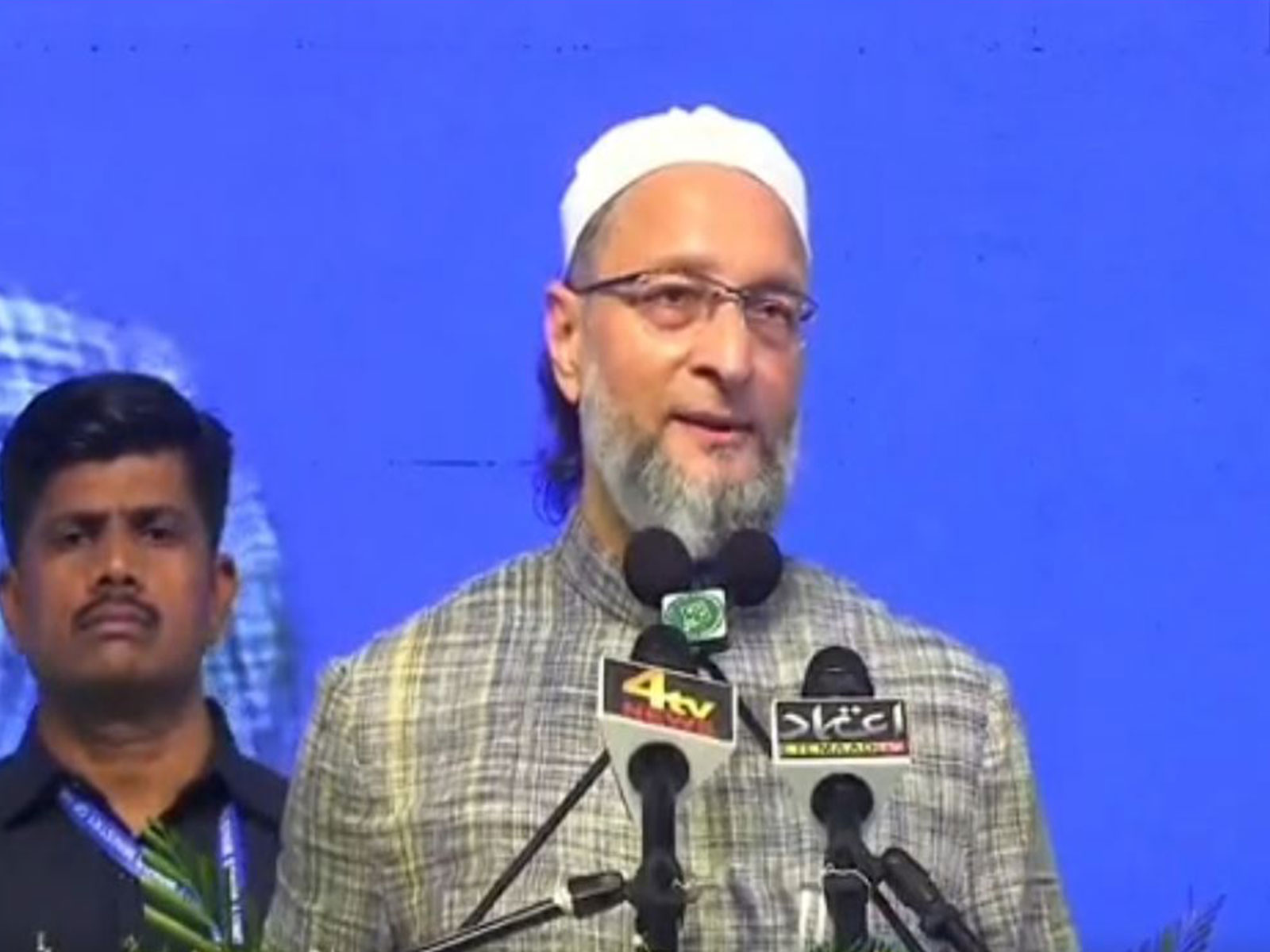
A fresh controversy over religious freedom and school dress codes has emerged after AIMIM president Asaduddin Owaisi strongly criticised an Allahabad High Court decision rejecting a minor student’s plea to wear a hijab along with her prescribed school uniform.
Owaisi described the ruling as an “attack on Islam” and questioned the court’s approach to determining whether wearing a hijab constitutes an essential religious practice. His remarks have added a political dimension to an already sensitive debate surrounding religious expression, institutional discipline and the constitutional rights of students.
The Allahabad High Court had dismissed the petition filed by a student from a school in Prayagraj. The student had sought permission to continue wearing a headscarf along with the uniform prescribed by her school. She had argued that she had been wearing the scarf for several years while attending the same institution and had not previously faced objections.
The dispute arose after the school introduced or enforced its dress-code requirements more strictly when the student sought admission to Class 11. According to the petition, she had completed Class 10 at the institution and had worn a scarf over her uniform since Class 6. The school subsequently treated the additional head covering as inconsistent with its prescribed dress code.
The case brought two competing considerations before the court: the student’s claim relating to religious practice and the school’s authority to establish and enforce a uniform policy.
What the Allahabad High Court said
A division bench of Justices J.J. Munir and Indrajit Shukla held that a school can prescribe and enforce a uniform when its dress code is applied uniformly, formulated in good faith, is non-discriminatory and is intended to maintain discipline and institutional identity.
The court did not accept the argument that the student’s previous permission to wear a scarf created a permanent or enforceable right to continue doing so. It observed that the absence of objections in earlier years could have resulted from factors such as lax implementation, negligence, discretion or courtesy. Such earlier conduct, the court said, could not by itself prevent the school from subsequently enforcing its rules.
The judges also examined the student’s argument that wearing the headscarf was an essential component of her religious practice. The court noted that sufficient religious or factual material had not been presented to establish that the practice was essential in a manner that would affect the validity of her faith if she were not permitted to follow it inside the school.
The court further referred to material placed before it showing that other students belonging to the same religious community were attending the institution without wearing headscarves.
The ruling therefore drew a distinction between a person’s freedom to practise religion and a school’s authority to regulate attire within its premises. According to the court’s reasoning, enforcing a neutral and uniformly applicable dress code does not necessarily amount to interference with a student’s religious freedom.
Owaisi questions the ruling
Reacting strongly to the judgment, Owaisi said he disagreed with the Allahabad High Court’s decision. He questioned the authority of a court to determine what should be regarded as an essential religious practice within Islam.
Owaisi linked the issue to the broader constitutional protection of religious freedom and individual liberty. He argued that the judgment raises concerns under Articles 25 and 19 of the Constitution, which deal respectively with freedom of conscience and the right to practise, profess and propagate religion, and with fundamental freedoms available to citizens.
He also referred to the ongoing debate before the Supreme Court concerning the determination of essential religious practices. In that context, Owaisi questioned why the issue of the hijab should be assessed in a manner that, in his view, places the judiciary in the position of determining what is essential to Islam.
Calling the judgment an “attack on Islam”, Owaisi maintained that wearing a hijab should not be interpreted as a restriction on a student’s participation in education. His remarks are likely to intensify the political and public debate over religious attire in educational institutions.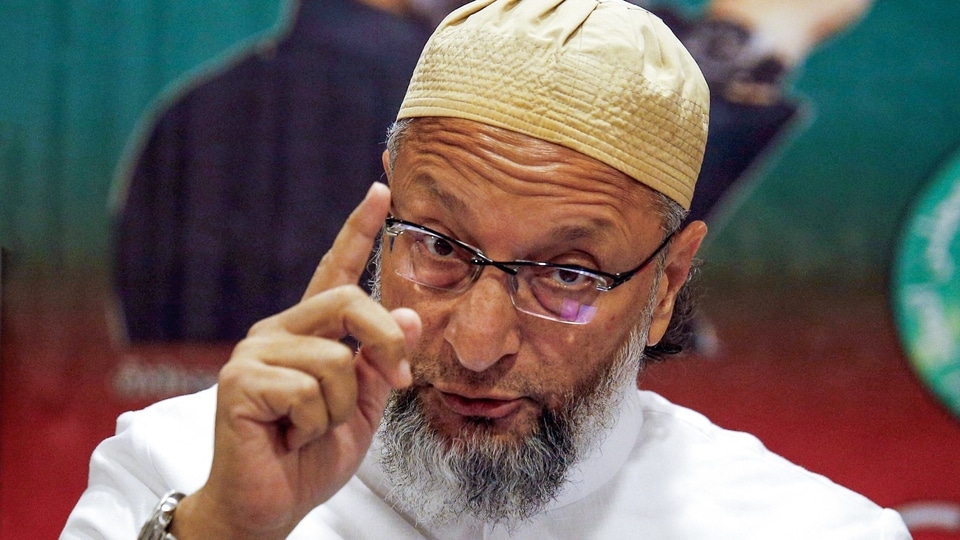
Religious freedom versus institutional discipline
The dispute highlights a continuing legal and social question in India: how far religious practices can be accommodated within institutions that prescribe common rules for all students.
Supporters of strict uniform policies argue that schools require clear and consistent dress codes to maintain discipline, equality and institutional identity. From this perspective, allowing individual additions to a uniform could create different standards and make enforcement more difficult.
Those advocating greater accommodation of religious attire, however, argue that uniform policies should not unnecessarily restrict constitutionally protected religious expression. They contend that reasonable accommodation can allow students to follow religious practices without undermining the broader purpose of a school uniform.
The Allahabad High Court’s ruling has therefore raised questions extending beyond the individual student’s circumstances. At its core is the balance between institutional autonomy and individual constitutional freedoms.
Previous permission does not create permanent entitlement
One significant aspect of the ruling concerns the student’s claim that she had been permitted to wear a scarf during earlier years of schooling.
The court rejected the suggestion that such past practice automatically established a continuing legal entitlement. The judges indicated that an institution’s previous failure to enforce a rule strictly does not prevent it from applying that rule later.
This principle could have implications for disputes involving school regulations more broadly. Educational institutions frequently modify or more strictly implement existing policies, and the judgment indicates that past tolerance alone may not be sufficient to prevent a school from enforcing its stated rules, provided those rules meet the required legal standards.
A debate likely to continue
The ruling has triggered criticism from Owaisi and other voices who view the hijab as an important component of Muslim identity and religious practice. Muslim clerics have also criticised the decision and argued that students should have the freedom to wear the hijab in educational institutions.
At the same time, the court’s reasoning places emphasis on the distinction between religious freedom and compliance with a school’s uniformly applicable regulations.
The controversy is consequently not limited to the question of whether one student can wear a headscarf. It touches upon larger questions involving constitutional rights, religious identity, educational discipline and the extent to which institutions can regulate personal appearance.
As debates over religious attire in educational institutions continue, the Allahabad High Court’s decision is likely to remain a point of discussion among legal experts, political leaders, religious organisations and civil society groups. Owaisi’s sharp criticism has further brought the issue into the political spotlight, ensuring that the question of hijab, religious freedom and school uniform rules remains part of India’s wider constitutional debate.