
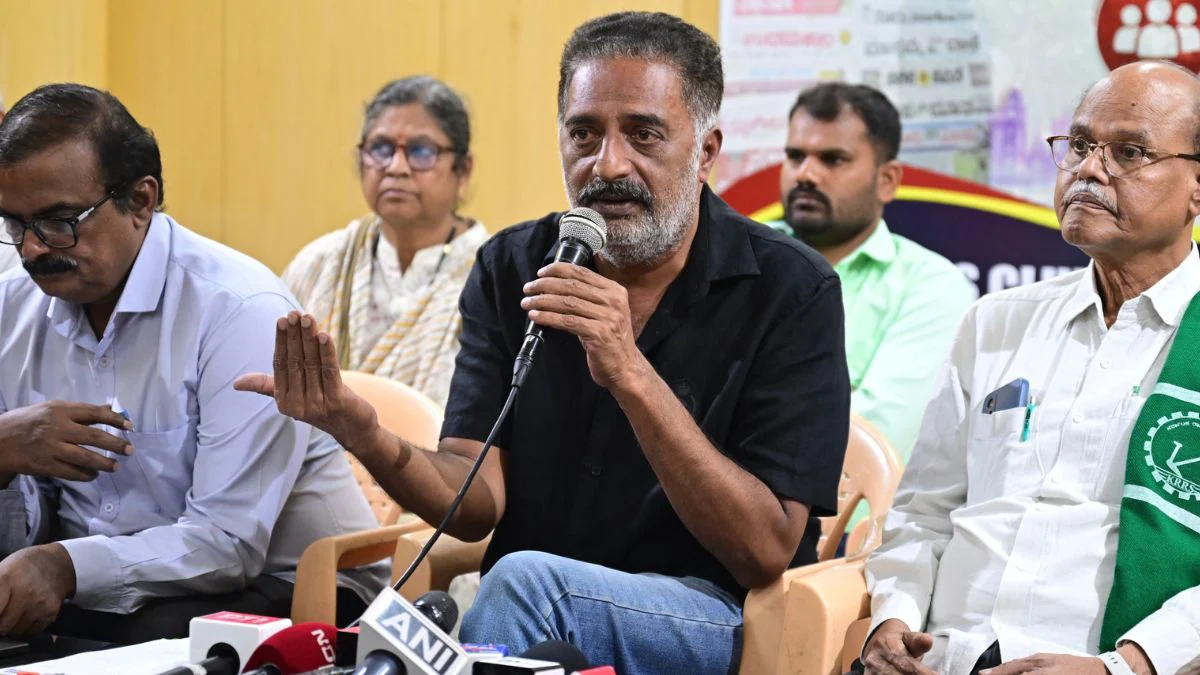
Actor and activist Prakash Raj is set to participate in a civil society campaign in Bengaluru on September 1 against the ongoing Special Intensive Revision (SIR) of electoral rolls in Karnataka. The campaign, being organised under the banner of “Election Commission Chalo”, will seek to draw attention to what civil society groups describe as serious shortcomings in the voter-list revision process.
The announcement comes after the publication of Karnataka’s draft electoral rolls following the SIR exercise. Civil society organisations have alleged that a large number of eligible voters have been affected by classifications under the ASDDO category — Absent, Shifted, Dead, Duplicate and Others. They have argued that the process could result in genuine voters being excluded from the electoral rolls if adequate opportunities are not provided to verify and restore their names.
Prakash Raj, speaking at a press conference in Bengaluru, said civil society organisations would intensify their campaign and take the issue to the streets as well as the courts. The groups have also indicated that they intend to seek judicial intervention to halt the SIR process while their concerns are examined.
Civil society groups raise concerns over voter deletions
The controversy centres on the treatment of voters whose names have been placed in the ASDDO category during the revision process. Activists have questioned whether all such classifications were made after sufficient verification and whether voters were given adequate opportunities to clarify their status before their names were removed or flagged.
According to figures cited during the ongoing debate, more than 1.08 crore voters were placed under ASDDO categories in the draft electoral roll. A separate group of around 43.81 lakh voters has reportedly been flagged for issues involving the absence of mapping or logical discrepancies, adding another layer of concern for political parties and civil society organisations.
Activists argue that while the removal of names belonging to deceased or duplicate voters is necessary to maintain accurate electoral records, voters who have temporarily moved, changed residence or were unavailable during verification should not automatically lose their place on the electoral roll.
The groups have particularly questioned the treatment of voters classified as “Absent” or “Shifted”. They have argued that such voters should be given a mechanism to update their existing electoral information rather than being treated as completely new voters.
Questions over Form 6 and Form 8
One of the central issues raised by activists concerns the forms that voters are being asked to submit after being classified under certain categories.
Civil society representatives have questioned why existing voters who have merely shifted residence should be required to submit Form 6, which is generally associated with applications for inclusion as a new voter. They argue that voters who have moved from one address to another should instead be able to use the appropriate procedure for shifting their electoral registration.
Activists say the distinction is important because forcing an existing voter to effectively re-register could create additional administrative hurdles, particularly for elderly people, migrant workers, economically weaker citizens and those who may have difficulty producing supporting documents.
The groups have also raised concerns about the possibility that voters who were temporarily away from their homes for employment or other reasons may have been wrongly classified as absent or shifted.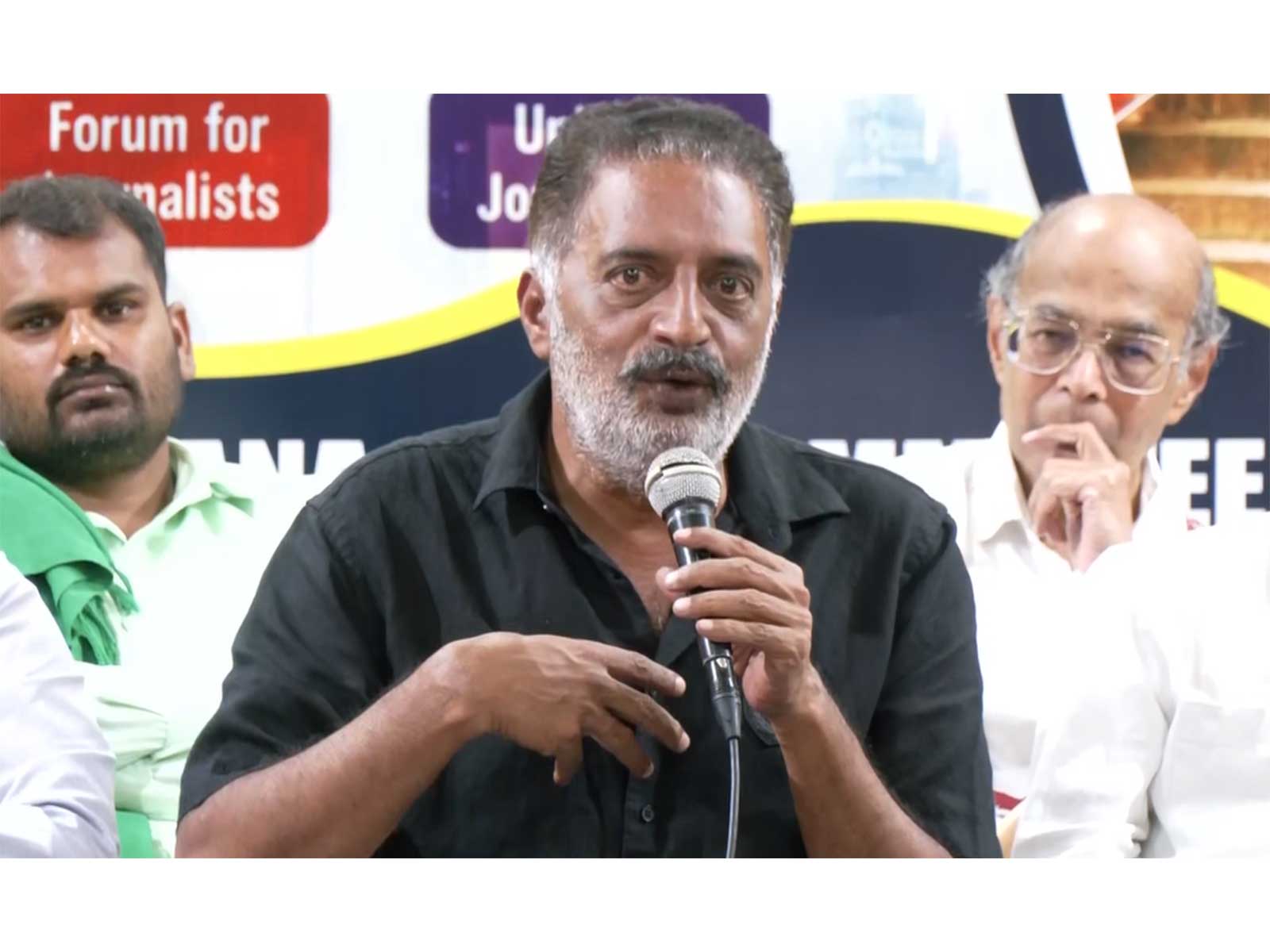
Prakash Raj questions urgency of the exercise
Prakash Raj has questioned the pace at which the electoral revision has been carried out. He argued that Karnataka still has considerable time before its next Assembly election and questioned why such a large-scale exercise needed to be completed within a compressed timeframe.
He also criticised what he described as the difficulties being placed on ordinary voters who may now have to approach officials or courts to establish their electoral eligibility.
The actor has urged elected representatives across political parties to support the campaign, arguing that the issue concerns the voting rights of citizens rather than the interests of any particular political organisation.
The September 1 campaign is therefore expected to bring together affected voters, activists and civil society representatives who want the Election Commission to address their concerns regarding the draft rolls.
Activists question Booth Level Officer procedures
Civil society representatives have also raised concerns about the workload and preparedness of Booth Level Officers (BLOs), who play a crucial role in the ground-level verification of electoral data.
According to activists, BLOs in several areas were working under significant pressure and may not always have had adequate time or local familiarity to conduct comprehensive verification. They have alleged that this could have contributed to genuine voters being incorrectly placed in categories such as absent or shifted.
Advocate and activist Vinay Sreenivasa has also argued that some voters who had actually changed residences were allegedly treated as deleted voters instead of being guided through the process for updating their electoral address.
Civil society organisations have called for more time for voters to file claims and objections, along with greater administrative capacity to deal with applications and complaints arising from the draft roll.
Political response to the controversy
The controversy has also drawn responses from political leaders. Karnataka Chief Minister DK Shivakumar has raised concerns over the large number of voters affected by the revision and has sought additional time for claims and objections.
Shivakumar has also called for increased administrative capacity, including more Electoral Registration Officers and District Election Officers, so that claims, objections and applications can be processed effectively.
He has stressed that factors such as mobility, poverty, inadequate documentation or lack of information should not become reasons for eligible citizens losing their voting rights.
The BJP, however, has defended the work carried out by election officials. State BJP spokesperson S Prakash said voter removals were based on genuine reasons and that Booth Level Officers had made efforts to distribute the required forms. He also pointed out that there were instances where voters received forms but did not return them.
The contrasting positions have added a political dimension to the debate, with the Election Commission’s electoral revision process now facing scrutiny from civil society groups as well as political representatives.
Election Commission maintains SIR was conducted transparently
The Election Commission has defended the SIR exercise and highlighted the cooperation of voters and officials involved in the process.
Chief Election Commissioner Gyanesh Kumar has said that conducting a Special Intensive Revision requires considerable effort and cooperation from citizens. He has also maintained that elections in India are conducted according to the Constitution, electoral laws and instructions issued by the Election Commission.
The Commission’s position contrasts with the allegations made by civil society groups, who have described aspects of the revision as flawed and insufficiently transparent.
The dispute is now expected to move into both the public and legal arenas, particularly as voters begin examining the draft electoral rolls and filing claims or objections where necessary.
Civil society groups prepare legal challenge
The organisations backing the September 1 campaign have said they will not limit their efforts to public demonstrations. They are also preparing to approach the courts, seeking intervention in the SIR process.
The groups have demanded greater transparency and accountability in the functioning of the Election Commission and have raised broader questions about the process through which Election Commissioners are appointed.
They have also criticised legal protections granted to members of the electoral body, arguing that independent constitutional institutions must remain accountable while carrying out their responsibilities.
For now, the immediate focus remains on the draft electoral roll and the ability of affected voters to challenge exclusions or discrepancies before the final rolls are prepared.
September 1 campaign could intensify voter-roll debate
The “Election Commission Chalo” campaign scheduled for September 1 is expected to become an important point in Karnataka’s ongoing electoral-roll controversy. Prakash Raj and participating civil society organisations intend to bring affected voters into the campaign and highlight cases that they believe demonstrate shortcomings in the SIR process.
The larger issue extends beyond the participation of a prominent actor. At its core is the question of how electoral authorities can balance the need to maintain accurate voter lists with the responsibility to ensure that eligible citizens are not inadvertently excluded.
As the claims and objections process continues, the handling of disputed names and the response of election authorities will be closely watched. The campaign, along with the proposed legal challenge, could further intensify the debate over electoral verification, voter rights and accountability in Karnataka.