
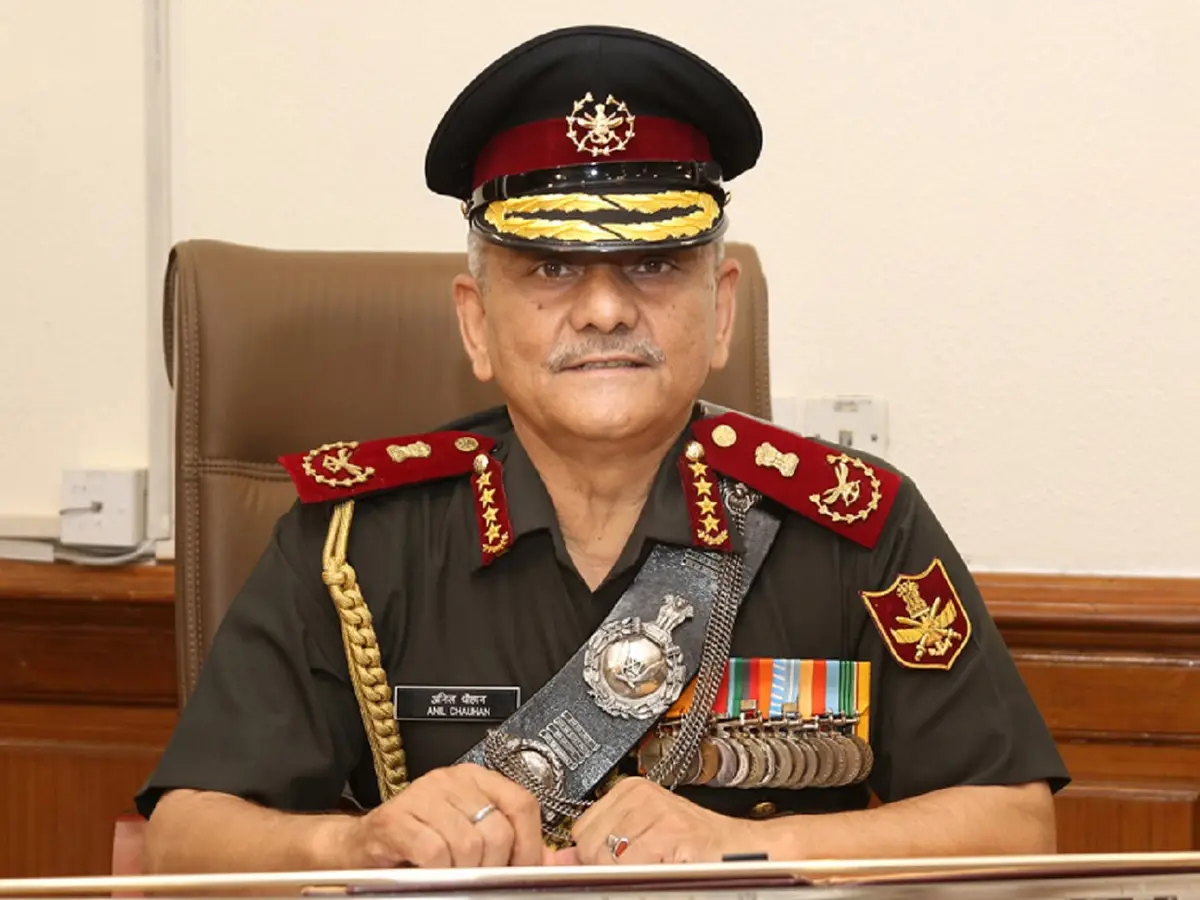
Former Chief of Defence Staff General Anil Chauhan has disclosed several details about the planning, execution and escalation management of Operation Sindoor, providing a rare insight into the military decision-making that took place during India’s confrontation with Pakistan in May 2025.
Chauhan, who was serving as Chief of Defence Staff during the operation, spoke about the military strategy adopted after the Pahalgam terror attack, the targets considered by Indian forces, the role of battlefield intelligence, communication between the two sides and the circumstances surrounding the eventual ceasefire.
Operation Sindoor was launched by India after the April 22, 2025, terror attack in Pahalgam in Jammu and Kashmir, in which 26 people were killed. India subsequently carried out military strikes against targets in Pakistan and Pakistan-occupied Kashmir, describing the action as a response to terrorist infrastructure linked to the attack.
In his latest remarks, Chauhan described the operation as one in which India sought to retain the initiative throughout the escalation. He said a key principle was that India should deliver the final strike in any escalation cycle rather than allow Pakistan to dictate the pace or direction of military action.
Sargodha Strike Was Considered Even After Pakistan Sought Talks
One of Chauhan’s most significant revelations relates to the moment when Pakistan attempted to establish communication with India during the military confrontation.
According to Chauhan, Pakistan indicated at around 10 am that it wanted to talk. Despite the development, the Indian military leadership was still considering further action.
The Air Chief asked Chauhan whether Indian forces should proceed with a planned strike against Sargodha. Chauhan said he gave approval for the operation to continue.
The disclosure illustrates the level of military pressure India was prepared to maintain even after Pakistan signalled an interest in dialogue. Rather than immediately suspending military preparations, Indian commanders continued evaluating operational options.
Chauhan said he also asked the Air Force to identify two additional targets. The decision reflected India’s broader approach of retaining multiple military options while assessing developments on the ground.
Skardu Was Considered as Another Target
Among the additional targets identified during the operation was Skardu.
Chauhan said the target was initially cleared, but adverse weather conditions eventually forced the Indian military to alter the plan. The operation was subsequently shifted towards Bholari.
The revelation provides an indication of how quickly operational plans could change because of battlefield conditions. Even when a target had been selected and approved, factors such as weather, visibility and operational feasibility could require commanders to make last-minute adjustments.
The consideration of Skardu also demonstrates that India’s military planning during Operation Sindoor extended beyond the immediate areas involved in the initial strikes.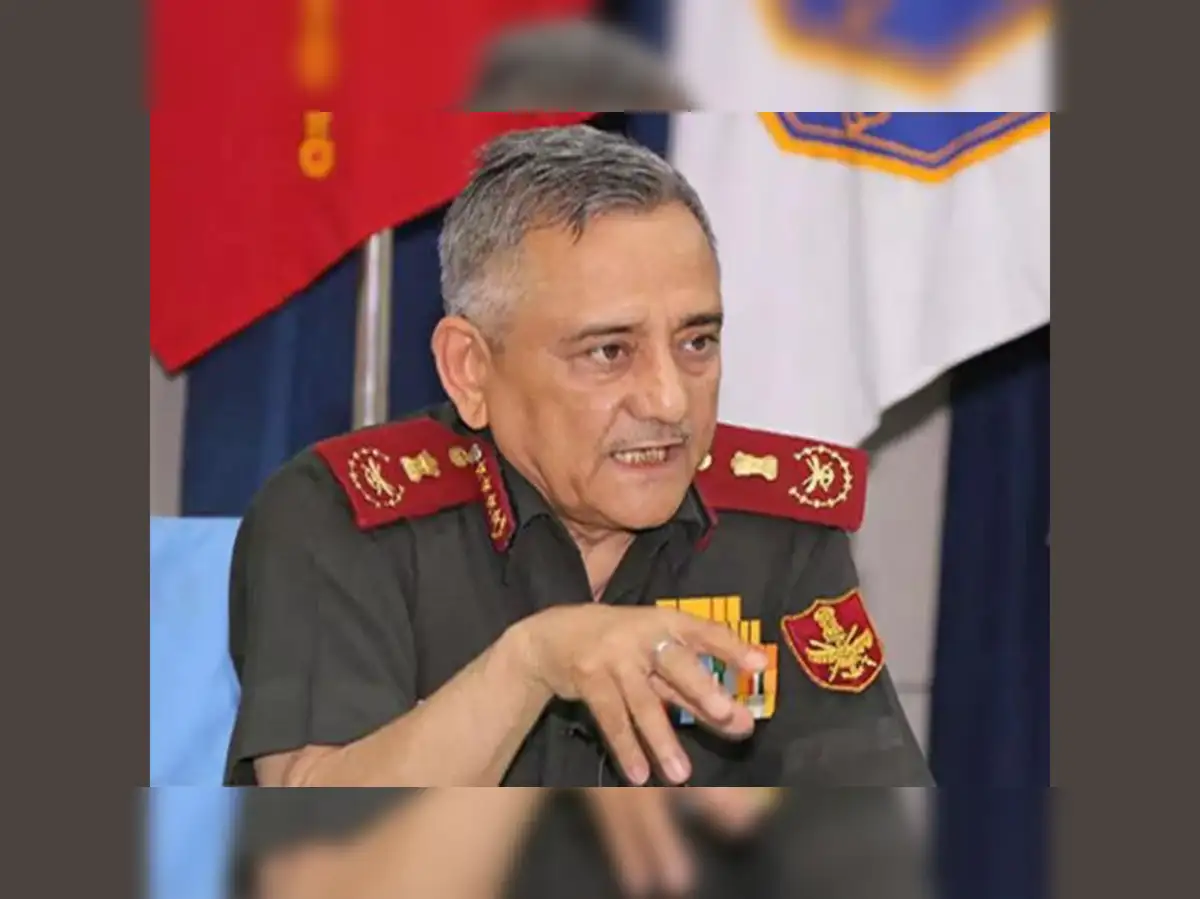
Integrated Military Information Helped India Make Faster Decisions
Chauhan attributed India’s effectiveness during the operation partly to what he described as improved battlefield awareness and stronger networking between the armed forces.
According to him, information from the Army, Navy and Air Force could be brought together into a common operational picture. This allowed commanders to assess developments across different military domains rather than relying on isolated information available to individual services.
Such integration is increasingly important in modern warfare, where operations can simultaneously involve fighter aircraft, missile systems, naval assets, drones, electronic warfare and intelligence networks.
Chauhan said India’s ability to maintain greater situational awareness helped commanders make better decisions during the confrontation.
He also pointed to clear political direction as another important factor. According to him, military leadership was given sufficient freedom to plan operations within the objectives established by the political leadership.
The combination of political clarity and operational freedom, he suggested, enabled the armed forces to respond quickly as the situation evolved.
Chauhan Says Ceasefire Was Decided Directly by the Two DGMOs
Chauhan also addressed the politically sensitive question of how the India-Pakistan ceasefire was reached.
US President Donald Trump had publicly claimed that American intervention helped bring the two sides to an agreement. Chauhan disputed the suggestion that a third party played a decisive role.
According to him, the ceasefire was decided directly through communication between the Directors General of Military Operations of India and Pakistan.
He said discussions between the two military officials eventually resulted in an agreement to stop hostilities. Chauhan indicated that he did not see a role for another country in the actual decision to halt military operations.
He also raised a question about how information regarding the impending ceasefire reached the United States before the announcement was made publicly.
Chauhan suggested that the information did not originate from the Indian side and appeared to have been communicated from the other side.
The comments add to the continuing debate surrounding the circumstances of the May 2025 ceasefire and the respective roles played by military and diplomatic channels.
Pakistan’s Intelligence Assessment Was Questioned
Another major point raised by Chauhan concerned Pakistan’s understanding of India’s military movements.
He claimed that Pakistan’s assessment of the Indian Navy’s position was inaccurate during the operation. According to him, Pakistani briefings placed an Indian carrier battle group at locations that were significantly different from its actual position.
Chauhan said Indian assessments indicated that the carrier battle group was between approximately 100 and 300 nautical miles away from the locations reportedly identified by Pakistan.
He suggested that Pakistan may have been dependent on foreign intelligence sources because its own long-range maritime aircraft were not operational during the period.
The episode, according to Chauhan, highlighted the importance of independent intelligence capabilities and accurate real-time information during military operations.
In a modern conflict, an incorrect understanding of an adversary’s position can have serious consequences. Military commanders depend on reliable information to determine where forces are located, what assets are available and how an opponent may respond to a particular action.
Kirana Hills Was Not Deliberately Targeted, Chauhan Says
Chauhan also sought to clarify speculation surrounding Kirana Hills, an area associated with Pakistan’s strategic and nuclear infrastructure.
He said India did not deliberately target Kirana Hills during Operation Sindoor.
According to his explanation, Indian loitering munitions had been deployed towards the Sargodha area to search for radar targets. Kirana Hills is located close to Sargodha.
A loitering munition is designed to remain in an area for a period of time while searching for a suitable target. Chauhan explained that the weapons involved had a limited operational endurance and would eventually come down if they failed to locate their intended target.
He suggested that one such munition may have eventually struck one of the hills in the Kirana Hills area.
The explanation is significant because reports and social media discussions had previously generated speculation that India had deliberately attacked Pakistan’s nuclear-related infrastructure.
Chauhan’s remarks indicate that any impact in the area was not part of India’s intended targeting plan.
The Incident Highlights the Complexity of Modern Warfare
The Kirana Hills episode also illustrates the challenges involved in precision warfare.
Weapons equipped with autonomous or semi-autonomous target-search capabilities can operate independently for extended periods while attempting to identify designated targets. Their effectiveness depends on factors such as target visibility, electronic conditions, battlefield information and the availability of suitable objectives.
Chauhan’s explanation suggests that the munition’s failure to locate the intended radar target may have resulted in an unintended impact elsewhere.
The episode has therefore become an important part of the discussion surrounding the risks associated with military operations in sensitive areas.
Operation Sindoor Was About More Than Individual Strikes
Chauhan’s revelations provide a broader understanding of Operation Sindoor and demonstrate that the military campaign involved continuous strategic calculations rather than a fixed sequence of attacks.
Indian commanders had to balance several competing considerations. They had to respond to the Pahalgam attack, maintain military pressure on Pakistan, prevent uncontrolled escalation and simultaneously preserve the possibility of ending the confrontation.
The discussion around Sargodha and Skardu shows that additional military options were being considered even as communication between the two sides was taking place.
At the same time, India’s reliance on integrated information from the Army, Navy and Air Force demonstrates the importance of joint operations in contemporary warfare.
The ceasefire discussions further highlight the close relationship between military operations and strategic communication during a conflict.
Escalation Control Was a Central Principle
One of the clearest themes in Chauhan’s account is escalation control.
He explained that Indian planners had established a principle under which the final strike in an escalation cycle should come from India. The objective was to retain the initiative and prevent Pakistan from gaining the advantage in determining how the confrontation developed.
Such an approach requires careful calculation. Every additional military action carries the possibility of triggering retaliation, while stopping too early can potentially surrender operational momentum.
The challenge for commanders is therefore to apply sufficient pressure to achieve strategic objectives without allowing a limited confrontation to turn into a much larger war.
Chauhan’s account indicates that this balance was an important consideration throughout Operation Sindoor.
Lessons for India’s Future Military Strategy
The former CDS’s remarks also point towards several broader lessons for India’s defence preparedness.
First, integrated information-sharing between the armed forces can significantly improve decision-making. A common operational picture allows commanders to understand developments across land, air and maritime theatres simultaneously.
Second, intelligence accuracy remains critical. Chauhan’s comments about Pakistan’s assessment of Indian naval movements demonstrate how incorrect information can distort an adversary’s understanding of a conflict.
Third, modern military operations require flexibility. The change from Skardu to Bholari because of weather conditions illustrates how operational plans can change even after targets have been selected.
Finally, escalation management remains essential in conflicts between nuclear-armed neighbours. Military commanders must operate within political objectives while remaining prepared for rapid changes in the strategic environment.
Chauhan’s Revelations Add to the Record of Operation Sindoor
General Anil Chauhan’s latest comments provide additional insight into one of the most consequential India-Pakistan military confrontations in recent years.
His account covers the consideration of Sargodha and Skardu as targets, the role of integrated battlefield information, the direct military communication that preceded the ceasefire, Pakistan’s intelligence assessment of Indian naval movements and the circumstances surrounding the reported impact near Kirana Hills.
The revelations also underline the complexity of decisions taken during a high-risk military confrontation. Behind every strike or operational decision were assessments involving intelligence, weather, target selection, political objectives and the possibility of further escalation.
More than a year after Operation Sindoor, Chauhan’s account offers a glimpse into those calculations and provides fresh context for understanding how Indian military planners sought to maintain operational control while limiting the risk of an uncontrolled escalation with Pakistan.