
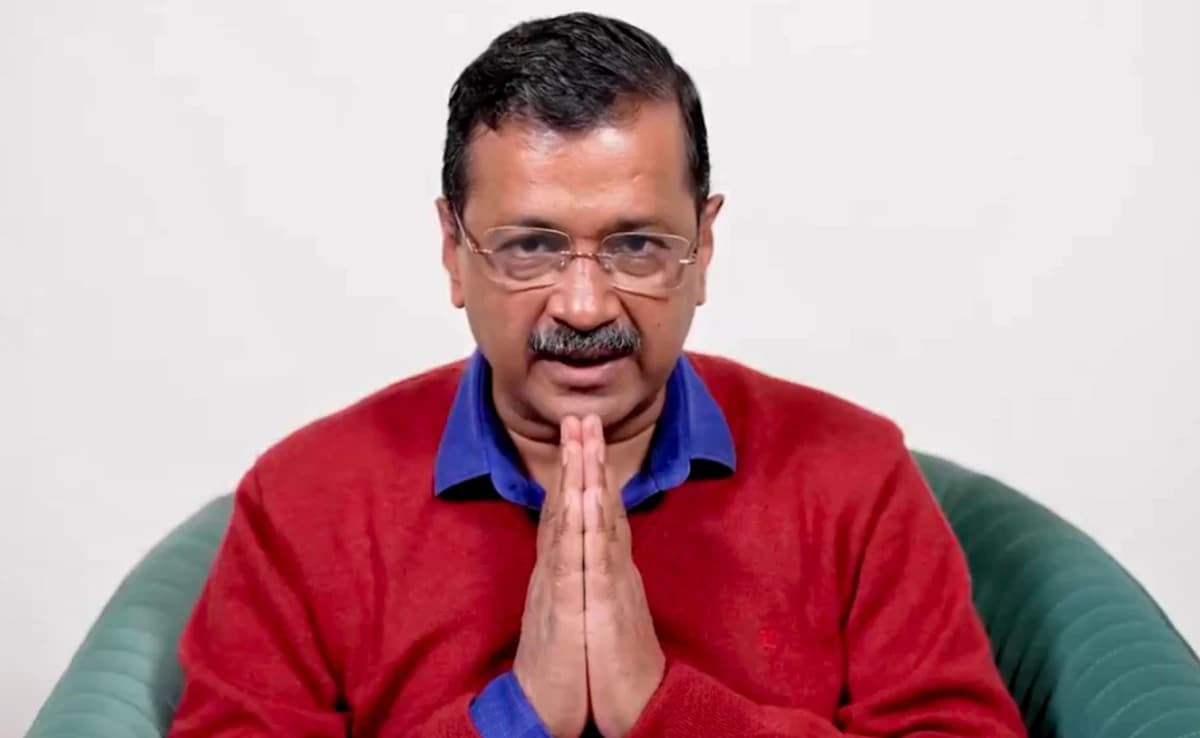
A fresh political confrontation over government education has emerged between the Aam Aadmi Party (AAP) and the Bharatiya Janata Party (BJP), with AAP national convenor Arvind Kejriwal challenging the BJP to conduct a direct comparison of government schools in Gujarat and Punjab.
Kejriwal has proposed that 1,000 government schools from each state be selected and inspected together, with the exercise conducted transparently and witnessed by the media. The challenge is aimed at testing claims about the quality of government education infrastructure in the two states and comes amid an increasingly political debate over the performance of public schools.
In a video message, Kejriwal said he was prepared to provide a list of 1,000 schools in Punjab and asked the BJP to identify an equivalent number of government schools in Gujarat. He proposed that representatives from both sides visit the institutions together and assess their condition.
Kejriwal argued that such a comparison would provide a more meaningful assessment than political allegations or isolated videos circulated on social media.
Kejriwal Highlights Punjab’s Education Transformation
The AAP leader defended the Punjab government’s record on school education and claimed that substantial improvements had been made since the party came to power in the state in 2022.
According to Kejriwal, Punjab has around 19,700 schools, and significant work has already been completed across approximately 19,200 of them. He said improvement work was continuing in the remaining schools and claimed that these institutions would also be upgraded over the next one-and-a-half to two years.
Kejriwal attributed the claimed transformation not only to the state government but also to teachers, principals, parents and students. He maintained that improvements in government schools require collective participation and cannot be achieved through government spending alone.
He also referred to Punjab’s earlier position in national assessments of school education, claiming that the state had been ranked near the bottom before the AAP government took office. He presented the subsequent changes as evidence of what he described as a significant turnaround in public education.
Attack on BJP Over Criticism of Punjab Schools
Kejriwal accused BJP-ruled states of concentrating on criticism of Punjab’s government schools instead of addressing shortcomings within their own education systems.
He also alleged that misleading or manipulated artificial-intelligence-generated videos were being used to portray Punjab’s schools negatively. The allegation adds another dimension to the political dispute, as both major political formations increasingly use digital platforms to showcase their governance records and challenge their opponents’ claims.
The AAP leader’s proposed school-to-school comparison is therefore not simply an administrative exercise but also a political challenge intended to put education performance at the centre of the debate.
Rather than relying on individual examples, Kejriwal’s proposal calls for a larger comparison involving 2,000 government schools across the two states. Such an exercise, if undertaken, could potentially bring issues such as classroom infrastructure, sanitation, laboratories, libraries, teacher availability and other facilities into sharper public focus.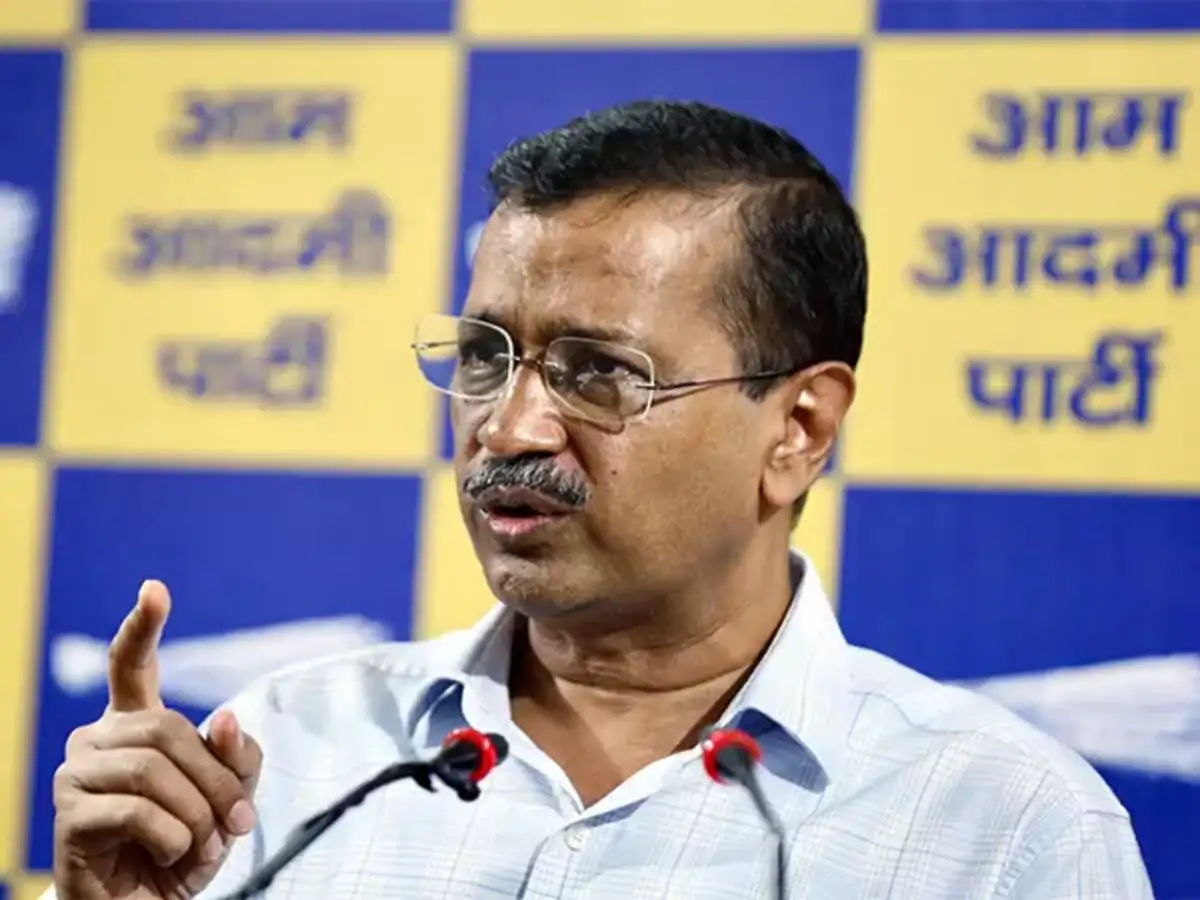
Gujarat Becomes the Focus of AAP’s Challenge
Gujarat has particular political significance for the AAP, which has attempted to expand its presence in the state by highlighting governance issues and public services.
Kejriwal contrasted the BJP’s long period of governance in Gujarat with the relatively shorter period during which the AAP has governed Punjab. He argued that the length of time a political party has been in power should be considered when evaluating the condition of public institutions.
The proposed comparison therefore seeks to frame the debate around measurable outcomes rather than political claims. By asking for 1,000 schools from each state to be inspected, Kejriwal is effectively challenging the BJP to allow the condition of government schools to be examined side by side.
The BJP’s response to the challenge, and whether the proposed comparison is accepted, could determine whether the dispute develops into a broader political debate over education governance.
Education as a Political Battleground
Government school infrastructure has increasingly become an important issue in political campaigns across India. Political parties frequently use improvements in classrooms, digital facilities, laboratories, libraries and other public-school infrastructure to demonstrate their administrative performance.
For the AAP, education has been one of the central areas through which it has sought to build its governance narrative. Punjab’s government schools have consequently become an important part of the party’s argument that improvements in public services can be achieved through focused government intervention.
The BJP, meanwhile, remains the dominant political force in Gujarat, making the state a natural target for comparison by opposition parties seeking to challenge its governance record.
Kejriwal’s latest statement places the condition of government schools directly at the centre of this political contest. His challenge also shifts the discussion from broad claims about education policy to the physical and functional condition of individual institutions.
A Test of Governance Claims
A genuine comparison of 1,000 schools in Gujarat and Punjab could involve a range of indicators, including buildings and classrooms, drinking water and sanitation facilities, libraries, laboratories, sports infrastructure, technology, teacher availability and student services.
Such an assessment would need clearly defined criteria and an independent methodology to ensure that the comparison is credible. Without common standards, political representatives from either side could interpret the findings differently.
For now, however, Kejriwal’s proposal remains a political challenge. His message seeks to place the BJP in a position where it must either accept a direct comparison or respond to the claims being made about Gujarat’s government schools.
The controversy also highlights the broader importance of education in Indian politics. While political parties regularly debate economic development, infrastructure and welfare schemes, the quality of government schools directly affects millions of students and families.
Kejriwal’s challenge has consequently turned a political exchange between the AAP and BJP into a debate over how government performance in education should be measured. Whether the proposed 1,000-school comparison takes place remains to be seen, but the issue is likely to remain part of the political conversation surrounding public education and governance in Gujarat and Punjab.
The claims regarding school improvements and rankings mentioned above are attributed to Arvind Kejriwal and represent his political assertions.