
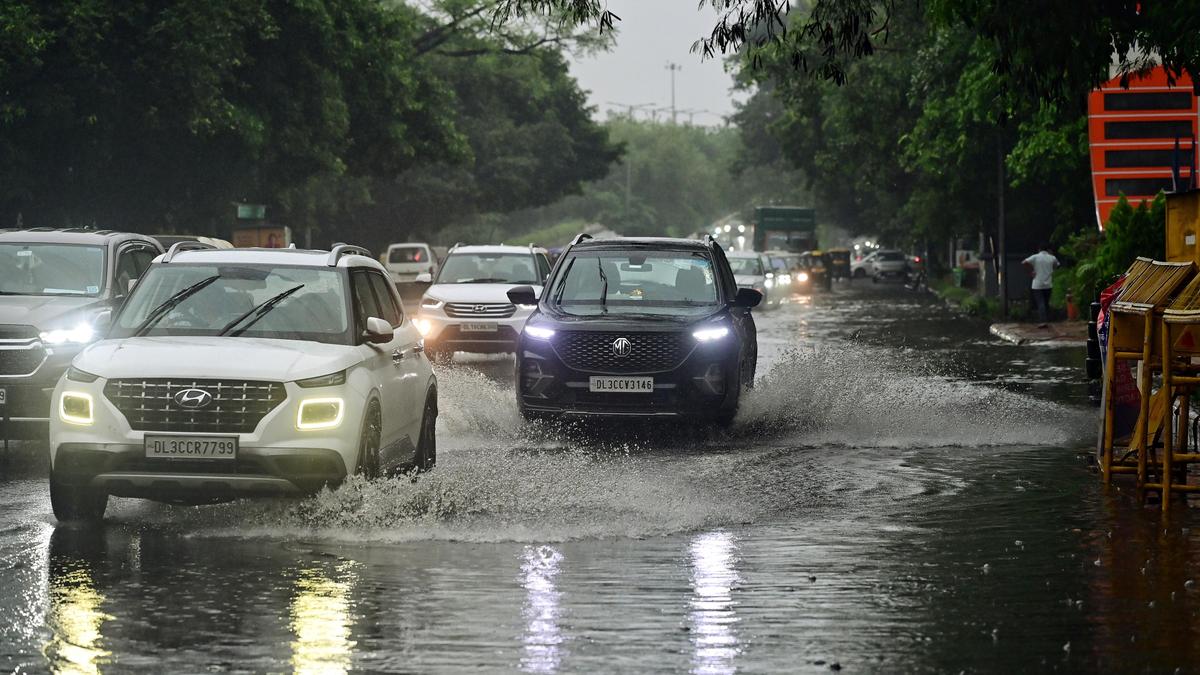
Heavy rainfall lashed Delhi on Tuesday, August 25, causing widespread waterlogging, disrupting traffic movement and creating difficulties for commuters across several parts of the national capital. The downpour came a day after intense showers had already affected Delhi-NCR, leaving several roads and low-lying areas flooded.
The latest spell of rain resulted in water accumulation on major roads, residential stretches and important junctions. Vehicles were forced to move slowly through flooded roads, while commuters faced prolonged delays as traffic congestion intensified across the city.
The weather conditions also prompted authorities to remain on alert, with the India Meteorological Department warning of further heavy rainfall, thunderstorms and lightning in Delhi and surrounding areas.
Several Parts of Delhi Waterlogged
Waterlogging was reported from a number of prominent locations, including Ashoka Road, Raisina Road, Parliament Street, Baba Kharak Singh Marg and areas around Connaught Place.
Important stretches near major institutions were also affected. Water accumulated around the Supreme Court and the All India Institute of Medical Sciences, while the AIIMS flyover area witnessed significant waterlogging. The situation made movement difficult for both motorists and pedestrians.
Other locations affected by the rainfall included ITO, Moti Bagh, Kamla Nagar, Karol Bagh, RK Puram and Ferozeshah Road.
The accumulation of rainwater on busy roads created bottlenecks at several points, with commuters reporting slow-moving traffic and extended travel times.
Several Areas Receive Around 100 mm Rain
The intensity of the rainfall was reflected in weather department data. During the 24-hour period ending at 8:30 a.m. on Tuesday, Ayanagar recorded 101.9 mm of rainfall, while the Ridge recorded 100.4 mm.
Safdarjung, which serves as one of Delhi’s key weather monitoring stations, recorded 99.1 mm of rain during the same period. Lodi Road received 98.3 mm, while Palam recorded 68 mm until 8 a.m.
The heavy precipitation within a relatively short period placed additional pressure on the city’s drainage infrastructure, particularly in areas that are prone to water accumulation during intense monsoon showers.
Traffic Disrupted Across the Capital
The rainfall severely affected traffic movement on several major routes. Waterlogged stretches forced motorists to reduce their speed, while congestion built up around important intersections and arterial roads.
The disruption followed another difficult day for commuters on Monday, when heavy rain caused extensive waterlogging in several parts of Delhi and the wider NCR.
Areas including Mathura Road, Bhairon Marg, ITO, Connaught Place and the Zakhira underpass were among those affected during the earlier spell. Parts of Sangam Vihar and Sadar Bazar also experienced severe water accumulation, with residents and pedestrians struggling to move through flooded streets.
The repeated disruption has added to concerns about the ability of Delhi’s drainage and road infrastructure to cope with intense rainfall events.
Rain Brings Drop in Temperatures
Although the heavy rain disrupted normal life, it also brought a noticeable fall in temperatures across the capital.
Safdarjung recorded a minimum temperature of 23.5 degrees Celsius, around 2.9 degrees below normal. Palam recorded a minimum of 21.8 degrees Celsius, while the Ridge recorded 20.8 degrees Celsius.
The cooler conditions provided some relief from the heat and humidity experienced during the monsoon season. However, the benefits of lower temperatures were accompanied by significant inconvenience caused by flooded roads and traffic congestion.
Weather Department Warns of More Rain
The weather department warned that Delhi could receive additional heavy rainfall, accompanied by thunderstorms, lightning and gusty winds.
The continuing weather system meant that residents and commuters remained vulnerable to further waterlogging, particularly in low-lying areas and locations where drainage is slow.
Authorities and emergency teams were expected to monitor vulnerable stretches and respond to water accumulation and traffic-related problems as the rainfall continued.
Delhi’s Monsoon Infrastructure Faces Another Test
The latest rainfall has once again highlighted the recurring challenges faced by Delhi during periods of intense monsoon activity. While seasonal rain is essential for replenishing water resources and bringing relief from high temperatures, concentrated heavy showers can quickly overwhelm drainage systems.
Waterlogging on major roads can affect more than just private vehicles. Public transport, emergency services, commercial activity and pedestrian movement can also be disrupted when important routes become difficult to navigate.
The repeated flooding of several locations during successive spells of heavy rain has also renewed attention on the need for better drainage capacity, regular cleaning of stormwater channels and effective monsoon preparedness.
Commuters Advised to Remain Cautious
With more rain forecast, commuters may continue to face difficult road conditions across Delhi and neighbouring parts of the National Capital Region. Reduced visibility, slippery roads, standing water and traffic congestion could further complicate travel.
Residents in waterlogging-prone areas are likely to remain particularly vulnerable if another intense spell occurs before accumulated water is cleared.
The latest rainfall therefore presents a familiar challenge for the national capital: while the showers provide much-needed relief from heat, intense precipitation can rapidly disrupt everyday life and expose weaknesses in urban infrastructure.