
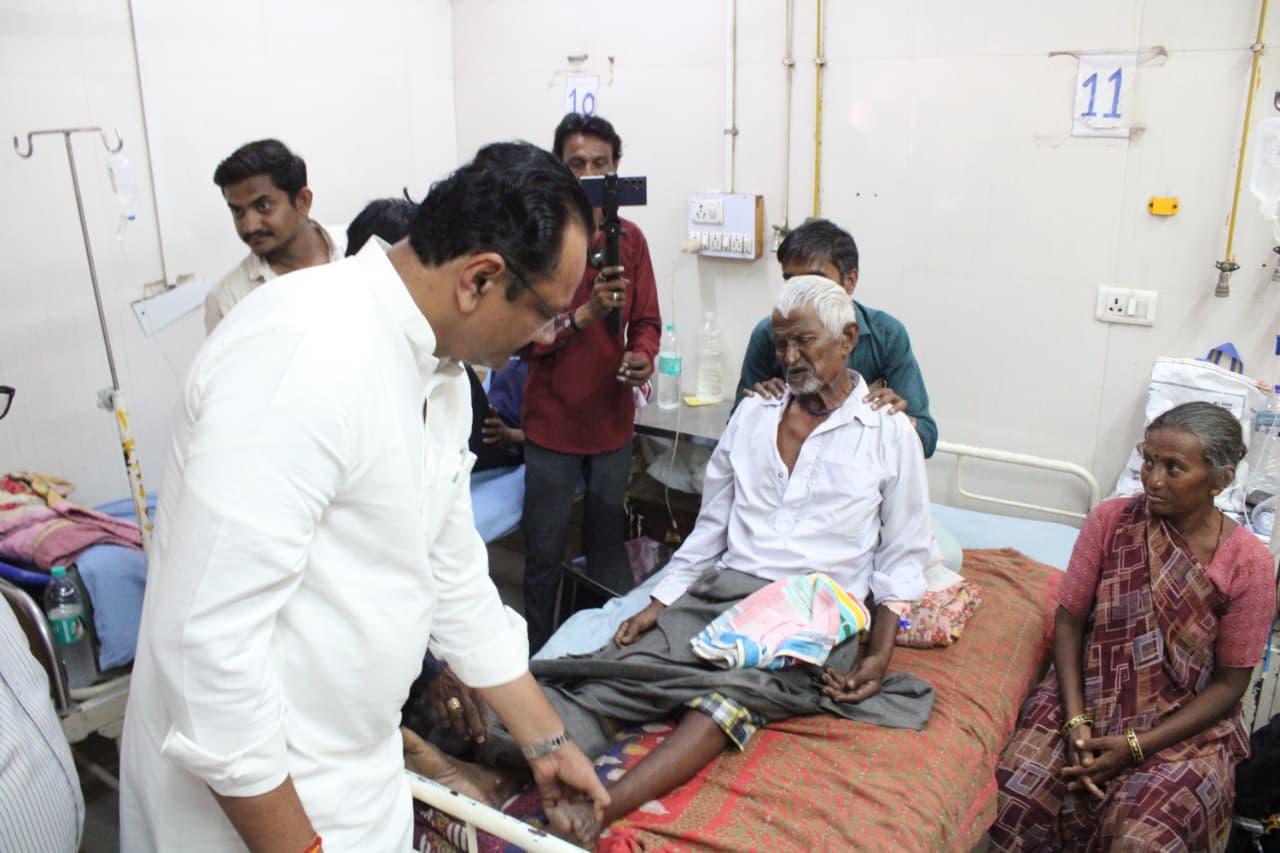
The death toll in the spurious liquor tragedy in Gujarat’s Bhavnagar district has risen to 11, with three more people succumbing to the effects of suspected toxic alcohol, police said on Saturday. The incident has triggered an intensified investigation into the manufacture and distribution of illicit liquor and raised serious questions about enforcement failures in the dry state.
According to officials, a total of 61 people have been affected in the incident. Several victims required medical treatment after consuming the suspected spurious liquor, while authorities continued efforts to identify everyone who may have consumed the contaminated substance and assess their condition.
Among the latest fatalities were Avinashbhai Kantibhai Parmar, 45, from Dabgar village; Hardik Hareshbhai Kilji, 35, from Bhavnagar city; and Sanjaybhai Laxmanbhai Dodia from Pingli village in Talaja taluka. Dodia died while undergoing treatment at a private hospital in Surat.
The deaths have occurred over several days as the health condition of victims deteriorated following consumption of the suspected illicit liquor. Earlier fatalities included people from Ghogha, Palitana, Bhavnagar city and other areas of the district.
Police investigation intensifies
The investigation has widened considerably, with police registering cases against 21 accused persons and making 14 arrests so far. One of the key accused, identified as Raees, was arrested on Friday and subsequently remanded in police custody for nine days.
The first information report alleges that Raees, along with Gautam Virambhai Solanki, 24, from Vartej, and another accused identified as Zuber from Ujjain, travelled to Ahmedabad to obtain methanol, bottles, caps and labels used for liquor packaging.
Investigators allege that the group subsequently prepared spurious liquor at Solanki’s residence. The first batch reportedly consisted of about 51 cases, which were allegedly sold before a second batch was destroyed.
The FIR further alleges that Raees later brought Narendra Singh Yadav, a resident of Morena in Madhya Pradesh, to Gujarat because of his alleged expertise in preparing illicit liquor. A subsequent batch of approximately 25 cases was allegedly manufactured and supplied to bootleggers and consumers in Bhavnagar.
Yadav himself became a victim of the suspected toxic liquor. He was admitted to a Bhavnagar hospital after consuming the substance and died during treatment.
Methanol suspected in toxic liquor
Methanol has emerged as a central focus of the investigation. Authorities have said that the suspected spurious liquor was prepared using methanol, a highly toxic substance that can cause severe poisoning when consumed.
Laboratory examination of a seized bottle reportedly found methanol concentration of 38.59 per cent, along with 0.94 per cent ethanol. Methanol was also detected in blood samples collected from victims.
The findings have strengthened investigators’ suspicion that methanol contamination was responsible for the deaths and illnesses. Authorities are examining the supply chain to determine how the chemical was obtained, transported and ultimately used in the production of the illicit liquor.
The investigation is also expected to establish the exact roles of those involved in procuring the raw materials, preparing the liquor, packaging it and distributing it among consumers.
State Monitoring Cell takes over investigation
The Gujarat government has transferred the investigation to the State Monitoring Cell, a specialised police unit responsible for tackling organised illegal activities.
State government spokesperson and Agriculture Minister Jitu Vaghani said authorities had taken the decision after the seriousness of the incident became clear. The move is intended to strengthen coordination between different investigative teams and trace the wider network involved in the suspected illicit liquor trade.
Bhavnagar district police have formed 16 teams to investigate different aspects of the case. Officers have also searched locations connected with the suspected distribution network and removed substances believed to be linked to the incident.
Police are simultaneously working to identify people who may have consumed the suspected liquor but have not yet approached hospitals or authorities.
Officials said around 29 such people had been traced and that arrangements were being made for their medical examination and treatment. Authorities have stressed the importance of identifying potentially affected individuals quickly because methanol poisoning can cause serious complications and may become fatal without timely medical intervention.
Police personnel suspended over alleged negligence
The tragedy has also led to action against police personnel. Two police inspectors and five other members of the police force have been suspended following a preliminary inquiry that reportedly found negligence.
The disciplinary action has added another dimension to the investigation, with authorities examining whether lapses in policing or enforcement allowed the illegal liquor network to operate.
The suspensions indicate that investigators are not only focusing on the alleged manufacturers and distributors but are also examining whether there were failures in preventing the movement and sale of illicit liquor.
A wider challenge for Gujarat
The incident has renewed concerns about the illegal liquor trade in Gujarat, a state where prohibition laws restrict the manufacture, sale and consumption of alcohol.
Despite the prohibition framework, illicit liquor networks continue to pose a public safety challenge. The Bhavnagar tragedy illustrates the potentially fatal consequences when unregulated substances are produced and sold without quality controls.
Unlike legally manufactured alcoholic beverages, illicit liquor may contain dangerous chemicals or inappropriate concentrations of substances. Methanol contamination is particularly hazardous because it can lead to serious poisoning and death.
The latest tragedy therefore extends beyond the immediate criminal investigation. It has also raised questions about how illegal liquor networks obtain raw materials, how such products reach consumers and whether enforcement mechanisms are sufficiently effective to prevent dangerous substances from entering local markets.
Investigation continues
With 11 deaths confirmed and 61 people affected, investigators are now attempting to establish the full scale of the incident and identify every person involved in the suspected supply chain.
Police are examining the procurement of methanol and other materials, the locations where the liquor was allegedly prepared, the movement of the finished product and its distribution among consumers.
The arrests made so far are expected to help investigators reconstruct the network and determine whether the accused were operating independently or as part of a larger organised group.
Authorities are also expected to continue monitoring people who may have consumed the suspected liquor, while forensic and medical evidence will remain important in establishing the precise cause of death and illness.
The rising death toll has turned the Bhavnagar incident into a major public safety and law-enforcement concern. With the investigation now under the State Monitoring Cell and multiple police teams working on the case, authorities face the task of tracing the entire illicit liquor chain while determining whether enforcement lapses contributed to the tragedy.