
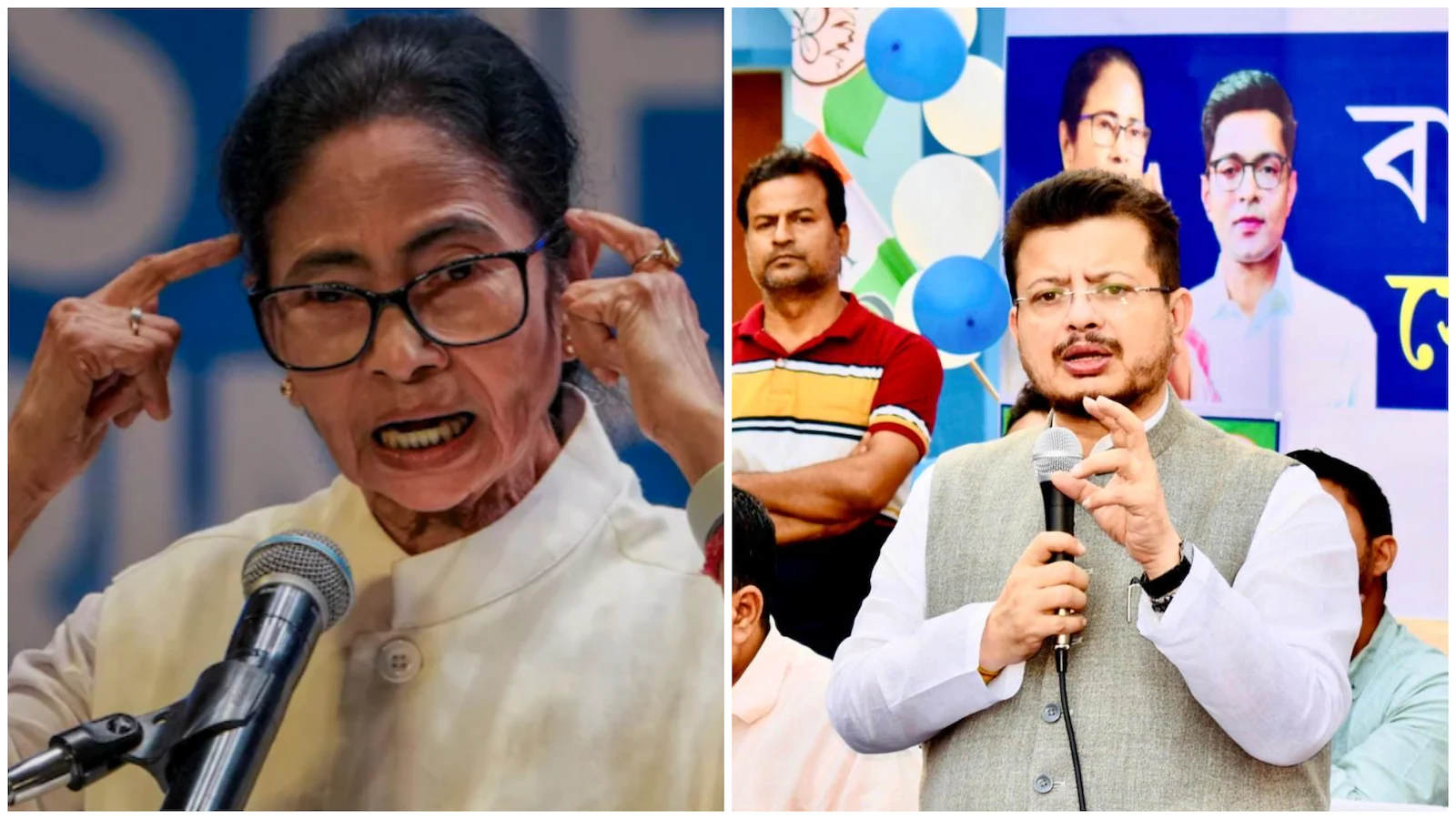
The political crisis within the Trinamool Congress (TMC) has deepened, with rebel lawmakers in West Bengal and Parliament still waiting for formal recognition of their new political alignments. Two separate groups of TMC dissidents have moved away from the leadership associated with Mamata Banerjee, creating a complex legal and political situation that now involves the Lok Sabha Speaker, party recognition and the interpretation of parliamentary rules.
In West Bengal, a large group of rebel legislators is seeking recognition as a separate political grouping under the leadership of Ritabrata Banerjee. At the national level, a group of around 20 TMC MPs has sought to move away from the party and merge with the Nationalist Citizens Party of India (NCPI), an organisation that supports the National Democratic Alliance (NDA).
The developments have placed the TMC’s internal dispute at the centre of a wider political contest, with the final decisions potentially affecting the balance of power in Parliament as well as the status of the rebel lawmakers.
Rebel MPs Await Decision From Lok Sabha Speaker
The rebel MPs have formally approached Lok Sabha Speaker Om Birla seeking recognition of their proposed merger with NCPI. Nineteen MPs submitted a petition on June 14, while TMC MP Rachana Banerjee submitted a similar communication the following day.
The proposed merger has not yet received formal approval. During the Monsoon Session, however, the rebel MPs were given separate seating arrangements in the Lok Sabha, signalling that the Speaker’s office was considering their request while the formal process continued.
Kakoli Ghosh Dastidar, one of the principal faces of the rebel group, said the Speaker’s office had requested additional documentation relating to NCPI. The documents reportedly included information concerning the party’s registration with the Election Commission, its organisational structure and its record in previous elections.
The rebel group has said that the required documents have now been submitted and that it expects the Speaker’s office to take a decision after examining the material.
The issue is therefore no longer simply an internal dispute within the TMC. It has developed into a question of parliamentary recognition, party status and the legal consequences of lawmakers changing their political affiliation.
Kakoli Ghosh Dastidar Emerges as Key Figure
Kakoli Ghosh Dastidar has emerged as one of the most prominent leaders of the parliamentary rebellion. The Barasat MP, who has been associated with the TMC for many years, is now playing a leading role in the group’s effort to establish a separate identity in Parliament.
The rebel MPs argue that their proposed move to NCPI provides a political and organisational framework for their departure from the TMC. Their request, however, requires scrutiny under parliamentary procedures and the applicable anti-defection framework.
The group is therefore waiting for the Speaker’s decision before its position inside the Lok Sabha can be considered formally settled.
The delay has added another layer of uncertainty to an already volatile political situation. Until the proposed merger is formally recognised, questions remain over the precise parliamentary status of the dissident MPs and the extent to which they can function independently of the TMC.
TMC’s Crisis Extends Beyond Parliament
The rebellion in the Lok Sabha is part of a broader crisis that has affected the TMC’s organisation in West Bengal.
A separate group of rebel legislators in the state Assembly has sought recognition under Ritabrata Banerjee. The group claims the support of a substantial majority of TMC legislators and is seeking to establish itself as the principal opposition formation in the state legislature.
This development has created an unusual situation in which competing groups are claiming legitimacy while seeking official recognition from constitutional authorities.
Ritabrata Banerjee, who leads the rebel legislators, has argued for recognition of his faction as the TMC in the West Bengal Assembly. The dispute therefore involves not only the question of defections but also the identity and institutional status of the party’s competing factions.
The parliamentary rebellion led by the group of MPs is occurring alongside this Assembly-level confrontation, making the crisis considerably more complicated than a conventional party split.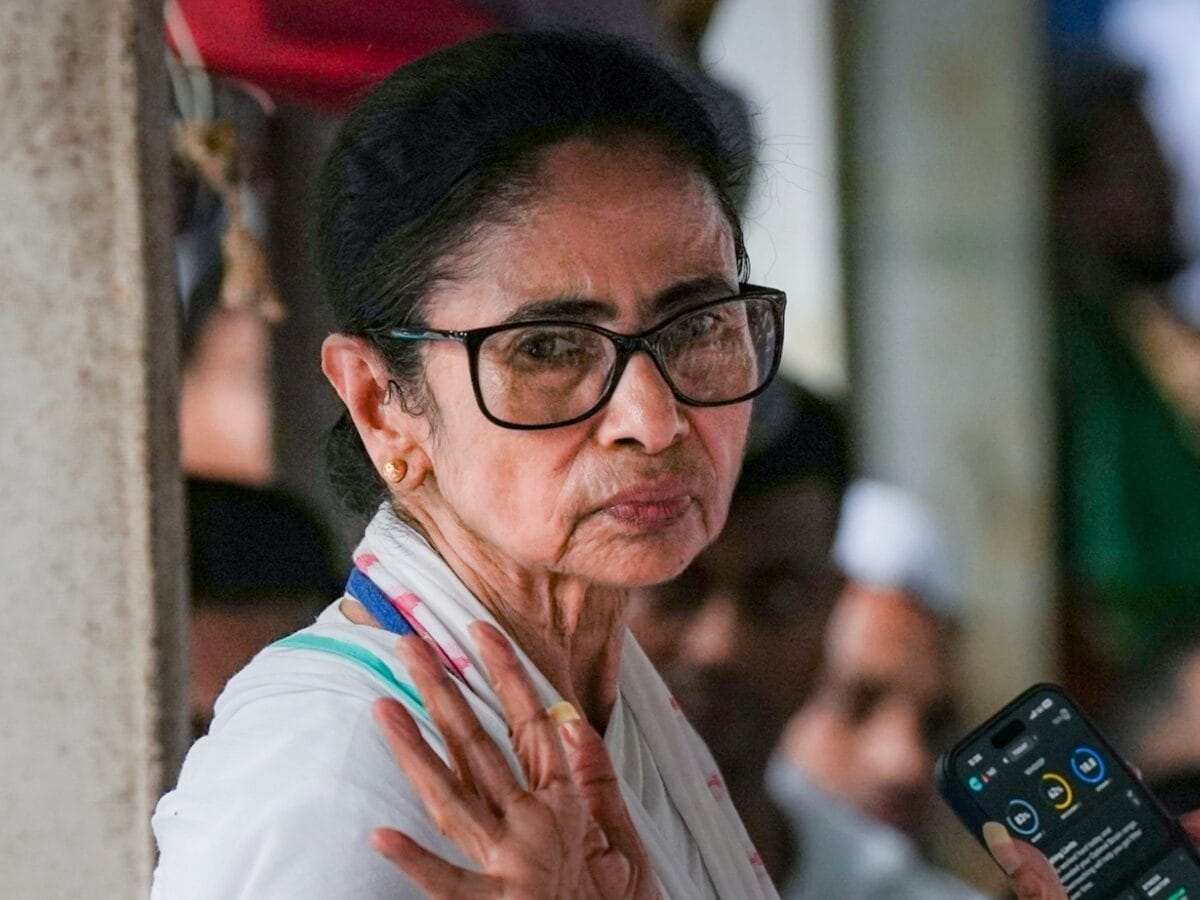
Why the Speaker’s Decision Matters
The decision of the Lok Sabha Speaker is important because recognition of a political merger can have significant consequences for the rebel MPs.
Under India’s anti-defection framework, lawmakers who voluntarily give up membership of their political party can face disqualification, although the law contains provisions relating to mergers when the prescribed conditions are fulfilled.
Consequently, the rebels’ proposed merger with another political party is being closely watched because its formal recognition could determine whether they continue to retain their seats without facing disqualification proceedings.
The Speaker’s office has therefore sought documentation before reaching a decision. The verification process is expected to examine the legal and organisational status of NCPI and the circumstances surrounding the proposed merger.
The issue is particularly sensitive because parliamentary recognition can affect not only individual MPs but also the numerical strength of political groups inside the House.
Shiv Sena Case Adds Another Complication
The situation has also been complicated by a separate legal dispute involving the Shiv Sena.
A case concerning the recognition of the Eknath Shinde-led Shiv Sena faction is pending before the Supreme Court following a challenge by the Uddhav Thackeray-led Shiv Sena (UBT). The outcome and broader legal implications of that dispute could have a bearing on how similar questions of party recognition and mergers are viewed.
The Lok Sabha Speaker had previously permitted six former Shiv Sena (UBT) MPs to merge with the Shinde-led faction. The development has consequently become an important point of reference as the authorities consider the TMC rebels’ request.
Officials are examining the wider constitutional and procedural implications before determining how the NCPI merger request should be handled.
Political Stakes for the NDA
The rebellion also carries wider implications for parliamentary arithmetic.
If the rebel TMC MPs are formally recognised as a separate group and subsequently support the NDA, the ruling alliance could strengthen its position in the Lok Sabha. However, even with the support of nearly 20 rebel TMC MPs, the NDA would remain short of the two-thirds majority required for certain constitutional amendments.
The significance of the rebels therefore extends beyond their individual political futures. Their eventual alignment could influence voting patterns, the government’s ability to secure support on important legislation and the broader balance between the ruling alliance and opposition parties.
The developments in West Bengal could also have implications for the state’s political landscape, particularly after the TMC’s electoral setbacks and the subsequent internal disagreements.
A Leadership Crisis for the TMC
For the TMC, the rebellion represents a serious organisational challenge. The party has traditionally operated around a strong central leadership structure, with Mamata Banerjee serving as its dominant political figure.
The emergence of rival groups claiming legitimacy within both the Assembly and Parliament challenges that established structure.
The rebels’ actions also indicate that the dispute is no longer confined to individual leaders or isolated disagreements. Instead, it has developed into a broader confrontation over political identity, institutional recognition and control of the party’s legislative strength.
The parliamentary faction’s decision to seek a merger with NCPI further demonstrates the extent to which the dissidents are attempting to create a formal alternative rather than simply operate as an internal opposition group.
What Happens Next
The immediate focus remains on the Lok Sabha Speaker’s decision regarding the proposed NCPI merger.
The rebel MPs have already submitted the additional documents requested by the Speaker’s office and are now waiting for the process to conclude. A favourable decision could provide the group with a formal parliamentary identity, while a rejection or prolonged delay could leave the MPs facing continued uncertainty over their status.
At the same time, the political dispute involving the rebel legislators in West Bengal remains unresolved.
The final outcome could depend on a combination of parliamentary procedure, anti-defection provisions, party recognition rules and ongoing judicial proceedings involving similar questions of political mergers.
For the TMC, the crisis represents one of the most significant tests of its organisational unity in recent years. For Parliament, it raises broader questions about how political defections and mergers should be handled when competing factions claim legitimacy.
Until the relevant authorities make definitive decisions, both the rebel MPs and the rival factions in West Bengal are likely to remain in a state of political and legal uncertainty.