
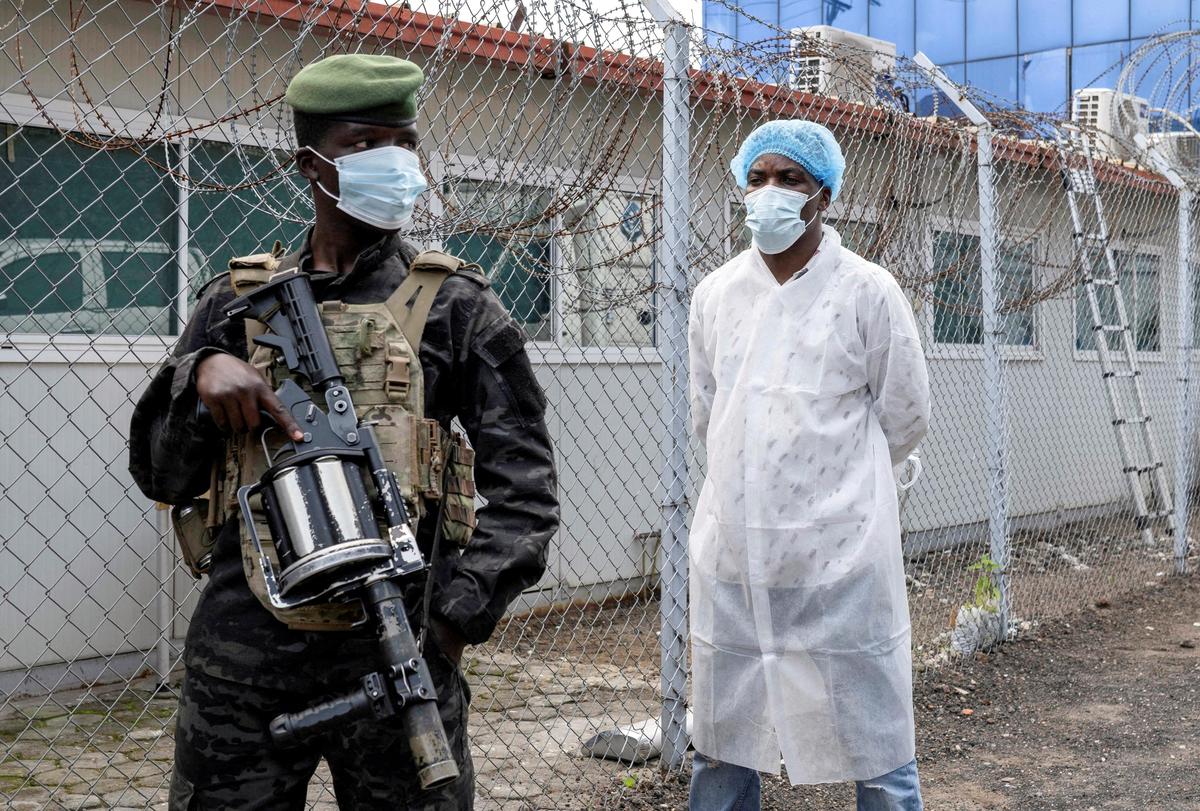
More than 16,000 doses of the Ervebo Ebola vaccine have arrived in the Democratic Republic of Congo (DRC), providing an important boost to efforts to contain an outbreak that has become the country’s deadliest Ebola epidemic on record.
A shipment containing 16,250 doses was delivered by air to Kinshasa late Friday as health authorities and international agencies intensify their response to the rapidly spreading disease. The arrival comes at a critical moment, with the outbreak continuing to claim lives at an alarming rate and putting severe pressure on an already fragile healthcare system.
The current epidemic is the DRC’s 17th Ebola outbreak. It was officially declared on May 15, although health officials believe the virus had been circulating for several weeks before the outbreak was formally recognised.
According to the latest figures released by Congolese authorities, the outbreak has resulted in 5,290 confirmed cases and 2,516 deaths. The scale of the fatalities has surpassed the toll from the country’s previous deadliest Ebola outbreak, which occurred between 2018 and 2020.
The outbreak has been particularly severe in parts of northern and eastern DRC, areas that face long-standing challenges including limited healthcare infrastructure, weak state presence and insecurity caused by armed groups. These conditions have made disease surveillance, patient treatment, vaccination and community outreach considerably more difficult.
Vaccine Shipment Arrives as Health Emergency Escalates
The latest shipment forms part of a larger allocation of 70,000 doses of Ervebo being made available to the DRC.
Health authorities plan to use 50,000 of those doses for frontline personnel and healthcare workers who are at particularly high risk of exposure to the virus. Another 20,000 doses have been designated for a clinical trial designed to determine whether the vaccine can provide protection against the strain responsible for the current outbreak.
The vaccine, developed by Merck, has previously been used extensively during Ebola responses, including during the major 2018-2020 outbreak in the DRC. Its arrival therefore gives authorities an established tool that can be rapidly incorporated into emergency vaccination operations.
However, the current situation presents a significant scientific challenge.
Current Outbreak Linked to Different Ebola Strain
Ervebo is approved for protection against the Zaire species of Ebola virus. The current outbreak, however, is being driven by the Bundibugyo strain.
This distinction is important because scientists have not yet established whether Ervebo can reliably protect humans against the Bundibugyo strain. While laboratory and animal studies have produced early indications that the vaccine could provide some degree of cross-protection, definitive evidence from human trials is still lacking.
The uncertainty has led vaccine experts to recommend a large-scale human study of Ervebo during the present outbreak.
The planned trial could provide crucial evidence about whether the vaccine can reduce infections, severe illness and deaths caused by the Bundibugyo strain. Such findings could have implications not only for the current emergency in the DRC but also for future outbreaks involving the same strain.
Frontline Workers Among Priority Groups
Healthcare and frontline workers are expected to be among the principal recipients of the available vaccine doses.
Workers involved in treating suspected and confirmed Ebola patients face a particularly high risk because the virus can spread through contact with infected bodily fluids. Medical staff, caregivers and other response personnel therefore require strong protective measures, including appropriate protective equipment, infection-control procedures and vaccination where recommended.
The allocation of vaccines to frontline workers is also intended to help maintain the functioning of health services during the outbreak. Losing medical personnel to infection can further weaken already overstretched facilities and make it harder to provide treatment and conduct contact tracing.
The vaccination campaign is consequently being viewed as one component of a broader response involving surveillance, infection prevention, treatment, community engagement and public-health education.
Conflict and Weak Healthcare Infrastructure Complicate Response
The outbreak is unfolding in regions where healthcare access is already limited.
Parts of eastern and northern DRC have experienced years of instability and the presence of numerous armed groups. Insecurity can restrict the movement of healthcare teams, delay the transportation of medical supplies and make it difficult for authorities to identify cases quickly.
The country’s large geographical size adds another layer of difficulty. Reaching remote communities requires considerable logistical planning, while shortages of healthcare facilities and trained personnel can delay diagnosis and treatment.
Public trust is another major concern.
Health officials have reported difficulties encouraging communities to seek treatment early. Some patients remain at home because families may initially mistake Ebola symptoms for other illnesses or fear treatment centres. Delays in seeking medical care increase the risk of transmission within households and communities and can reduce the chances of survival.
UN Warns Outbreak Is Growing Exponentially
The latest vaccine shipment comes amid increasingly serious warnings about the trajectory of the outbreak.
UN officials have described the Ebola epidemic as growing exponentially, underscoring the urgency of expanding the response. The latest death toll of 2,516 among 5,290 confirmed cases demonstrates the severity of the crisis.
The current outbreak has already exceeded the death toll recorded during the DRC’s 2018-2020 Ebola epidemic, previously regarded as the country’s most devastating. That earlier outbreak killed 2,299 people from 3,381 confirmed cases.
The figures highlight the scale of the present emergency and the need for rapid action to prevent further spread.
Clinical Trial Could Provide Critical Vaccine Evidence
The decision to allocate 20,000 doses for a clinical trial reflects the scientific uncertainty surrounding Ervebo’s effectiveness against Bundibugyo Ebola.
Researchers need human data to establish whether vaccination can provide meaningful protection against the strain. Conducting the trial during an active outbreak could allow scientists to collect evidence under real-world conditions while simultaneously supporting the broader public-health response.
The study could become particularly important because there is currently no specifically approved vaccine designed for the Bundibugyo strain responsible for the current surge.
If Ervebo demonstrates cross-protection, it could offer health authorities another valuable option when responding to future outbreaks involving the strain. If protection is limited, the findings would nevertheless help researchers understand the limitations of existing Ebola vaccines and guide the development of more targeted interventions.
Urgent Need for Coordinated Response
The arrival of the first major batch of vaccine doses marks an important development, but vaccination alone is unlikely to bring the outbreak under control.
Health authorities will need to combine immunisation with rapid identification of cases, isolation and treatment, contact tracing, infection-control measures and sustained engagement with affected communities.
The effectiveness of the response will also depend on maintaining access to affected areas and ensuring that medical teams can safely reach communities where transmission is occurring.
For the DRC, the immediate priority is to slow transmission and prevent additional deaths. At the same time, the vaccine trial could help answer a crucial scientific question about whether an existing Ebola vaccine can offer protection against a strain for which no specific vaccine has yet been established.
With thousands of confirmed infections and deaths already recorded, the arrival of 16,250 Ervebo doses provides an important addition to the response effort. But the rapidly escalating outbreak means health authorities face a race against time to deploy available resources, protect frontline workers and establish whether the vaccine can help contain the crisis.