
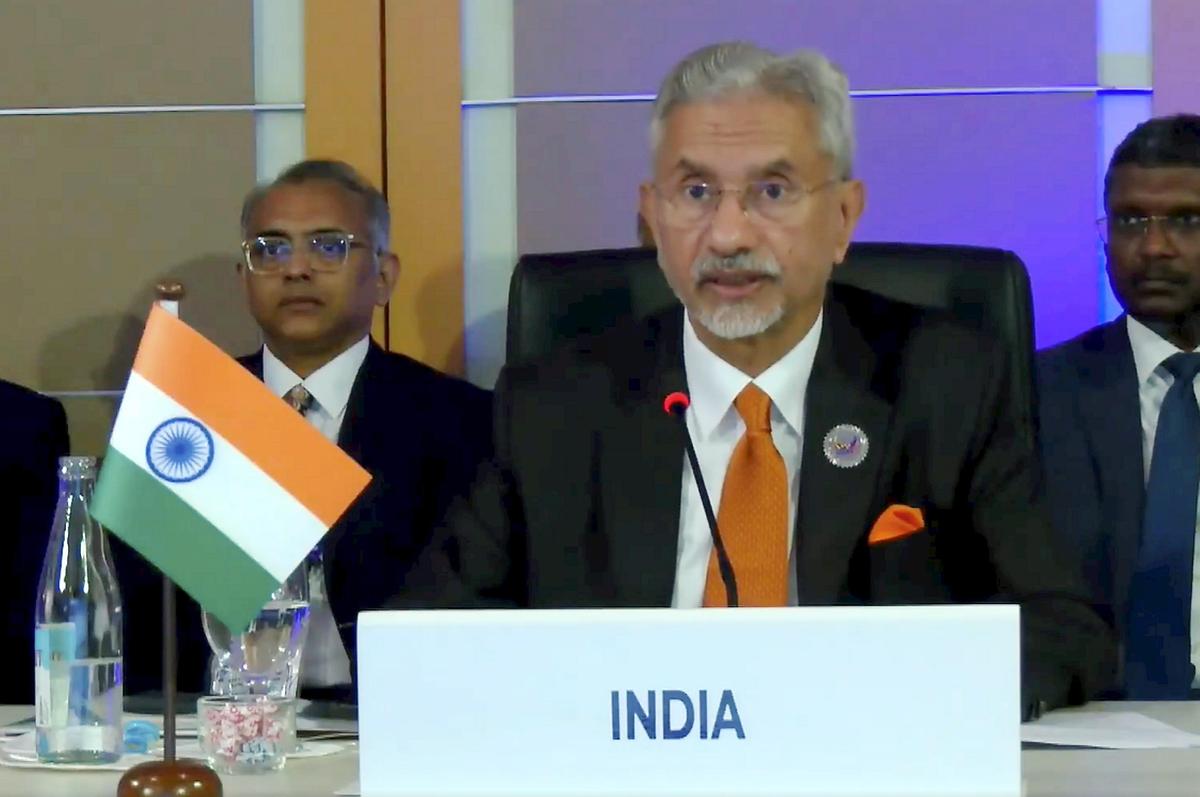
External Affairs Minister S. Jaishankar is scheduled to undertake a two-day official visit to Russia on August 23 and 24, 2026, in a diplomatic engagement expected to focus on strengthening India-Russia cooperation across trade, investment, science, technology and other areas of mutual interest.
During the visit, Jaishankar will co-chair the 27th session of the India-Russia Inter-Governmental Commission on Trade, Economic, Scientific, Technological and Cultural Cooperation. The high-level meeting is regarded as an important institutional mechanism for reviewing existing bilateral initiatives and identifying new areas of collaboration between the two countries.
Jaishankar’s visit comes at a time when India and Russia continue to maintain close diplomatic and strategic ties despite significant changes in the global geopolitical environment. The two countries have sustained engagement in several sectors, including energy, defence, trade, technology, transport and economic cooperation.
Jaishankar to co-chair India-Russia inter-governmental commission
The External Affairs Minister is travelling to Russia at the invitation of Russian First Deputy Prime Minister Denis Manturov. One of the principal engagements during the visit will be the 27th session of the India-Russia Inter-Governmental Commission.
The commission provides a structured platform for officials and policymakers from both countries to examine the progress of bilateral cooperation and discuss ways to expand economic and technological partnerships.
The discussions are expected to cover a broad range of areas, including trade and investment, scientific and technological cooperation, industrial partnerships and cultural exchanges. Strengthening economic ties is likely to remain a significant component of the talks as both sides seek to widen the scope of bilateral commerce.
The meeting also provides an opportunity to assess existing projects and examine potential new initiatives that could contribute to long-term economic cooperation.
Meeting with Russian Foreign Minister Sergey Lavrov
During his stay in Russia, Jaishankar is also expected to meet Russian Foreign Minister Sergey Lavrov. The two ministers are likely to exchange views on bilateral relations as well as important regional and international developments.
The Jaishankar-Lavrov engagement is significant because regular high-level communication remains an important feature of the India-Russia relationship. Their discussions are expected to provide an opportunity to review the overall state of bilateral ties and address issues requiring continued diplomatic coordination.
India and Russia have maintained regular ministerial-level consultations even as international circumstances have evolved considerably in recent years. Their diplomatic engagement has included discussions on economic cooperation, global security, regional developments and broader international affairs.
Focus on expanding economic cooperation
Economic relations are expected to receive particular attention during Jaishankar’s visit. India and Russia have been working to increase bilateral trade and explore mechanisms that can facilitate smoother commercial exchanges.
The inter-governmental commission is expected to examine opportunities for expanding cooperation in sectors such as industry, science, technology and investment. Greater diversification of trade and stronger business-to-business engagement could form part of the broader effort to make bilateral economic relations more balanced and sustainable.
The two sides are also expected to consider ways to improve connectivity and logistical arrangements that can support trade. Such discussions are increasingly important as India and Russia seek to strengthen economic links despite changes in international supply chains and geopolitical conditions.
India-Russia ties amid changing global dynamics
Jaishankar’s Moscow visit comes against the backdrop of a rapidly changing international environment. India has continued to pursue an independent foreign policy while maintaining strategic relationships with major global powers.
Russia remains an important partner for India in areas ranging from defence and energy to nuclear cooperation and strategic affairs. At the same time, New Delhi has expanded its engagement with countries and groupings across the world, including the United States, Europe, Japan and other Indo-Pacific partners.
The continued India-Russia dialogue therefore reflects New Delhi’s broader approach of maintaining multiple strategic partnerships while protecting its national interests.
The two countries have also remained in contact on major international developments, including the conflict in Ukraine and wider security issues. India has consistently emphasised dialogue and diplomacy as the preferred means of addressing international disputes.
Broader significance of Jaishankar’s Moscow visit
The visit is significant not only because of the formal meetings scheduled during the two-day trip but also because it provides an opportunity for both countries to assess the future direction of their longstanding partnership.
The India-Russia relationship has traditionally been supported by strong political and strategic ties. However, changing global economic conditions and evolving geopolitical alignments have created new challenges as well as opportunities.
For India, maintaining stable relations with Russia remains important for several strategic and economic reasons. At the same time, New Delhi is seeking greater diversification in trade, technology, energy supplies and international partnerships.
For Moscow, sustained engagement with India remains important as Russia seeks to strengthen economic and diplomatic relationships with major Asian powers.
Continued high-level diplomatic engagement
Jaishankar’s visit also underlines the importance both countries attach to regular political dialogue. High-level meetings provide an avenue for resolving practical issues, reviewing existing agreements and exploring new areas of cooperation.
The upcoming talks are expected to focus primarily on bilateral matters, while discussions with the Russian foreign minister are likely to include wider regional and global developments.
The outcome of the meetings could help determine priorities for the next phase of India-Russia economic and institutional cooperation. Greater collaboration in trade, technology, science and investment would also complement the longstanding strategic relationship between the two countries.
As Jaishankar heads to Moscow, attention will therefore remain focused on how India and Russia seek to deepen their economic partnership while continuing their broader diplomatic engagement in an increasingly complex international environment.