
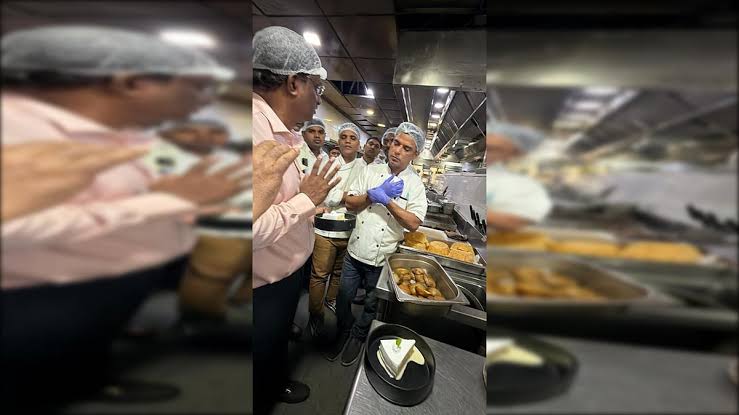
Food safety authorities in Bengaluru conducted an extensive inspection drive across hotels, restaurants and fast-food outlets between August 7 and 10, uncovering several violations related to food storage, hygiene, labelling and handling. More than 70 food samples have been sent for laboratory testing, while one prominent lounge bar kitchen was sealed after officials found large quantities of rotten meat and expired dairy products.
The three-day enforcement campaign covered around 60 establishments, including five-star and three-star hotels as well as major fast-food outlets across the city. Officials said the operation was undertaken as part of efforts to strengthen food safety standards and protect consumers from potential health risks.
Rotten meat and expired dairy products found
One of the most serious findings was reported at the kitchen of Skyye Lounge in UB City. Officials sealed the kitchen after discovering around 45 kg of chicken and beef that had reportedly deteriorated and was covered with fungal growth.
The inspection team also found about 6 kg of vegetable cutlets and 15 litres of used cooking oil at the premises. Milk and curd that had expired around 10 days earlier were also discovered and subsequently discarded.
The findings prompted authorities to take enforcement action and further examine food safety practices at the establishment.
More than 70 food samples sent for testing
As part of the inspection programme, officials collected more than 70 food samples for laboratory analysis. The samples included a wide range of products commonly used or served at restaurants and hotels, including chicken, meat, fish, bread, mayonnaise, cooking oil, curd, pulses, coriander, chutneys and marinated food items.
The laboratory examination is expected to establish whether the samples meet prescribed food safety standards and whether further action is required against establishments where violations were detected.
Multiple violations detected across establishments
Officials reported several categories of food safety violations during the inspections. These included improper labelling and misbranding of products, storage of expired food, inadequate storage of meat, fish and poultry, unhygienic food-handling practices and fungal growth in vegetables.
Authorities also reported cases where vegetarian and non-vegetarian food items were not adequately segregated, raising concerns about cross-contamination and hygiene.
The inspection drive resulted in the seizure or disposal of substantial quantities of food products. Officials reported the seizure of approximately 640 kg of mutton, chicken and fish, along with 276 kg of rotten or mould-affected vegetables. In addition, 45 litres of expired milk and curd, 67 kg of cereals and other food products, 12 kg of bakery products and 49 litres of used cooking oil were seized or discarded.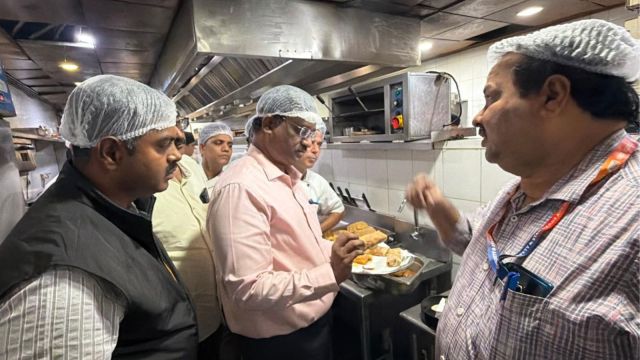
Action against food businesses
The inspections also uncovered concerns involving product shelf-life declarations. According to officials, some products carried shelf-life declarations extending up to two years, despite applicable requirements providing for a one-year shelf life.
Authorities also found imported products that had subsequently been repacked, along with deficiencies in fish labelling and problems involving food preparation and storage conditions.
At several establishments, officials disposed of food items considered expired or unfit for consumption. Royal Chain Hotel, for instance, had 50 kg of duck meat and 5 kg of fish discarded. Madras Kitchen was found with 5 kg of expired green peas, while officials at Tescon Hotel identified 5 kg of mushrooms considered unsuitable for use.
At Senchez Hotel, around 3 kg of fish was seized, while 7 kg of cooked food, including cake, potatoes and tacos, was discarded.
The department’s itemised figures for five establishments amounted to 126 kg, compared with an overall tally of 132 kg reported for that portion of the operation.
Several prominent hotels inspected
The inspection campaign also covered a number of well-known hotels in Bengaluru.
At LaLiT Ashok’s South Annexe, officials reported seizing 76 kg of meat and 200 kg of vegetables, along with 32 litres of expired milk. Around 15 kg of meat was seized at Shangri-La, while officials reported finding 19 kg of meat at Four Seasons.
At Vivanta Whitefield, around 3 kg of expired bakery products was seized. Taj Yeshwantpur was reported to have 72 kg of meat and fish, while Radisson Blu Hotel had 50 kg of chicken, 25 kg of meat, 23 kg of fish and 7 kg of vegetables seized.
The scale of the findings has highlighted the importance of regular monitoring of food storage and preparation practices, even at establishments operating in the premium hospitality sector.
Fast-food outlet issued notice
Food safety officials also inspected a McDonald’s outlet on Brigade Road, where they reported finding magnesium sulfite (MgSO₃) being used in an attempt to purify used frying oil.
A notice was subsequently issued to the concerned food business operator. The finding has raised questions about the handling and reuse of cooking oil in commercial food preparation.
Health minister says inspections were not aimed at luxury hotels
State health minister U T Khader said the inspections were not specifically directed at luxury hotels or any particular category of establishment.
He said the objective was to ensure food safety and cleanliness across the city, regardless of whether an establishment was a high-end hotel, restaurant or a smaller roadside outlet.
According to the minister, food safety standards must apply equally to all businesses serving food to consumers. He said the inspections were conducted as part of a broader public health and hygiene exercise rather than in response to specific complaints against five-star hotels.
Hotel disputes some inspection findings
LaLiT Ashok Bengaluru disputed parts of the inspection findings. The hotel said that the meat and frozen food products identified during the inspection were frozen and, according to the establishment, were not spoiled or unfit for consumption.
The hotel also said the milk cited during the inspection was only one day beyond its “Best Before” date. According to the hotel’s statement, the product had already been identified for withdrawal and was not intended to be served to guests.
The hotel said it was cooperating with the authorities and had taken steps to strengthen food storage, inventory management and monitoring of product dates following the inspection.
Focus on food safety and consumer health
The Bengaluru inspections have brought renewed attention to the importance of maintaining food safety standards throughout the supply, storage and preparation chain. The discovery of expired products, fungal growth, improperly stored meat and other hygiene-related violations demonstrates the risks that can arise when food safety procedures are not followed consistently.
The laboratory analysis of the collected samples will be important in determining whether additional regulatory action is warranted. Meanwhile, the enforcement drive sends a broader message that food safety requirements apply to establishments across the hospitality sector, irrespective of their size, reputation or price range.
For consumers, the inspections also underline the importance of stronger regulatory oversight and regular checks to ensure that food served at restaurants, hotels and other commercial establishments is stored, prepared and handled under safe and hygienic conditions.