
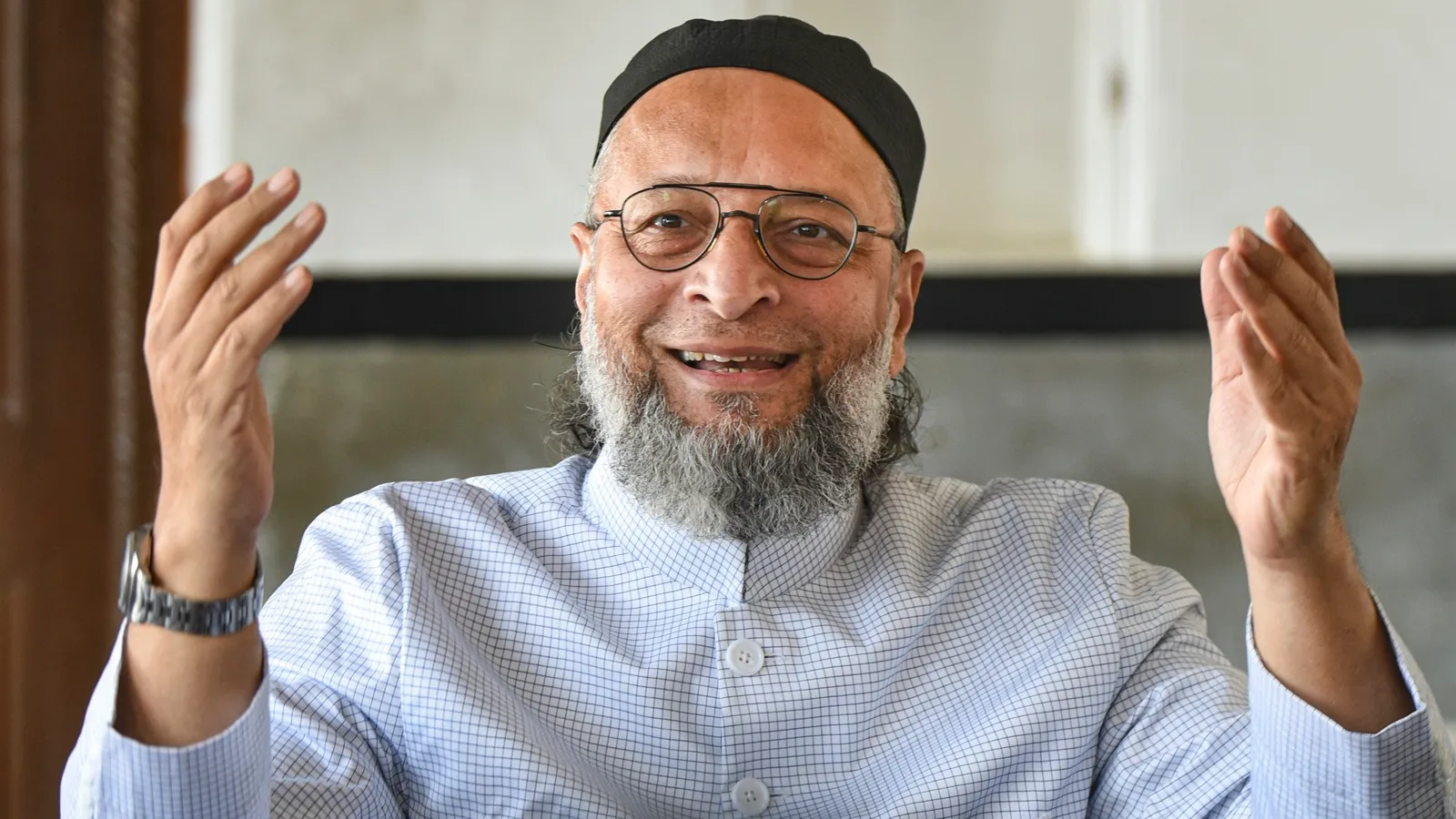
The political landscape of Uttar Pradesh is witnessing a fresh debate over the future of Muslim voter support, with All India Majlis-e-Ittehadul Muslimeen (AIMIM) chief Asaduddin Owaisi attempting to expand his party’s presence in the state. His growing outreach has sparked discussions about whether he could challenge the long-standing influence of Samajwadi Party leader Akhilesh Yadav among a crucial section of minority voters.
For several years, the Samajwadi Party has maintained a strong connection with Muslim voters in Uttar Pradesh, who have traditionally viewed the party as one of the primary political forces capable of representing their interests. However, Owaisi’s aggressive campaigning style, focus on minority issues, and efforts to build a wider organisational network have introduced a new factor into the state’s electoral calculations.
Owaisi’s Expansion Strategy in Uttar Pradesh
Owaisi has been working to strengthen AIMIM’s position beyond its traditional strongholds by targeting states where minority communities form a significant part of the electorate. Uttar Pradesh, being India’s most populous state and a key political battleground, remains strategically important for any party seeking a national footprint.
The AIMIM leader has repeatedly argued that minority voters should have their own political representation rather than depending on larger parties. His message has focused on issues related to social justice, political participation, and representation in governance.
The party’s attempts to establish a stronger presence in Uttar Pradesh have led to speculation among political observers about whether AIMIM could influence electoral outcomes by attracting a section of Muslim voters who have historically supported regional parties.
Akhilesh Yadav’s Established Muslim Support Base
Akhilesh Yadav’s Samajwadi Party has built a strong support network among Muslim voters over decades. The party’s alliance-based politics and focus on social groups, particularly the combination of Muslim and Yadav voters, have played a significant role in its electoral strategy.
The Muslim community represents an important voting bloc in several constituencies across Uttar Pradesh. As a result, maintaining their confidence remains a major priority for the Samajwadi Party, especially in elections where small shifts in voter preferences can significantly impact results.
Political analysts believe that any division within the Muslim vote could alter the competitive dynamics between major parties in the state. Even a limited shift in support towards a third party could influence results in closely contested constituencies. 
Debate Over Vote Division
One of the biggest discussions surrounding Owaisi’s entry into Uttar Pradesh politics is whether his presence could lead to a division of opposition votes. Critics argue that a fragmented minority vote may indirectly benefit rival political parties by reducing the electoral advantage of parties that traditionally rely on consolidated support.
However, supporters of AIMIM maintain that the party’s objective is not merely to divide votes but to provide an independent political platform for communities that feel underrepresented.
The debate reflects a broader question in Indian politics: whether voters prefer strategic alliances with established parties or independent representation through smaller political organisations.
Changing Political Equations Ahead of Future Elections
Uttar Pradesh has historically been a state where caste combinations, community representation, leadership appeal, and local issues play a major role in determining election outcomes. Political parties continuously adjust their strategies to attract different sections of voters.
Owaisi’s attempts to expand AIMIM’s influence could encourage other parties to rethink their approach towards minority voters. At the same time, Akhilesh Yadav faces the challenge of maintaining his party’s traditional support base while addressing concerns among different sections of the electorate.
The coming electoral contests in Uttar Pradesh are expected to reveal whether Owaisi’s political outreach can translate into significant voter support or whether the Samajwadi Party will continue to retain its influence among Muslim voters.
A New Contest for Political Representation
The competition between established regional parties and emerging political forces highlights the evolving nature of Uttar Pradesh’s politics. While the Samajwadi Party remains a major player with a strong organisational structure, AIMIM’s growing presence introduces another layer to the state’s complex electoral landscape.
As political parties prepare for upcoming battles, the question of who can secure the confidence of Muslim voters is likely to remain one of the most closely watched aspects of Uttar Pradesh politics.