
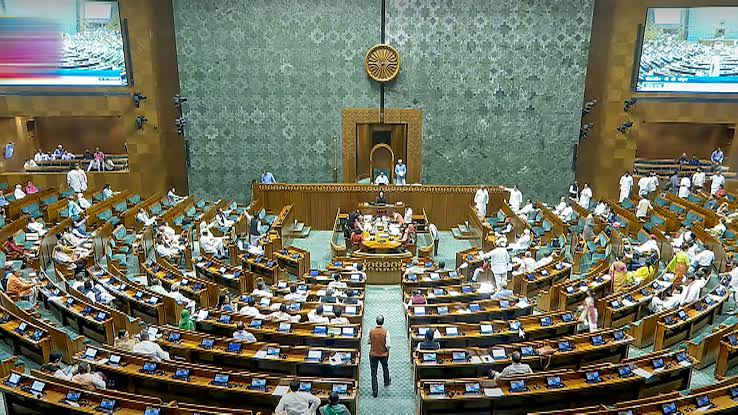
The Lok Sabha on Friday passed the Birth and Death Registration Bill after a lengthy and often heated debate that was repeatedly interrupted by protests from opposition members. The legislation, aimed at strengthening India’s civil registration system and modernizing the management of birth and death records, was approved despite strong objections from several opposition parties, who accused the government of rushing the bill without adequate consultation and parliamentary scrutiny.
The passage of the bill marked another significant legislative development during the ongoing Parliament session, with the government defending the proposed reforms as necessary for improving governance, enhancing public service delivery, and ensuring accurate maintenance of demographic records across the country.
Government Defends Need for Modern Registration System
Presenting the legislation in the House, the government argued that the proposed changes are designed to simplify and modernize the country’s birth and death registration framework. According to the government, a more efficient registration system would help create reliable and updated records, enabling better planning, welfare implementation, and administrative coordination.
Government representatives stated that digitized and standardized registration would reduce delays in issuing certificates while improving the accuracy and accessibility of official records. They also emphasized that maintaining comprehensive birth and death data is essential for public administration, social welfare schemes, healthcare planning, and demographic analysis.
The government maintained that the legislation is part of broader efforts to improve governance through digital infrastructure and streamlined administrative procedures.
Opposition Raises Concerns Over Transparency
Opposition parties strongly opposed the bill during the debate, alleging that several important concerns had not been adequately addressed before its introduction and passage. Members demanded greater discussion on the possible implications of the proposed changes, arguing that legislation affecting citizens’ personal records requires careful examination.
Several opposition lawmakers questioned the government’s approach, claiming that Parliament should have been given more time to debate the bill and consider amendments. They expressed concern over the speed with which the legislation was brought forward, insisting that broader consultation with stakeholders and parliamentary committees would have strengthened the proposed law.
The protests led to repeated disruptions in the House as opposition members voiced their objections while the government continued to defend the legislation. 
Heated Proceedings in the Lok Sabha
The debate witnessed frequent exchanges between treasury and opposition benches, reflecting the political divide over the proposed legislation. Opposition members protested during the proceedings, while government leaders maintained that the bill had undergone the required legislative process and was intended solely to improve administrative efficiency.
Despite the interruptions, the government proceeded with the passage of the bill, securing its approval in the Lok Sabha.
Parliamentary proceedings remained tense throughout the discussion, with both sides presenting sharply contrasting views on the necessity and timing of the legislation.
Importance of Civil Registration
Birth and death registration forms the foundation of a country’s civil registration system. Birth certificates are widely used as proof of identity, age, nationality, and eligibility for various government services, while death certificates are essential for legal, financial, inheritance, insurance, and administrative purposes.
Experts have long emphasized that an effective civil registration system contributes to better governance by providing accurate demographic data for policy formulation, healthcare planning, education, and welfare programs.
The government believes that modernizing this system will improve the efficiency of public administration and reduce inconsistencies in maintaining official records across different states and local authorities.
Political Reactions Continue
The passage of the bill is expected to remain a subject of political debate, with opposition parties indicating that they will continue raising concerns over aspects of the legislation and the manner in which it was passed.
Meanwhile, the government has reiterated that the reforms are intended to strengthen public administration and improve citizen services through a more reliable and digitally integrated registration framework.
With the Lok Sabha’s approval secured, attention will now shift to the subsequent stages of the legislative process before the proposed law can be fully implemented. The debate surrounding the bill is likely to continue both inside and outside Parliament as political parties examine its long-term administrative and governance implications.