
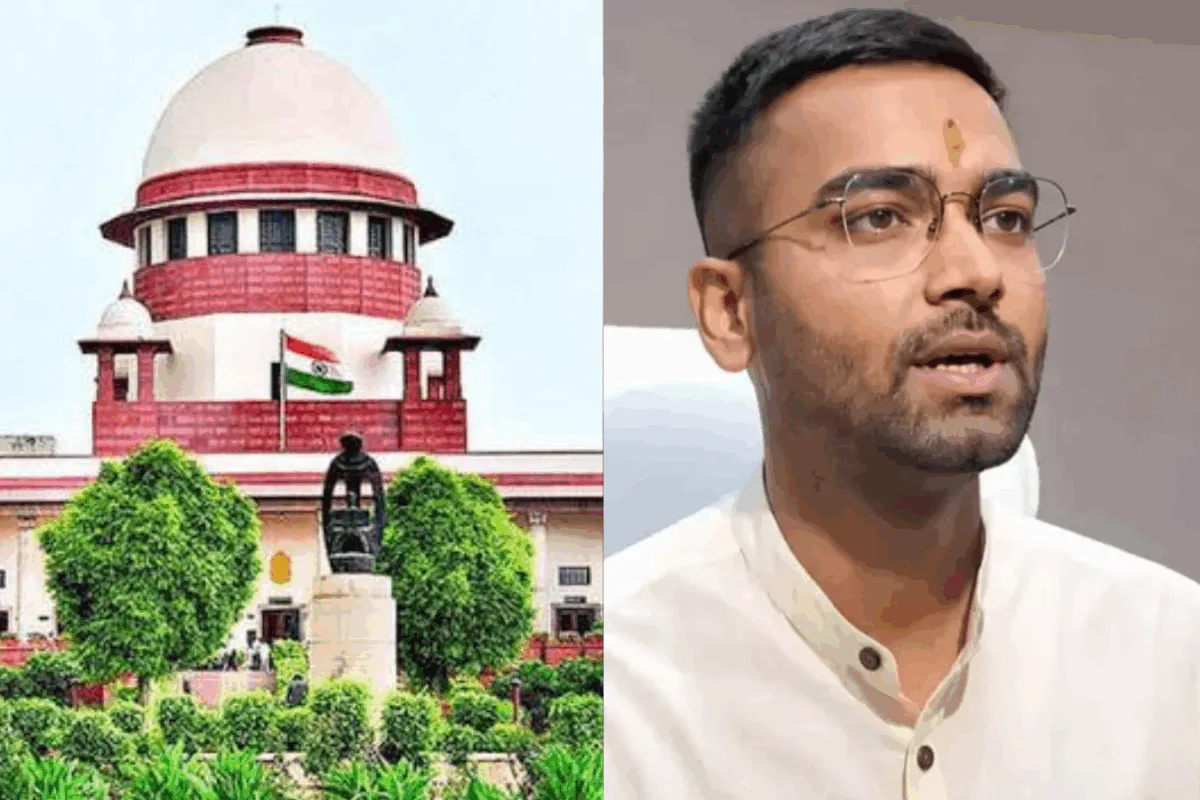
The Supreme Court has raised concerns over the Bihar government’s decision to allow an unelected individual to continue as a minister, questioning the constitutional validity and governance implications of such an arrangement. The court’s observations came during a hearing where issues related to the appointment and continuation of ministers who do not hold membership in the state legislature were examined.
The bench questioned the state government regarding the circumstances under which the minister was allowed to remain in office despite not being elected as a member of the Legislative Assembly or Legislative Council within the prescribed constitutional period. The court sought clarity on whether such continuation was consistent with constitutional principles and democratic norms.
Under constitutional provisions, a person who is not a member of the state legislature can be appointed as a minister, but they must secure membership of either the Legislative Assembly or Legislative Council within six months of their appointment. Failure to meet this requirement generally results in the person having to leave the ministerial position.
The Supreme Court’s intervention has brought renewed attention to the interpretation of these constitutional rules and their application by state governments. The court emphasized the importance of maintaining accountability in a parliamentary democracy, where elected representatives are expected to hold key positions in government.
During the proceedings, the state authorities were asked to explain the reasons behind permitting the minister’s continuation and whether all constitutional requirements had been fulfilled. The court’s questions indicate that it is examining whether procedural safeguards designed to ensure legislative accountability were properly followed.
The issue has also triggered political discussions in Bihar, with opposition parties questioning the government’s decision and demanding greater transparency in ministerial appointments. They argued that allowing an unelected person to remain in a powerful executive position raises concerns about democratic representation and constitutional discipline.
The ruling party and government representatives, however, have maintained that the appointment was made within the framework of constitutional provisions and that necessary legal procedures were followed. They are expected to present their arguments and clarify their position before the court.
The Supreme Court’s scrutiny of the matter highlights the judiciary’s role in ensuring that constitutional boundaries are respected by governments. The case could have wider implications for similar situations involving the appointment of ministers who are not immediately elected members of legislatures.
The court’s proceedings are being closely watched as they may provide further clarity on the limits of executive powers and the obligations of state governments while appointing ministers. The final outcome of the case could influence future interpretations of constitutional requirements related to ministerial appointments across India.