
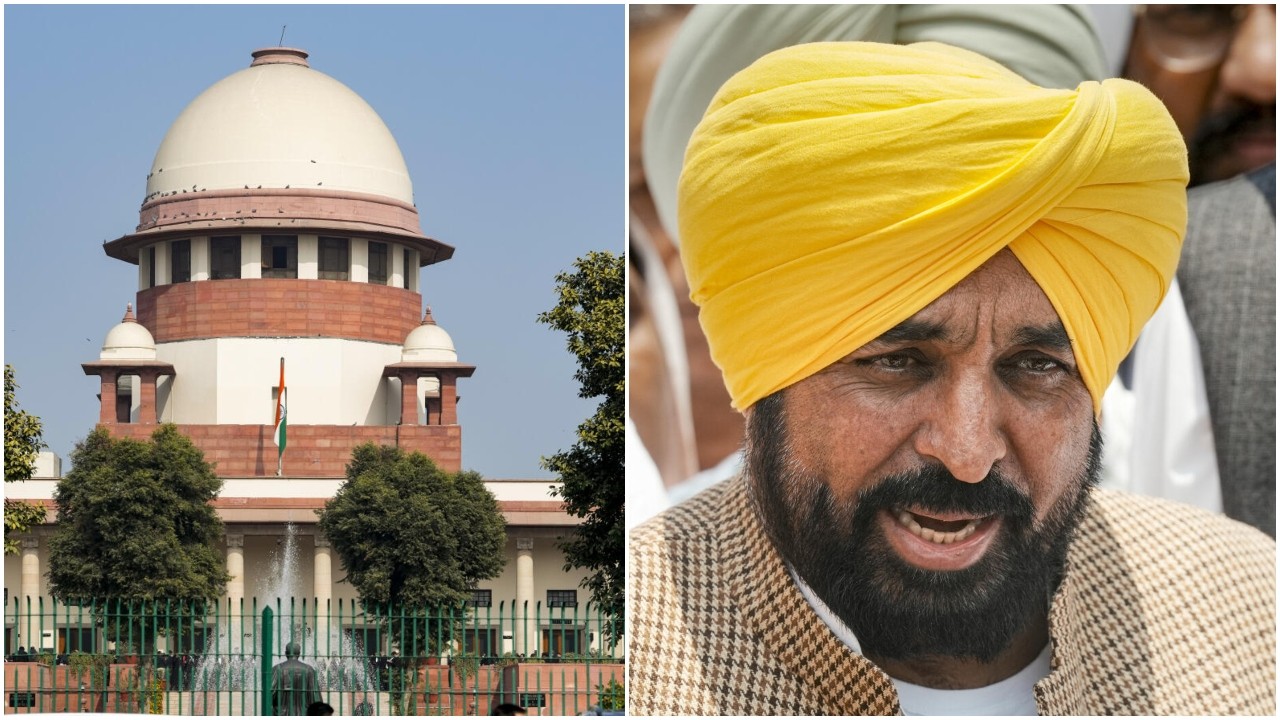
The Supreme Court has issued a notice to Punjab Chief Minister Bhagwant Mann in connection with a 2020 protest-related criminal case. The notice was issued while hearing a plea challenging the decision of the Punjab and Haryana High Court to quash the FIR and related proceedings against Mann and other accused persons.
The case relates to a protest held in Chandigarh in 2020 when Bhagwant Mann, who was then an opposition leader, participated in a demonstration against rising electricity tariffs in Punjab. The Chandigarh administration had registered a case following the protest, alleging violations of law, including unlawful assembly and other offences.
The Supreme Court’s notice marks another stage in the legal proceedings, with the court seeking responses from Mann and other respondents before examining the arguments raised by the administration.
Background of the 2020 Demonstration
The case dates back to January 2020, when members and supporters of the Aam Aadmi Party organised a protest outside the residence of the then Punjab Chief Minister in Chandigarh. The demonstration was aimed at raising concerns over electricity tariff increases and other issues affecting consumers in the state.
Following the protest, the police registered a criminal case against several individuals, including Bhagwant Mann. The allegations included unlawful gathering, rioting, obstruction of public officials, and other related offences under applicable sections of law.
The authorities claimed that the protest created a law-and-order situation, leading to the initiation of criminal proceedings against those involved.
High Court Earlier Quashed Criminal Proceedings
The Punjab and Haryana High Court had earlier quashed the FIR, chargesheet, and subsequent proceedings in the case involving Mann and other accused persons.
While passing the order, the High Court observed that the available evidence did not establish sufficient grounds for continuing the criminal proceedings. The court noted that participation in a protest alone could not automatically establish criminal liability unless there was specific evidence showing involvement in unlawful activities.
Following the High Court’s decision, the criminal case against Mann and other accused individuals came to an end at that stage.
Chandigarh Administration Moves Supreme Court
The Chandigarh administration challenged the High Court’s decision before the Supreme Court, arguing that the proceedings should not have been dismissed at the preliminary stage.
The administration maintained that the evidence and allegations required detailed examination during a trial and that quashing the case prevented the prosecution from presenting its arguments before a court.
The plea sought the restoration of the criminal proceedings and requested the Supreme Court to reconsider the High Court’s decision.
Supreme Court Examines Legal Issues
During the hearing, the Supreme Court examined questions related to political protests, criminal responsibility, and the requirement of evidence before continuing legal proceedings.
The court observed that political demonstrations and slogan-shouting are common aspects of democratic expression. The judges also considered whether there were specific allegations showing that Mann had encouraged or participated in any unlawful activity beyond his presence at the protest.
The observations highlighted the court’s focus on determining individual responsibility rather than holding every participant in a protest equally accountable.
Notice Does Not Indicate Final Decision
The issuance of notice by the Supreme Court does not mean that the allegations against Bhagwant Mann have been proven. It only indicates that the court has decided to hear arguments from all sides before reaching a conclusion.
Mann and other respondents will now have the opportunity to submit their responses to the administration’s plea. After considering the arguments, the Supreme Court will decide whether the High Court’s order should continue or whether the criminal proceedings should be revived.
Political Significance of the Case
The case has gained attention because it involves Bhagwant Mann, who later became the Chief Minister of Punjab. The matter highlights the legal challenges that political leaders may face over protests and demonstrations conducted before holding public office.
The proceedings may also have wider implications regarding how courts evaluate criminal cases arising from political protests, particularly when allegations involve unlawful assembly or public disorder.
Future Course of Proceedings
The Supreme Court’s decision in the matter will determine whether the case remains closed or moves forward for trial. The next hearings will focus on the arguments presented by both sides and the legal validity of the High Court’s decision to quash the proceedings.
The outcome of the case will be closely watched as it involves questions related to political protests, criminal accountability, and the limits of judicial intervention in such matters.