
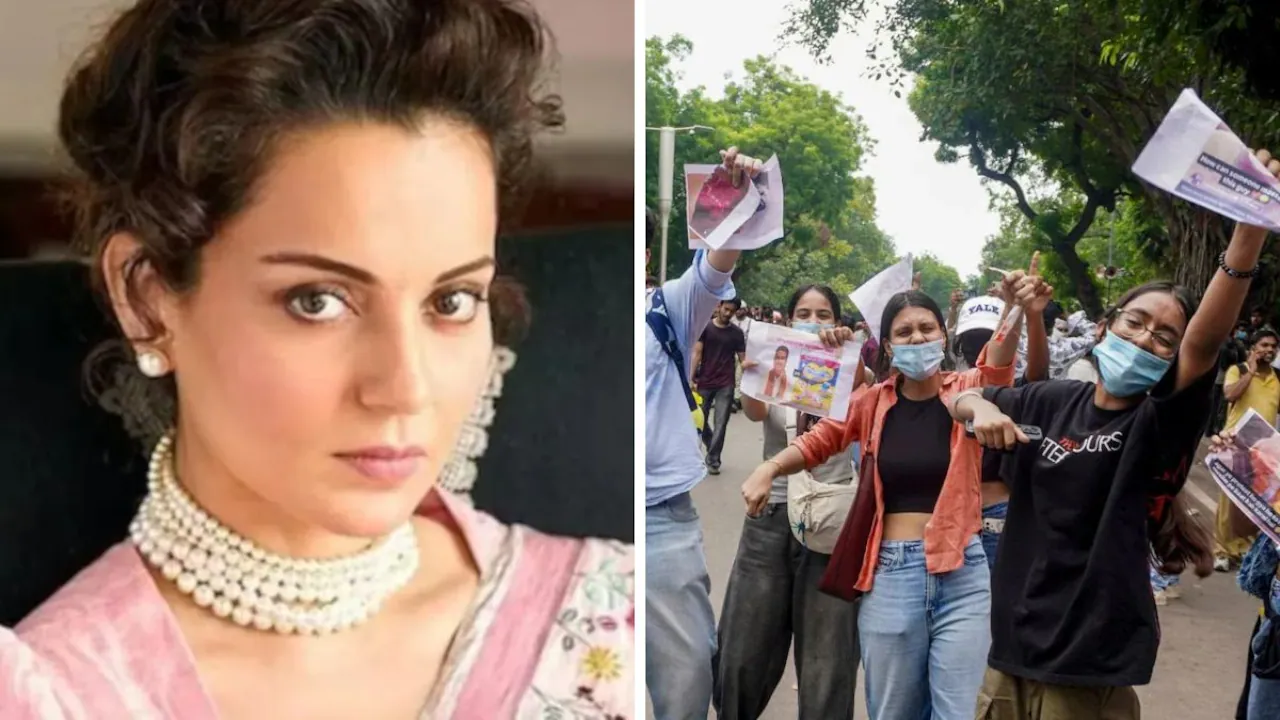
Actor-turned-politician Kangana Ranaut has issued a clarification after facing intense criticism over her controversial “gutter generation” remark, which sparked widespread outrage across social media platforms and led to protests from several youth groups. The BJP Member of Parliament said her statement had been misunderstood and insisted that she never intended to insult the entire Generation Z community.
The controversy began after Kangana made remarks that many interpreted as a sweeping criticism of today’s youth. Her comments quickly attracted strong reactions online, with thousands of users accusing her of stereotyping an entire generation. Hashtags criticising the actor gained momentum, while student groups and youth organisations questioned her remarks and demanded an explanation.
Kangana Says Remarks Were Misinterpreted
Responding to the criticism, Kangana clarified that her comments were aimed only at a specific group of organised protesters who, according to her, were engaged in spreading misinformation and attacking her through coordinated online campaigns. She maintained that her words were never intended to describe or target all members of Generation Z.
According to Kangana, the phrase “gutter generation” referred only to individuals whom she believes deliberately indulge in abusive behaviour, misinformation, and organised trolling on digital platforms. She argued that many people had selectively circulated portions of her statement without providing its full context, leading to widespread misunderstanding.
The actor also expressed disappointment that her comments had been presented as an attack on young people as a whole. She emphasised that she respects hardworking and responsible members of the younger generation who contribute positively to society.
Online Criticism Intensifies
Despite her clarification, criticism against Kangana continued across social media. Many users argued that public figures should exercise greater caution while making public statements, especially when referring to an entire age group or generation. Critics maintained that even if the remark was intended for a smaller group, the language used was inappropriate and capable of offending millions of young people.
Several content creators, activists, and youth voices pointed out that influential personalities carry significant responsibility because their statements can shape public perception. Many also questioned whether the clarification came only after widespread backlash rather than immediately after the controversy emerged.
Supporters of Kangana, however, defended her position, arguing that her original comments were taken out of context. They claimed she was criticising organised online campaigns and not Gen Z as a whole. They further stated that selective editing and viral clips often contribute to public misunderstandings on social media. 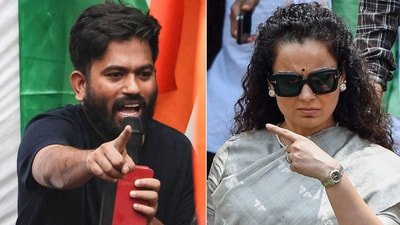
Youth Organisations Raise Objections
The controversy soon moved beyond social media, with some youth organisations staging symbolic protests against Kangana’s remarks. Protesters alleged that the statement unfairly portrayed an entire generation in a negative light and demanded greater accountability from elected representatives and public personalities.
Some activists argued that broad labels can reinforce stereotypes and create unnecessary divisions between generations. They maintained that disagreements on political or social issues should not result in derogatory language directed at young citizens.
Others, however, defended the actor’s right to express her opinion, saying that criticism of certain online behaviour should not automatically be interpreted as criticism of an entire generation.
Debate Over Public Responsibility
The episode has reignited a larger debate about responsible communication by celebrities and political leaders. Public figures today communicate directly with millions of people through interviews and social media, making their words highly influential. Even statements intended for a limited audience can quickly spread across digital platforms, often losing their original context.
Communication experts have frequently observed that politically sensitive remarks can become polarising when short video clips circulate independently of their complete conversation. As a result, clarifications often struggle to reach audiences after the initial controversy has already gained momentum.
The incident also highlights the growing influence of social media in shaping public opinion, where reactions develop rapidly and public figures often face immediate scrutiny over their statements.
Political and Social Reactions
The controversy has generated mixed political reactions. While some leaders and supporters defended Kangana’s explanation, others argued that elected representatives should choose their words more carefully to avoid alienating sections of society.
Political observers note that such controversies increasingly blur the line between entertainment, politics, and digital activism, with celebrities-turned-politicians frequently finding themselves at the centre of ideological debates. The incident reflects the broader challenges of public communication in an era where every statement is instantly amplified across online platforms.
Conclusion
Kangana Ranaut’s clarification has addressed her position but has not entirely ended the debate surrounding her controversial remark. While she insists that her comments were directed only at organised protesters and not Generation Z as a whole, critics continue to question the language she used and the broader implications of such statements.
The episode serves as another reminder of how quickly public discourse can escalate in the digital age, where context is often overshadowed by viral clips, and clarifications may struggle to reverse the impact of an initial statement. As discussions continue, the controversy underscores the importance of careful communication, particularly for public figures whose words influence millions of people.