
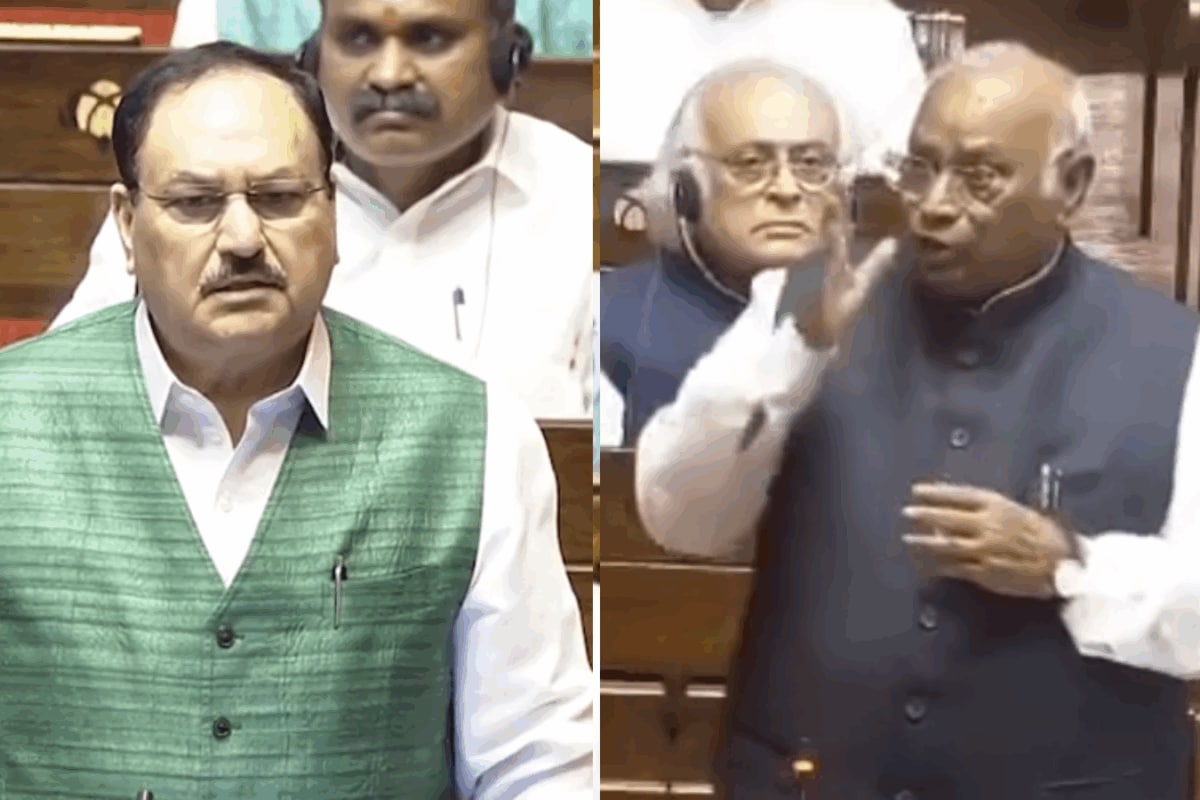
Bharatiya Janata Party president J. P. Nadda has defended police action against protesters, arguing that maintaining law and order is a fundamental responsibility of any government and that enforcement measures should not automatically be viewed as an attack on democratic rights.
Nadda’s remarks came amid a wider political debate over the handling of recent protests and the use of police force to control demonstrations. While emphasising the importance of peaceful dissent in a democracy, he maintained that authorities are also required to intervene when protests disrupt public order or create a situation that could threaten security.
The BJP leader reportedly described the prevailing law-and-order situation as normal and backed the actions taken by the police in dealing with protesters. His comments reflect the government’s broader position that law enforcement agencies must be allowed to perform their duties when demonstrations cross established legal boundaries.
At the same time, Nadda drew attention to his own experience during the Emergency, recalling that he had been arrested during the period when civil liberties and political freedoms were severely restricted. By referring to that episode, he sought to distinguish between the exercise of lawful police powers in a democratic system and the suppression of political opposition during the Emergency.
The Emergency, imposed in 1975 by the then Congress government, remains one of the most contentious chapters in India’s post-Independence political history. During that period, political opponents were detained, press freedoms were curtailed and constitutional rights were significantly restricted. The BJP and its leaders have frequently invoked the Emergency as an example of what they describe as an assault on democratic institutions.
Nadda’s reference to his own arrest therefore carried a wider political message. By recalling his experience, he appeared to underline the BJP’s long-standing criticism of the Emergency while defending the current government’s approach to maintaining public order.
The BJP president’s comments also come against the backdrop of continuing discussions over the balance between the right to protest and the state’s responsibility to preserve peace. In a democratic society, citizens have the right to express disagreement, organise demonstrations and raise concerns about government policies. However, such rights are subject to legal limitations, particularly when protests involve violence, damage to public property or serious disruption to essential services.
The question of police action during protests has frequently generated political controversy in India. Opposition parties and civil rights groups have often raised concerns about excessive use of force, while governments and law enforcement agencies have argued that police intervention becomes necessary when demonstrations turn disruptive or threaten public safety.
Nadda’s position appears to favour the latter argument, with the BJP leadership maintaining that the police must have the authority to respond to situations that could potentially escalate. The party has repeatedly argued that criticism of police action should be assessed in the context of the circumstances surrounding a protest and the responsibilities placed on law enforcement.
The BJP leader’s remarks also highlight the continuing political significance of the Emergency, nearly five decades after it ended. The period remains a recurring point of reference in political debates, particularly when questions of civil liberties, state power, freedom of expression and the right to dissent arise.
For the BJP, the Emergency is a central part of its political narrative about the protection of democratic institutions. Leaders of the party frequently recall the arrests and restrictions imposed during that period to contrast the present political system with what they describe as an authoritarian phase in India’s history.
Nadda’s comments thus combine two distinct arguments: a defence of the police’s role in maintaining law and order and a reminder of his personal experience during a period of political repression. His remarks suggest that, in his view, police action taken under the framework of a functioning democracy should not be equated with the systematic curbs on political freedoms witnessed during the Emergency.
The debate, however, continues to centre on how authorities can maintain public order without undermining the democratic right to protest. The challenge for governments and police forces is to ensure that enforcement remains proportionate, lawful and accountable while also preventing violence and serious disruption.
As political tensions surrounding protests and public demonstrations continue, Nadda’s remarks are likely to add further weight to the ongoing discussion about the limits of protest, the responsibilities of law enforcement and the protection of civil liberties in a democratic society.