
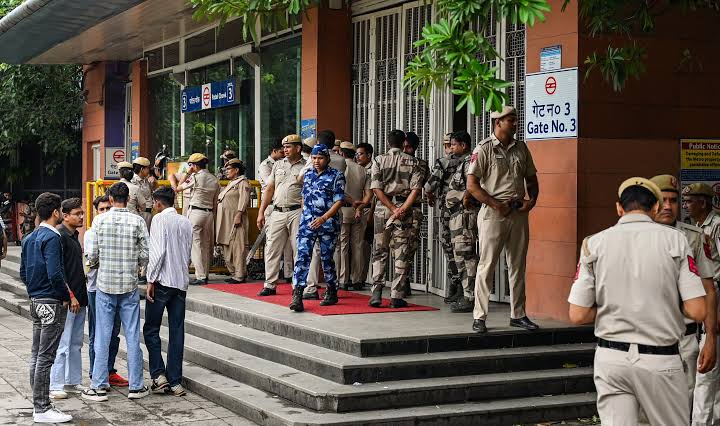
New Delhi: Commuters across the national capital faced disruptions on Thursday as authorities closed 16 Delhi Metro stations amid heightened security arrangements linked to the ongoing protest at Jantar Mantar.
The stations were shut from 7:30 am and will remain closed until further instructions, according to the latest service update. The move comes as the protest in central Delhi continues to draw increasing participation, prompting security agencies to strengthen arrangements around the demonstration site and surrounding areas.
Despite the suspension of entry and exit at the affected stations, interchange facilities continued to be available at three key locations—Rajiv Chowk, Mandi House and Central Secretariat. The arrangement was intended to allow passengers to change metro lines even though they could not enter or exit through the affected stations.
Full list of 16 Delhi Metro stations closed
The following stations were closed as part of the security measures:
- Lok Kalyan Marg
- Rajiv Chowk
- Patel Chowk
- Ramakrishna Ashram Marg
- Barakhambha Road
- Supreme Court
- Seva Teerth
- Janpath
- Mandi House
- Central Secretariat
- ITO
- Delhi Gate
- Indraprastha
- Khan Market
- Jor Bagh
- Shivaji Stadium
The closures affected several important areas of central Delhi, including locations around government offices, major commercial districts and key public institutions. With entry and exit services suspended, passengers travelling through central Delhi were advised to make alternative arrangements and account for additional travel time.
The latest shutdown followed similar restrictions imposed a day earlier, when 17 metro stations were temporarily closed as security measures were intensified around the protest zone. 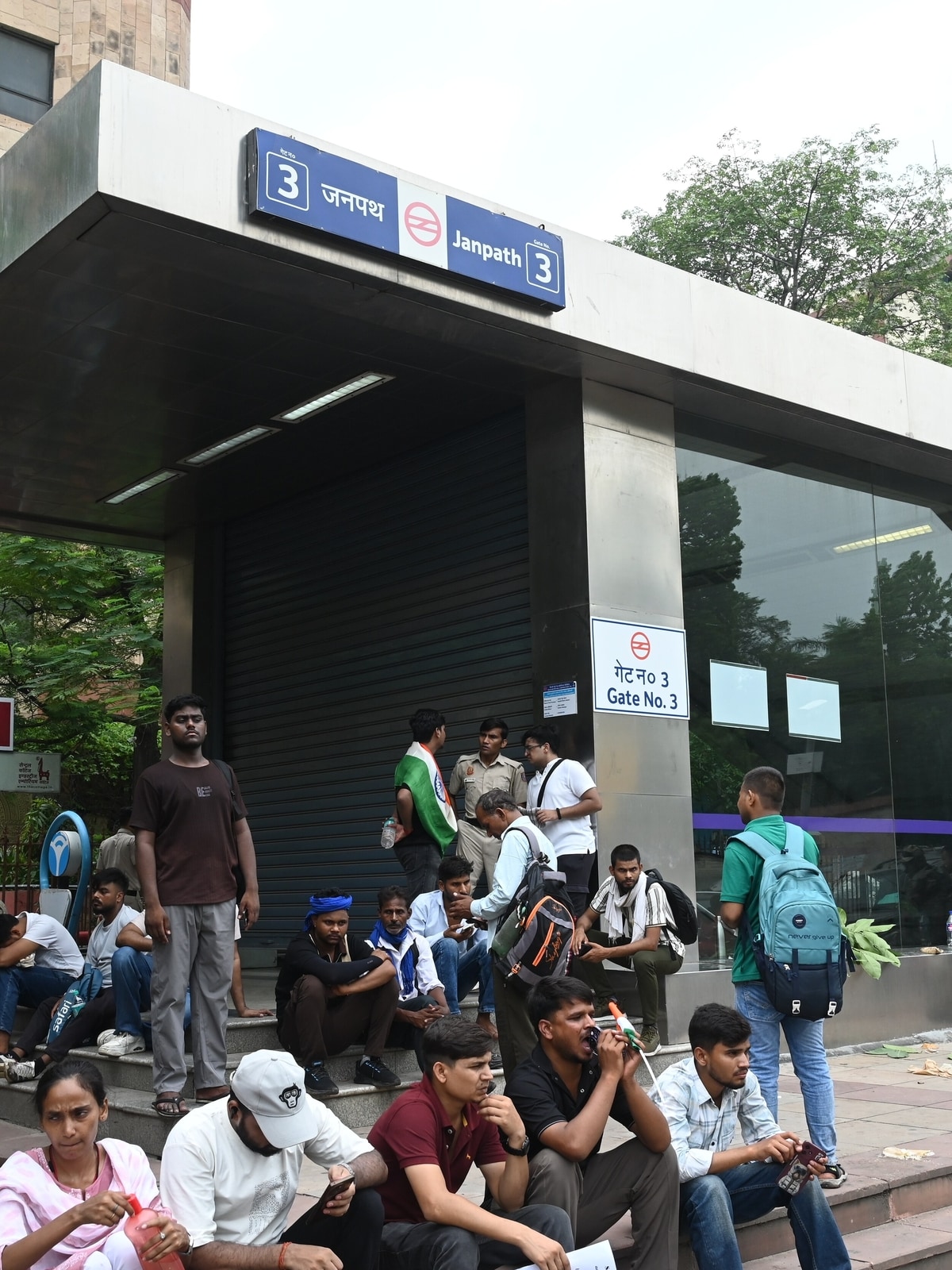
Security tightened as protest grows
The metro restrictions came against the backdrop of growing tensions near Jantar Mantar. The protest, which has continued for several weeks, has increasingly become a major point of mobilisation among young people and students.
Security personnel, including Delhi Police and the Rapid Action Force, were deployed in large numbers around the protest area and nearby roads. The security presence was stepped up after tensions reportedly escalated near Sansad Marg, where clashes were reported between protesters and security personnel.
According to reports, the situation briefly turned tense when some protesters moved onto the road. Security forces used tear gas to disperse the crowd, while allegations were also made that protesters threw stones at police personnel. The incident resulted in additional security measures being implemented in and around central Delhi.
The developments have also had a direct impact on public transportation, with multiple metro stations being closed to regulate movement and prevent overcrowding in sensitive areas.
Protest linked to concerns over examination irregularities
The demonstration has evolved into a wider youth-led movement focusing on alleged irregularities in examinations and concerns surrounding the country’s education system.
The protest was initially launched as a satirical campaign and later developed into a broader public mobilisation. The movement has attracted attention from students, activists and other sections of civil society, with protesters raising demands related to examination reforms and accountability.
One of the major demands emerging from the agitation has been the resignation of Union Education Minister Dharmendra Pradhan. Protesters have argued that issues surrounding competitive examinations and alleged irregularities have caused significant uncertainty among students preparing for higher education and government recruitment.
The demonstration at Jantar Mantar began on June 20 and subsequently gained wider visibility after climate activist Sonam Wangchuk joined the agitation on June 28. Wangchuk announced an indefinite hunger strike as part of the protest.
The situation intensified further after concerns were raised over Wangchuk’s health. He was reportedly taken to Safdarjung Hospital amid allegations from protesters that he had been forcibly removed from the protest location. The development further fuelled tensions surrounding the demonstration.
Impact on Delhi commuters
The closure of 16 metro stations is expected to affect thousands of daily passengers who depend on the Delhi Metro for travel through central Delhi.
Stations such as Rajiv Chowk, Central Secretariat, Mandi House and Patel Chowk are among the busiest and most strategically located stations in the network. Their restricted access can significantly affect commuters travelling to workplaces, government offices, commercial centres and other important destinations.
Although interchange services remained operational at Rajiv Chowk, Mandi House and Central Secretariat, passengers were unable to use the stations for regular entry and exit. The restrictions could therefore lead to longer travel times and increased pressure on other transport routes.
The closures also highlight the wider impact that large-scale public demonstrations can have on urban mobility in the capital. Central Delhi frequently witnesses political rallies, protests and public gatherings, and security agencies often impose temporary restrictions when crowd movement or law-and-order concerns arise.
Authorities maintain heightened vigilance
With the protest continuing and tensions reported near the demonstration site, security agencies are maintaining a heightened level of vigilance in central Delhi.
The duration of the metro closures remains uncertain, with the affected stations scheduled to remain shut until further instructions. Authorities are expected to review the security situation before deciding whether normal entry and exit services can resume.
For commuters, the situation means that travel plans through central Delhi may need to be adjusted depending on developments around the protest. The continued restrictions also underline the challenges faced by authorities in balancing public demonstrations with the need to maintain security and uninterrupted movement in one of the country’s busiest urban centres.
As the protest continues to attract attention, further developments are likely to determine whether metro restrictions are extended, reduced or lifted in the coming hours.