
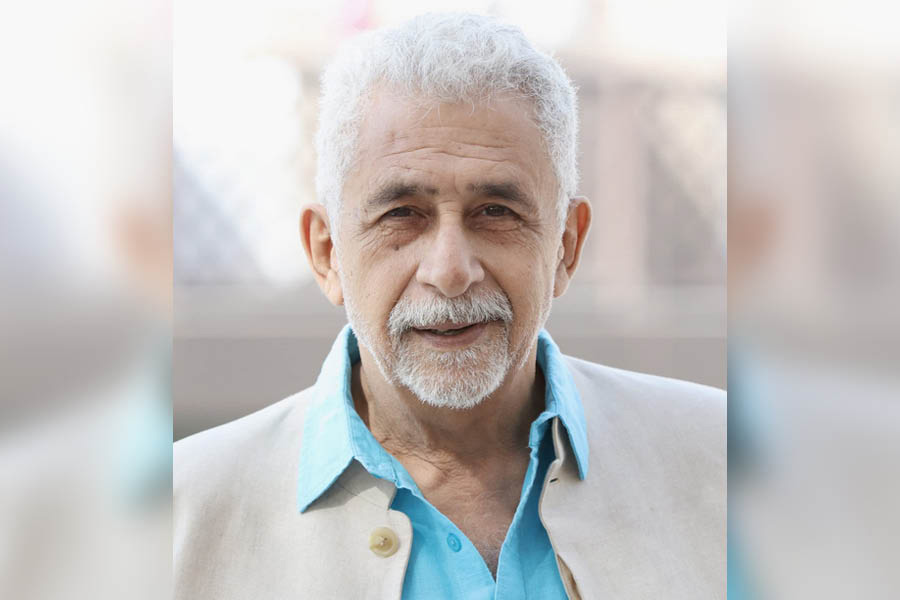
Veteran actor Naseeruddin Shah has strongly criticized the police response to students protesting at Delhi’s Jantar Mantar, describing the alleged use of force against demonstrators as deeply disturbing. His remarks came after videos and reports emerged showing police personnel attempting to disperse students participating in a protest linked to the Chhatra Jan Panchayat (CJP), triggering widespread political and public debate.
The demonstration was organized to highlight several issues affecting students and young people, including concerns surrounding the National Eligibility-cum-Entrance Test (NEET), alleged irregularities in competitive examinations, employment opportunities, and broader educational reforms. Protesters had gathered at Jantar Mantar, a designated venue for public demonstrations in the national capital, demanding greater accountability and policy action from the government.
As the gathering intensified, police intervened to clear the protest site. According to participants and eyewitnesses, officers resorted to a lathi-charge while removing demonstrators from the area. Several students claimed they were pushed, detained, and physically assaulted during the operation. Videos circulating on social media appeared to show police personnel using force against protesters, prompting criticism from activists, opposition leaders, and members of the entertainment industry.
Reacting to the incident, Naseeruddin Shah expressed outrage over the treatment of the students. The acclaimed actor referred to the police personnel involved as “gundas” and questioned the justification for using force against young citizens exercising their democratic right to protest peacefully. He argued that such actions undermine constitutional freedoms and weaken public confidence in democratic institutions.
Shah emphasized that students raising concerns over education, examinations, and employment should be heard rather than suppressed. He stated that peaceful protests are an essential part of a functioning democracy and warned that excessive use of force against demonstrators sends a troubling message about the state’s approach to dissent.
The actor’s comments quickly gained attention on social media, where supporters praised him for speaking out on issues affecting students and civil liberties. Others defended the police, arguing that law enforcement authorities were acting to maintain public order and enforce restrictions at the protest venue. The contrasting reactions highlighted the polarized public discourse surrounding the incident.
The protest itself was organized under the banner of the Chhatra Jan Panchayat, a student-led platform advocating reforms in education, transparent recruitment processes, and employment opportunities. Participants also raised concerns over examination integrity, delays in recruitment, and what they described as inadequate government engagement with student-related issues.
Police officials have maintained that they acted in accordance with established procedures to manage the gathering and prevent disruptions. Authorities stated that necessary measures were taken to maintain law and order while ensuring public safety. However, student organizations have disputed this version of events, alleging that the response was disproportionate and unnecessary.
The incident has reignited debate over the handling of public protests in India, particularly demonstrations involving students and youth organizations. Civil rights advocates argue that the right to peaceful assembly is protected under the Constitution and should not be curtailed through excessive policing. They have called for an impartial inquiry into the alleged use of force and greater accountability if procedural violations are established.
Political leaders from various parties also weighed in, with several opposition figures condemning the police action and demanding answers from the government. They argued that democratic institutions must protect citizens’ rights to express dissent, especially on matters related to education and employment that directly affect millions of young Indians.
The controversy surrounding the Jantar Mantar protest has once again drawn national attention to the relationship between law enforcement, public demonstrations, and democratic freedoms. As debates continue, student organizations have reiterated their demands for meaningful dialogue, transparency in examination systems, and greater government responsiveness to youth concerns.
Naseeruddin Shah’s intervention has further amplified the conversation, adding the voice of one of India’s most respected actors to the growing calls for accountability and the protection of peaceful protest rights. Whether the incident leads to further official action or policy discussions remains to be seen, but it has undoubtedly intensified public scrutiny of how student demonstrations are managed.