
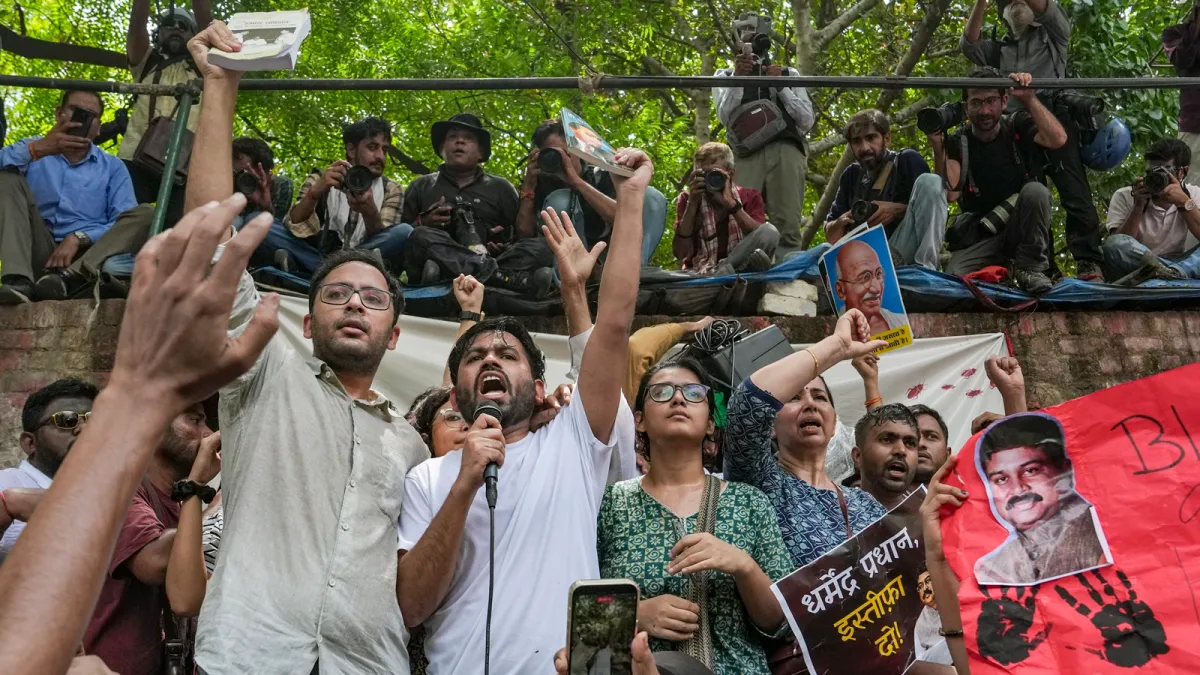
The nationwide protest led by the CJP entered a critical phase on Monday as thousands of students, youth activists, and supporters gathered in New Delhi for the much-publicised “Chalo Sansad” march. The demonstration, organised on the opening day of Parliament’s Monsoon Session, witnessed heightened security arrangements, road restrictions, and confrontations between protesters and law enforcement agencies.
At the centre of the movement is environmentalist and education reform advocate Sonam Wangchuk, whose prolonged hunger strike has become a defining symbol of the agitation. Wangchuk, currently under medical supervision after being shifted from the protest site to a hospital, stated that he would consider ending his fast only if specific assurances were provided regarding the movement’s demands.
Protest Gains National Attention
The “Chalo Sansad” campaign has emerged as one of the largest youth-led demonstrations in recent months. Protesters have accused the authorities of failing to adequately address alleged irregularities in competitive examinations and have demanded greater accountability from the government.
Thousands assembled at Jantar Mantar before attempting to march towards Parliament. Authorities deployed a large contingent of police personnel, erected barricades at strategic locations, and imposed traffic diversions across central Delhi to prevent demonstrators from reaching the Parliament complex.
As crowds swelled during the day, clashes were reported at several locations. Protesters alleged that police used force, including tear gas and detentions, to disperse the gathering. Delhi Police, however, maintained that necessary measures were taken to enforce security restrictions and denied allegations of excessive force.
Wangchuk Lists Conditions to End Fast
Speaking from the hospital, Wangchuk said he would be willing to end his hunger strike only if meaningful steps were taken to address the concerns raised by the movement.
Among his stated conditions were public accountability from the government over the issues highlighted by the protesters or firm assurances from elected representatives that the demands would be discussed and acted upon in Parliament. He also expressed concern over what he described as restrictions on his movement, communication, and ability to interact freely with supporters while under medical supervision.
His remarks have further intensified public attention on the protest, with supporters describing his fast as a peaceful attempt to draw national focus to issues affecting students and young job aspirants. 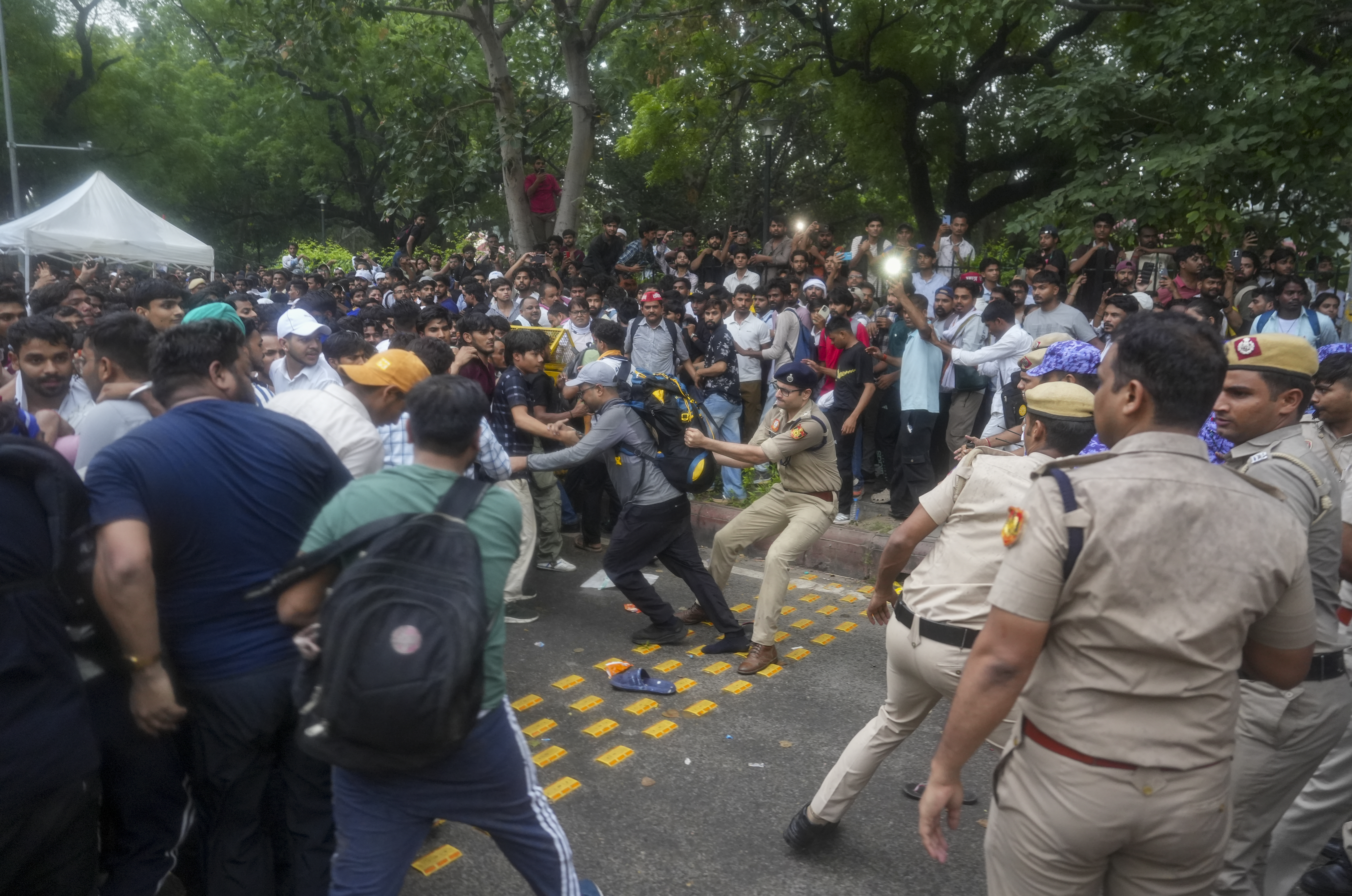
Abhijeet Dipke Ends Hunger Strike
CJP founder Abhijeet Dipke, who had launched his own indefinite hunger strike following Wangchuk’s hospitalisation, announced that he had decided to end his fast after a personal appeal from Wangchuk.
Dipke said that while he was concluding his hunger strike out of respect for Wangchuk’s request, the broader movement would continue until its demands were addressed. The decision marked a symbolic shift in the protest strategy while reinforcing the organisers’ commitment to sustaining public demonstrations.
Government Opens Door for Dialogue
Amid mounting public pressure and large-scale demonstrations, representatives of the protest movement were expected to hold discussions with senior government officials. The proposed talks were viewed as an important opportunity to reduce tensions and explore possible solutions to the issues raised by the protesters.
While organisers welcomed the possibility of dialogue, they maintained that demonstrations would continue unless concrete commitments emerged from the discussions.
Security Tightened Across Central Delhi
Authorities significantly strengthened security arrangements around Parliament and other sensitive government installations as the march progressed. Multiple layers of barricades, additional police deployment, and restrictions on public movement were put in place to prevent protesters from entering high-security zones.
Traffic disruptions affected several major roads, while commuters faced delays due to diversions and temporary closures around the protest route. Public transport services in parts of central Delhi also experienced interruptions as security agencies monitored the situation.
A Movement Driven by Youth Concerns
The ongoing agitation has evolved into a broader platform highlighting concerns over examination transparency, opportunities for young people, and public accountability. The participation of students, professionals, and civil society groups has transformed the protest into a nationwide discussion on governance and education-related reforms.
Supporters say the movement seeks institutional reforms and greater transparency, while authorities continue to emphasise the need to maintain law and order during public demonstrations.
As Parliament convenes for its Monsoon Session, attention remains focused on whether dialogue between protest leaders and the government can produce a breakthrough or whether the demonstrations will continue to escalate in the coming days.