
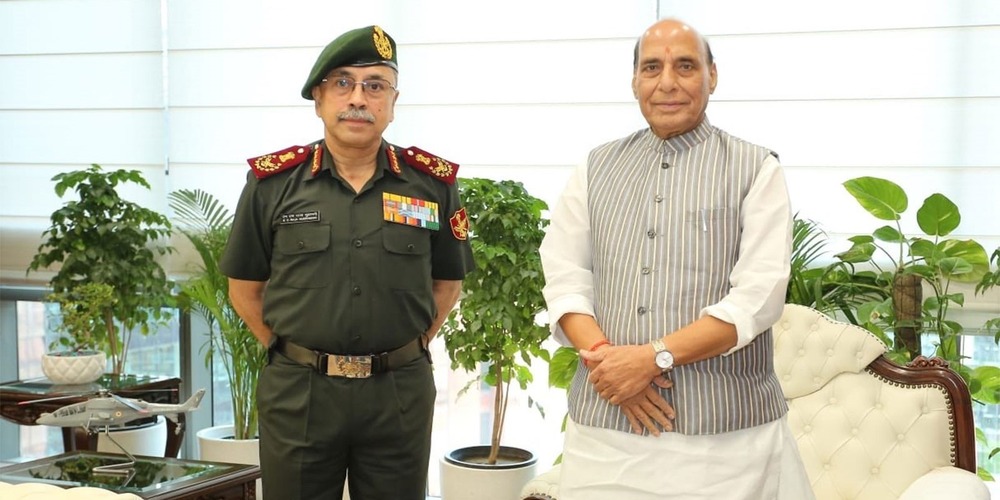
India is preparing to take another significant step toward transforming its military structure as Chief of Defence Staff (CDS) General Anil Chauhan’s successor, General N. S. Raja Subramani, is expected to present a detailed strategy on military theatre commands to Defence Minister Rajnath Singh. The proposal is anticipated to play a crucial role in reshaping the operational framework of the Indian Armed Forces by promoting greater coordination among the Army, Navy, and Air Force.
The proposed theatre command model has long been considered one of the country’s most ambitious defence reforms. It is designed to replace the existing service-specific operational structure with integrated commands that bring together personnel and resources from all three armed services under a unified command. Defence officials believe such integration would improve operational efficiency, enable quicker decision-making, and enhance India’s preparedness for modern security challenges.
A Major Reform in India’s Defence Structure
The concept of military theatre commands has been under discussion for several years as India seeks to modernize its defence management system. At present, the Army, Navy, and Air Force largely operate through independent command structures. While coordination exists during joint operations, each service follows its own operational chain of command.
The proposed theatre command system aims to overcome these limitations by creating unified operational commands responsible for specific geographical regions or strategic functions. Under this arrangement, military assets from all three services would function together under a single theatre commander, improving coordination during both peace and conflict.
Officials involved in the planning process believe that integrated commands would allow India to respond more effectively to evolving security threats, reduce duplication of resources, and strengthen overall military readiness.
Strategy to be Presented to Defence Minister
According to defence sources, the CDS is expected to brief Defence Minister Rajnath Singh on the proposed roadmap for implementing theatre commands. The presentation is likely to include recommendations on command structures, operational responsibilities, force allocation, and coordination mechanisms among the three services.
The roadmap may also outline the phased implementation of the reform, ensuring that the transition from the current command structure takes place without affecting operational preparedness. The proposal is expected to incorporate feedback from the Army, Navy, and Air Force, which have been engaged in extensive consultations over the framework.
The Defence Minister’s review of the strategy could mark an important milestone before further discussions at the highest levels of the government. 
Strengthening Joint Military Operations
One of the primary objectives of theatre commands is to improve jointness among the armed forces. Modern warfare increasingly demands seamless cooperation between land, maritime, air, cyber, and space capabilities. Defence planners believe that integrated command structures will help synchronize these capabilities under unified leadership.
Military experts argue that such integration can significantly improve operational planning, intelligence sharing, logistics management, and resource utilization. Instead of multiple service-specific headquarters making separate operational decisions, a theatre commander would oversee coordinated planning and execution for the assigned operational area.
This approach is expected to reduce delays in decision-making while enabling faster responses during emergencies and military contingencies.
Learning from Global Military Models
Several major military powers have adopted theatre command systems to improve joint operations. Countries including the United States and China have implemented integrated command structures that combine different military branches under unified operational leadership.
India’s proposed model is expected to be tailored to the country’s unique strategic environment, taking into account its extensive land borders, maritime interests in the Indian Ocean Region, and emerging security challenges across multiple domains.
The government has consistently emphasized the importance of integrated military planning to strengthen national security and enhance the country’s defence capabilities.
Challenges in Implementation
Although the concept enjoys broad strategic support, implementing theatre commands remains a complex process. Integrating three distinct military services requires careful planning, consensus-building, and clearly defined operational responsibilities.
Key issues include the distribution of resources, command authority, operational jurisdiction, and ensuring that the specialized capabilities of each service continue to be effectively utilized within the integrated framework.
Defence authorities have been conducting extensive consultations to address these concerns and develop a structure that balances operational efficiency with the individual strengths of each service.
Significance for India’s National Security
The theatre command initiative represents one of the most important defence reforms undertaken in recent decades. If implemented successfully, it is expected to enhance India’s military preparedness, improve interoperability among the armed forces, and strengthen the country’s ability to respond to conventional and emerging security threats.
The anticipated presentation to Defence Minister Rajnath Singh is expected to provide clarity on the next phase of this reform process. Following the minister’s review, further discussions and approvals could pave the way for gradual implementation of the integrated theatre command structure.
As India continues to modernize its armed forces, the proposed theatre command strategy is expected to remain a cornerstone of efforts aimed at building a more agile, coordinated, and future-ready military capable of addressing increasingly complex regional and global security challenges.