
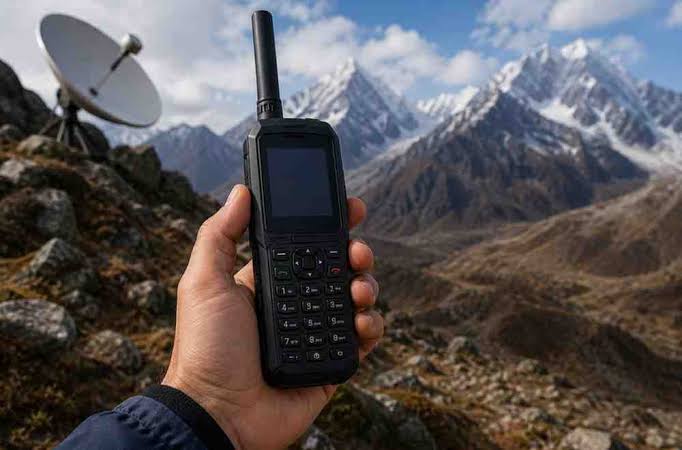
In an era where mobile communication depends heavily on cellular towers, Bharat Sanchar Nigam Limited (BSNL) offers a unique solution that functions even in locations where conventional mobile networks are unavailable. Through its satellite phone service, users can make voice calls directly via satellites, ensuring uninterrupted communication in remote regions, disaster-hit areas, mountainous terrain, forests, deserts, and offshore locations.
Unlike regular smartphones that require nearby cellular towers, BSNL’s satellite phones establish connections using satellite technology. This makes them an essential communication tool for government agencies, disaster response teams, security personnel, maritime operators, researchers, and individuals working in isolated regions.
The service has gained renewed attention due to its ability to provide connectivity in areas where traditional telecom infrastructure cannot reach.
How BSNL Satellite Phones Work
A standard mobile phone communicates by connecting to the nearest cellular tower, which routes the call through a telecom network. When users move outside tower coverage, they lose network access.
Satellite phones operate on a completely different principle.
Instead of relying on ground-based infrastructure, these devices communicate directly with communication satellites orbiting the Earth. The signal is transmitted from the satellite phone to a satellite in space, which then relays it to a ground station before connecting the call to the intended recipient.
Since satellites cover vast geographical areas, users can stay connected even where no mobile towers exist.
This technology makes satellite phones highly reliable during emergencies when natural disasters damage conventional communication infrastructure.
Coverage Beyond Cellular Networks
BSNL’s satellite communication service is specifically designed for locations where establishing conventional mobile towers is either technically difficult or economically unfeasible.
Typical areas benefiting from satellite communication include:
- High-altitude Himalayan regions
- Dense forests
- Remote villages
- Desert regions
- Coastal waters
- Islands
- Offshore oil and gas installations
- Border areas
- Disaster-affected zones
In these environments, satellite phones provide dependable voice communication when regular mobile services fail. 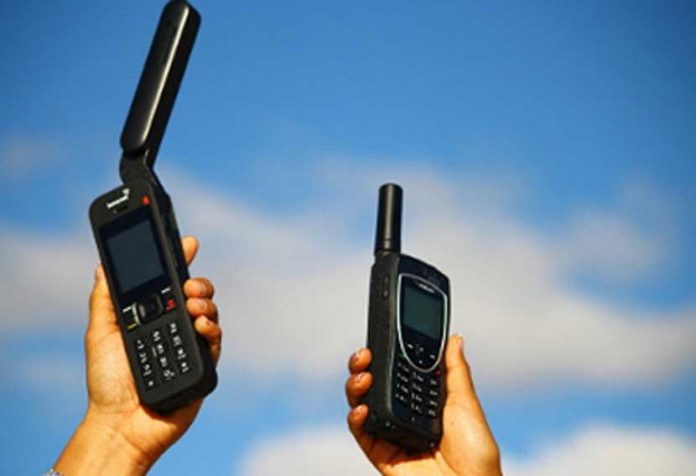
Who Uses Satellite Phones?
Satellite phones are commonly used by organizations and professionals working in challenging environments.
Primary users include:
- Disaster management authorities
- Armed forces and security agencies
- Government departments
- Forest officials
- Mountaineers and expedition teams
- Shipping companies
- Offshore workers
- Emergency rescue personnel
- Scientific researchers
- Infrastructure and energy sector employees
These users often operate in locations where maintaining continuous communication is critical for safety and coordination.
Why Satellite Phones Matter During Emergencies
Natural disasters such as earthquakes, cyclones, floods, landslides, and severe storms frequently damage telecom towers and power infrastructure.
When conventional mobile networks become unavailable, satellite communication continues to function because it depends on satellites rather than local telecom infrastructure.
This capability allows rescue agencies and emergency responders to coordinate operations, share critical information, and maintain contact with command centers even during large-scale disasters.
As a result, satellite phones are considered one of the most reliable communication tools for emergency preparedness and disaster response.
BSNL Satellite Phone Pricing
BSNL’s satellite phone service is significantly more expensive than conventional mobile services due to the specialized technology involved.
According to the available service structure:
- The satellite handset costs approximately ₹1.34 lakh.
- Users are also required to pay a monthly rental.
- Voice calls are charged separately based on usage.
- Additional security deposits and activation charges may apply depending on the service plan.
The higher cost reflects the sophisticated satellite infrastructure, specialized equipment, and operational expenses associated with maintaining nationwide satellite connectivity.
Advantages of Satellite Communication
Satellite phones offer several important benefits over conventional mobile networks:
- Works without mobile towers.
- Provides connectivity in isolated locations.
- Functions during natural disasters.
- Offers dependable emergency communication.
- Covers large geographical regions.
- Supports operations in remote and inaccessible terrain.
These advantages make satellite communication indispensable for mission-critical operations.
Limitations of Satellite Phones
Despite their advantages, satellite phones also have certain limitations.
The devices are considerably more expensive than regular smartphones and generally require an unobstructed view of the sky to establish a stable satellite connection. Buildings, tunnels, caves, and dense overhead structures may interfere with signal quality.
Additionally, satellite communication services are primarily intended for specialized users rather than everyday consumers due to their higher costs and operational requirements.
Growing Importance of Satellite Connectivity
As governments and telecom providers continue expanding communication infrastructure, satellite technology is increasingly viewed as an essential complement to traditional mobile networks rather than a replacement.
The technology plays a vital role in ensuring communication resilience during emergencies, supporting national security operations, enabling connectivity in geographically challenging regions, and extending communication services to areas beyond the reach of conventional telecom infrastructure.
With India’s growing focus on disaster preparedness and digital connectivity, satellite-based communication services are expected to remain an important part of the country’s telecommunications ecosystem, particularly for sectors where uninterrupted communication can be critical to safety, coordination, and operational success.