
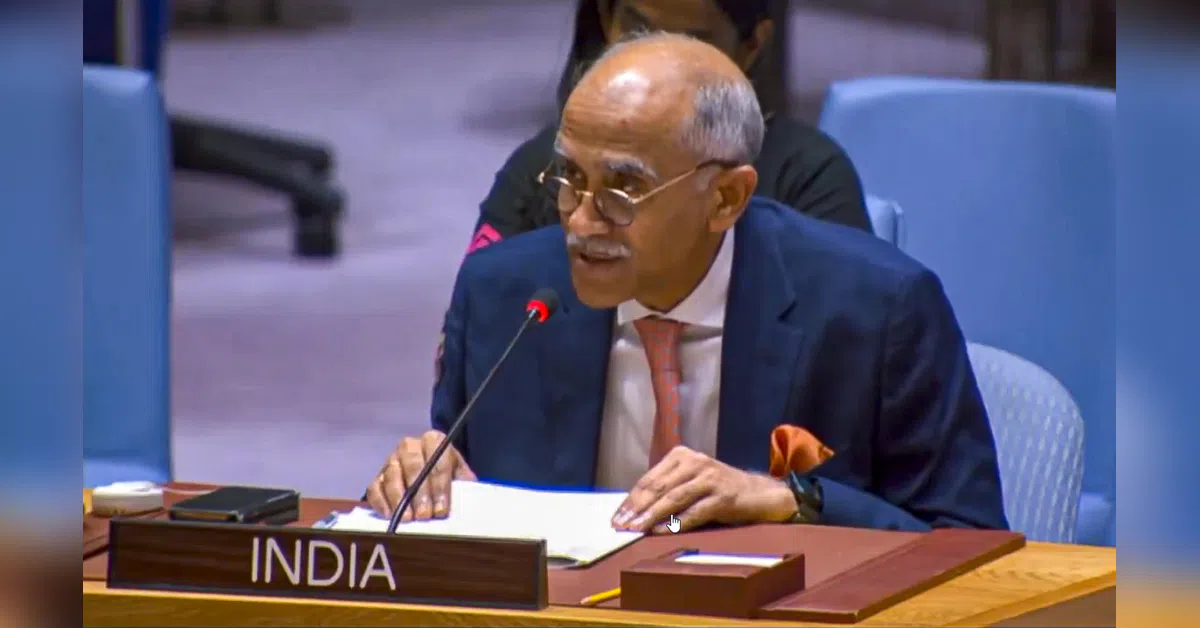
India has reiterated its uncompromising stance on terrorism at the United Nations, urging the international community to adopt a united and consistent approach in combating the global menace. Delivering a strong message before the world body, India emphasized that terrorism cannot be justified under any circumstances and warned against selective approaches that differentiate between terrorist groups based on political or strategic interests.
Addressing the United Nations, India’s representative stressed that terrorism remains one of the gravest threats to international peace and security. The statement underscored the country’s long-standing position that every act of terrorism deserves equal condemnation, regardless of the identity, ideology, motivation, or geographical location of those responsible.
Reaffirming India’s commitment to international counterterrorism efforts, the representative declared that “a terrorist is a terrorist,” highlighting that no distinction should be made between so-called “good” and “bad” terrorists. According to India, such selective treatment has allowed extremist organizations to survive, regroup, and continue threatening global stability.
Call for Zero Tolerance Towards Terrorism
India urged all United Nations member states to adopt a policy of zero tolerance toward terrorism. The country emphasized that the fight against terrorism should transcend political differences and regional rivalries, requiring coordinated international cooperation, intelligence sharing, financial tracking, and legal action against terror networks.
The Indian delegation argued that countries must refrain from providing safe havens, logistical support, funding, or political protection to individuals and organizations involved in terrorist activities. It asserted that any form of state support or tolerance for terrorism undermines international security and weakens global counterterrorism efforts.
India also stressed the importance of holding accountable those who sponsor, finance, train, or shelter terrorist groups. According to the delegation, lasting peace can only be achieved when every nation demonstrates equal commitment to eliminating terrorism in all its forms.
Concerns Over Double Standards
A key element of India’s intervention focused on what it described as the persistent problem of double standards in addressing terrorism. The country warned that selective condemnation and inconsistent enforcement of international norms create loopholes that extremist organizations exploit.
India argued that geopolitical interests should never influence the global response to terrorism. Terrorist groups, regardless of their objectives or affiliations, pose a common threat to humanity and therefore deserve a unified international response.
The delegation stressed that attempts to justify acts of terror based on political grievances, ideological narratives, or regional conflicts only embolden extremist elements and weaken the credibility of international institutions. 
Push for Stronger International Cooperation
India called upon the international community to strengthen mechanisms for cooperation in combating terrorism. This includes enhancing intelligence-sharing frameworks, improving border security, disrupting financial networks used by terrorist organizations, and accelerating legal cooperation to bring perpetrators to justice.
The country also highlighted the growing use of modern technology by terrorist groups for recruitment, propaganda, financing, and operational planning. India urged nations to work together to counter online radicalization while ensuring that digital platforms do not become tools for spreading violent extremism.
Officials noted that international cooperation remains critical in identifying emerging threats and preventing cross-border terrorist activities before they escalate into larger security challenges.
Longstanding Position on Comprehensive Counterterrorism Framework
India reiterated its long-standing advocacy for a comprehensive and universally accepted framework to combat terrorism under the United Nations system. The country maintained that the absence of a universally agreed definition of terrorism continues to hinder effective global action.
India has consistently argued that establishing common legal standards would strengthen international cooperation, facilitate prosecution of terrorists, and eliminate ambiguity that some countries exploit for political purposes.
The delegation emphasized that global unity is essential to ensure that terrorists and their supporters are denied financial resources, safe havens, weapons, and ideological platforms.
India’s Continued Commitment
India reaffirmed that combating terrorism remains one of its foremost foreign policy and national security priorities. Having faced the impact of cross-border terrorism for decades, the country said it remains committed to working closely with international partners to strengthen collective security.
The delegation emphasized that protecting innocent lives and preserving international peace require unwavering political will from all nations. It called on governments to move beyond rhetoric and implement concrete measures that dismantle terrorist infrastructure and prevent future attacks.
India concluded by urging the international community to demonstrate collective resolve in eliminating terrorism without exceptions or selective interpretation, reinforcing the principle that every terrorist act deserves equal condemnation and decisive global action.