
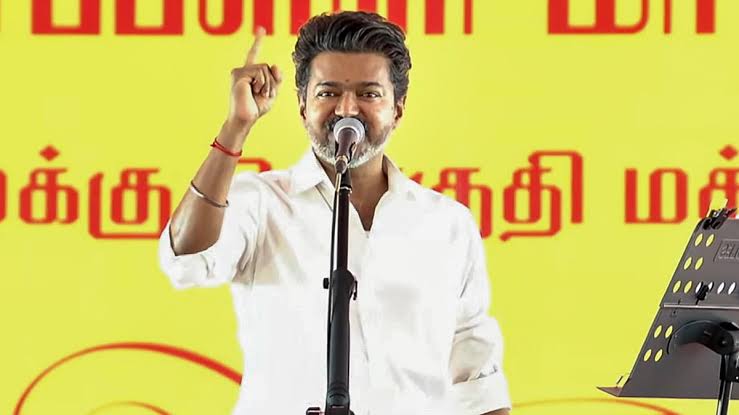
A fresh political controversy has erupted in Tamil Nadu after serious allegations of horse-trading surfaced between the ruling Tamilaga Vettri Kazhagam (TVK) and the opposition Dravida Munnetra Kazhagam (DMK). The dispute has intensified the state’s political atmosphere, with both parties accusing each other of attempting to lure legislators and manipulate the balance of power in the Legislative Assembly.
The controversy has sparked widespread debate over the stability of Chief Minister Vijay’s government, although there has been no official indication that the administration has lost its legislative majority. Instead, the allegations have fueled political confrontation and heightened tensions between the state’s two principal political rivals.
Allegations of Multi-Crore Offers to MLAs
The political storm began after a TVK legislator alleged that individuals claiming to have links with influential political figures approached him with an offer reportedly worth ₹35 crore in exchange for supporting efforts aimed at weakening the ruling government. The MLA claimed he was pressured to vote against the government’s interests during crucial Assembly proceedings.
According to the allegations, the proposal was part of a broader attempt to persuade several TVK legislators to distance themselves from the ruling party, potentially affecting the government’s strength in the Assembly. The accusations triggered an immediate police investigation and significantly escalated political tensions across the state.
Police Action and Arrests
Law enforcement authorities acted swiftly after receiving complaints connected to the alleged bribery attempt. Multiple individuals were arrested on suspicion of involvement in the purported operation to influence elected representatives.
Investigators are examining whether the accused acted independently or as part of a larger political conspiracy. Authorities have not publicly disclosed conclusive evidence linking any senior political leader to the alleged operation, and the investigation remains ongoing.
TVK Accuses Opposition of Political Destabilization
The ruling TVK has maintained that the alleged bribery attempts were part of a deliberate strategy to destabilize the elected government. Party leaders claimed that certain opposition-linked figures were attempting to engineer defections among legislators in order to weaken Chief Minister Vijay’s administration.
TVK representatives argued that the alleged conspiracy reflected growing political desperation among rivals following the party’s rise to power. They insisted that their legislators remain united and committed to supporting the government despite attempts to influence them. 
DMK Rejects Charges, Levels Counter-Allegations
The opposition DMK has categorically denied all allegations made by the ruling party and instead accused TVK of manufacturing the controversy for political advantage.
DMK leaders demanded an independent investigation into the entire episode and alleged that the ruling party itself had engaged in attempts to influence opposition legislators. The party has also called for a formal inquiry into the conduct of senior government functionaries, arguing that transparency is essential to maintain public confidence in democratic institutions.
Is Vijay Government Really Under Threat?
Despite speculation surrounding the controversy, there is currently no official evidence suggesting that Chief Minister Vijay’s government is on the verge of collapse.
Political observers note that while the allegations have generated considerable attention, they do not automatically translate into an immediate constitutional crisis. Any challenge to the government’s majority would ultimately need to be tested on the floor of the Legislative Assembly if circumstances warrant such a move.
The controversy has therefore become more of a political battle than an immediate threat to the government’s continuation in office.
Background: A Politically Sensitive Assembly
The latest dispute comes only weeks after Tamil Nadu witnessed an intensely contested government formation process following the Assembly elections. The current administration was formed after securing the necessary legislative support in a politically fragmented Assembly, making questions surrounding legislative loyalty particularly significant.
Given the relatively delicate political arithmetic, allegations involving attempts to influence MLAs have attracted heightened public attention and intensified scrutiny from both supporters and opponents of the government.
Political Temperature Continues to Rise
The horse-trading controversy has become the latest chapter in an increasingly confrontational relationship between the ruling TVK and the opposition DMK. Both parties have intensified their political attacks in recent weeks over governance, administrative decisions, and legislative conduct.
While investigations continue, the episode has further polarized Tamil Nadu’s political landscape, with both sides insisting they are the victims of attempts to undermine democratic processes. Whether the allegations ultimately lead to criminal prosecutions or remain part of the broader political contest will depend on the findings of the ongoing investigation.