
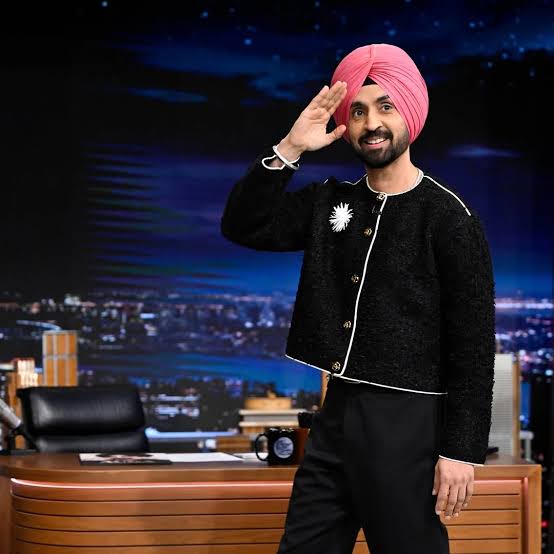
Punjabi singer and actor Diljit Dosanjh has addressed the ongoing controversy surrounding his upcoming film, responding to protests and criticism with a brief yet striking message that has reignited debate across social media and political circles. As opposition to the film continues to gain attention, Dosanjh remarked, “Mubarak” (Congratulations) to those protesting, while asserting that the government has no involvement in the matter.
His comments come amid mounting criticism from certain political groups and activists who have expressed objections to the film and its perceived associations. The controversy has evolved beyond the entertainment industry, drawing reactions from political leaders, cultural commentators, and members of the public.
Diljit Breaks His Silence
Breaking his silence after days of controversy, Diljit Dosanjh appeared to respond to the growing campaign against the film through a social media interaction. Congratulating those who have been protesting, the actor suggested that the issue had been amplified beyond its original context.
He also emphasized that the government should not be blamed or drawn into the dispute, making it clear that public criticism should not be directed toward authorities over a creative project. His statement appeared aimed at separating the film’s release from political narratives that have emerged in recent days.
Although concise, the response quickly became a topic of discussion online, with supporters praising his calm approach while critics continued to question his position.
Why the Film Is Facing Opposition
The controversy revolves around objections raised by sections of political and social organizations over the film’s reported casting choices and alleged cross-border associations. Critics have argued that the project has hurt public sentiment, especially in light of strained diplomatic relations and longstanding national security concerns.
Demonstrations have been held in some locations, with protesters demanding action against the film and calling for greater accountability from those associated with its production.
The issue has sparked polarized reactions, with one side arguing that artists should exercise greater responsibility in sensitive matters, while another has defended creative freedom and opposed attempts to pressure filmmakers through public protests. 
Political Reactions Intensify
The matter has also attracted political attention, with leaders offering differing views on the controversy.
Some political voices have criticized Diljit Dosanjh and questioned his professional decisions, arguing that public figures should remain mindful of national sentiment. Others have maintained that the controversy should not be politicized and that artistic works should be evaluated independently.
Amid the growing debate, Union Education Minister Dharmendra Pradhan reportedly clarified that the central government has no role in the film’s production or the decisions made by its creators. His remarks reinforced the position that the dispute is unrelated to government policy.
Meanwhile, criticism from political figures, including Maharashtra BJP leader Abhijeet Dipke, has further intensified the public discourse, with calls for stronger action against those associated with the project.
Social Media Divided
The controversy has generated widespread discussion across social media platforms.
Supporters of Diljit Dosanjh argue that artists should not become targets of political campaigns and that cinema should remain a platform for creative expression. Many praised the actor for maintaining a restrained tone despite sustained criticism.
On the other hand, opponents believe that public personalities must consider the broader implications of their professional collaborations and remain sensitive to issues that resonate strongly with the public.
The divide reflects a broader national conversation about the balance between artistic freedom, public accountability, and political sentiment.
A Continuing Debate Around Cinema and Public Sentiment
The latest episode once again highlights how films and celebrities can quickly become the center of political and social debates in India. As entertainment increasingly intersects with national issues, filmmakers and actors often find themselves navigating complex public expectations.
Whether the controversy ultimately affects the film’s commercial performance remains to be seen. However, the discussion has already extended well beyond cinema, raising larger questions about freedom of expression, public opinion, and the role of artists in a politically charged environment.
For now, Diljit Dosanjh’s response has added another chapter to an already evolving controversy, ensuring that both the film and the broader debate remain firmly in the public spotlight.