
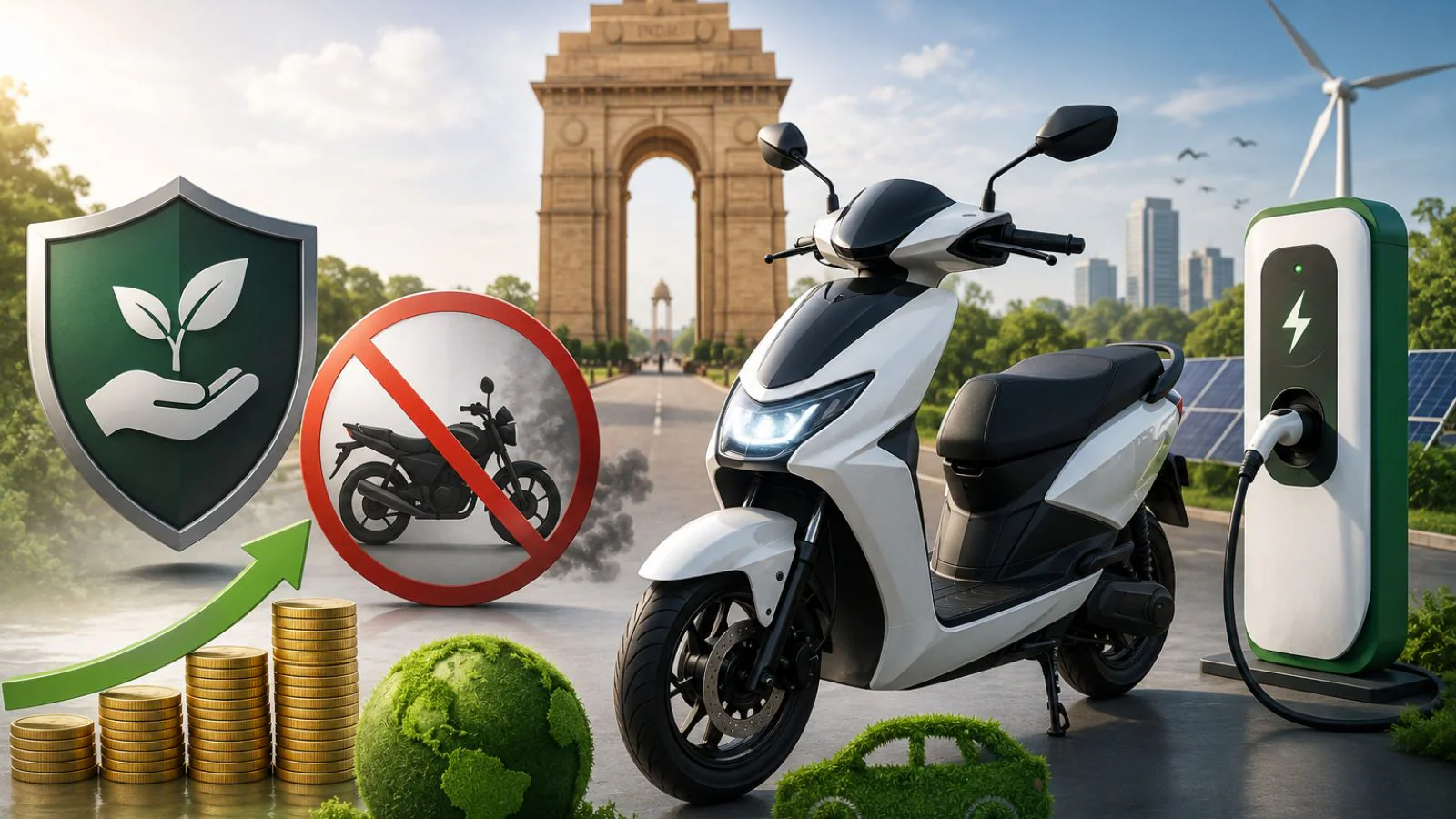
In a major push toward cleaner transportation and reduced urban pollution, the Delhi government has approved a comprehensive Electric Vehicle (EV) Policy that introduces a wide range of financial incentives, tax exemptions, and scrappage benefits aimed at accelerating the adoption of electric vehicles across the national capital.
The policy, which comes into effect from July 1, 2026, is designed to encourage residents to transition from conventional fuel-powered vehicles to electric alternatives. It will remain operational until March 31, 2030, and forms a key component of the government’s long-term strategy to tackle vehicular emissions and improve air quality.
Strong Financial Incentives for Electric Two-Wheeler Buyers
One of the most attractive features of the new policy is the subsidy package for electric two-wheelers. The government has structured incentives in a phased manner, rewarding early adopters with higher financial benefits.
Eligible electric two-wheelers with an ex-factory price below ₹2.25 lakh will qualify for purchase incentives linked to battery capacity. During the first year of the policy, buyers can receive ₹10,000 per kWh of battery capacity, subject to a maximum subsidy of ₹30,000. In the second year, the incentive reduces to ₹6,600 per kWh with a cap of ₹20,000, while the third year offers ₹3,300 per kWh up to ₹10,000.
The staggered subsidy structure has been introduced to encourage consumers to make the switch to electric vehicles sooner rather than later, helping drive rapid adoption during the initial years of implementation.
Additional Scrappage Incentive for Older Two-Wheelers
The policy also seeks to remove older and more polluting vehicles from Delhi’s roads through a dedicated scrappage incentive.
Owners of two-wheelers registered under BS-IV emission standards or older can receive an additional incentive of ₹10,000 when they scrap their existing vehicle and purchase a new electric two-wheeler within the specified eligibility period. The incentive is available upon submission of the required scrappage certificate from an authorized vehicle recycling facility.
This measure is expected to significantly boost vehicle replacement rates while simultaneously reducing emissions from aging vehicles that contribute disproportionately to urban air pollution. 
Major Benefits for Electric Car Buyers
While the policy does not offer direct purchase subsidies for electric passenger cars, it introduces substantial scrappage incentives to make the transition more affordable.
Owners of older petrol or diesel vehicles meeting the prescribed eligibility criteria can receive a scrappage incentive of up to ₹1 lakh when purchasing a new electric car. The benefit applies to eligible vehicles that are retired through authorized scrapping channels and replaced with electric alternatives.
In addition, electric cars priced up to ₹30 lakh will receive complete exemptions from road tax and registration charges, significantly reducing the overall ownership cost. These tax benefits are expected to improve the affordability of EVs and attract a wider segment of buyers.
Broader Vision for Cleaner Transportation
The policy extends beyond consumer incentives and forms part of a larger roadmap to transform Delhi’s transportation ecosystem.
Authorities have outlined ambitious targets to increase electric vehicle penetration while reducing dependence on fossil-fuel-powered transportation. Investments are expected to support charging infrastructure expansion, strengthen EV-related services, and improve accessibility for consumers across the city. The government has earmarked significant funding to support the transition over the coming years.
Shift Toward an Electric-Only Future
The approved policy also includes long-term regulatory measures that signal a gradual phase-out of conventional vehicle registrations in certain categories.
Beginning January 2027, only electric auto-rickshaws will be eligible for new registrations in Delhi. Furthermore, registrations of new petrol and CNG-powered two-wheelers are scheduled to end from April 2028, making electric vehicles the default option in these segments.
These measures represent one of the most aggressive electric mobility transitions undertaken by any Indian state or union territory and are intended to substantially reduce transportation-related emissions.
Addressing Delhi’s Pollution Challenge
Delhi has long struggled with severe air quality issues, particularly during winter months when pollution levels often reach hazardous levels. Vehicular emissions remain one of the significant contributors to the city’s air pollution burden.
By encouraging the replacement of older internal combustion engine vehicles with cleaner electric alternatives, policymakers aim to reduce tailpipe emissions, lower dependence on fossil fuels, and create a more sustainable urban transport network. The initiative also aligns with broader national goals for electric mobility and environmental sustainability.
Conclusion
The Delhi EV Policy 2026 marks a significant step in the capital’s transition toward sustainable transportation. With generous subsidies for electric two-wheelers, attractive scrappage incentives, tax exemptions for electric cars, and a clear roadmap toward greater electrification, the policy seeks to make EV ownership more accessible while addressing pressing environmental concerns.
If implemented effectively, the initiative could accelerate electric vehicle adoption, reduce vehicular pollution, and position Delhi as one of India’s leading cities in the clean mobility revolution.