
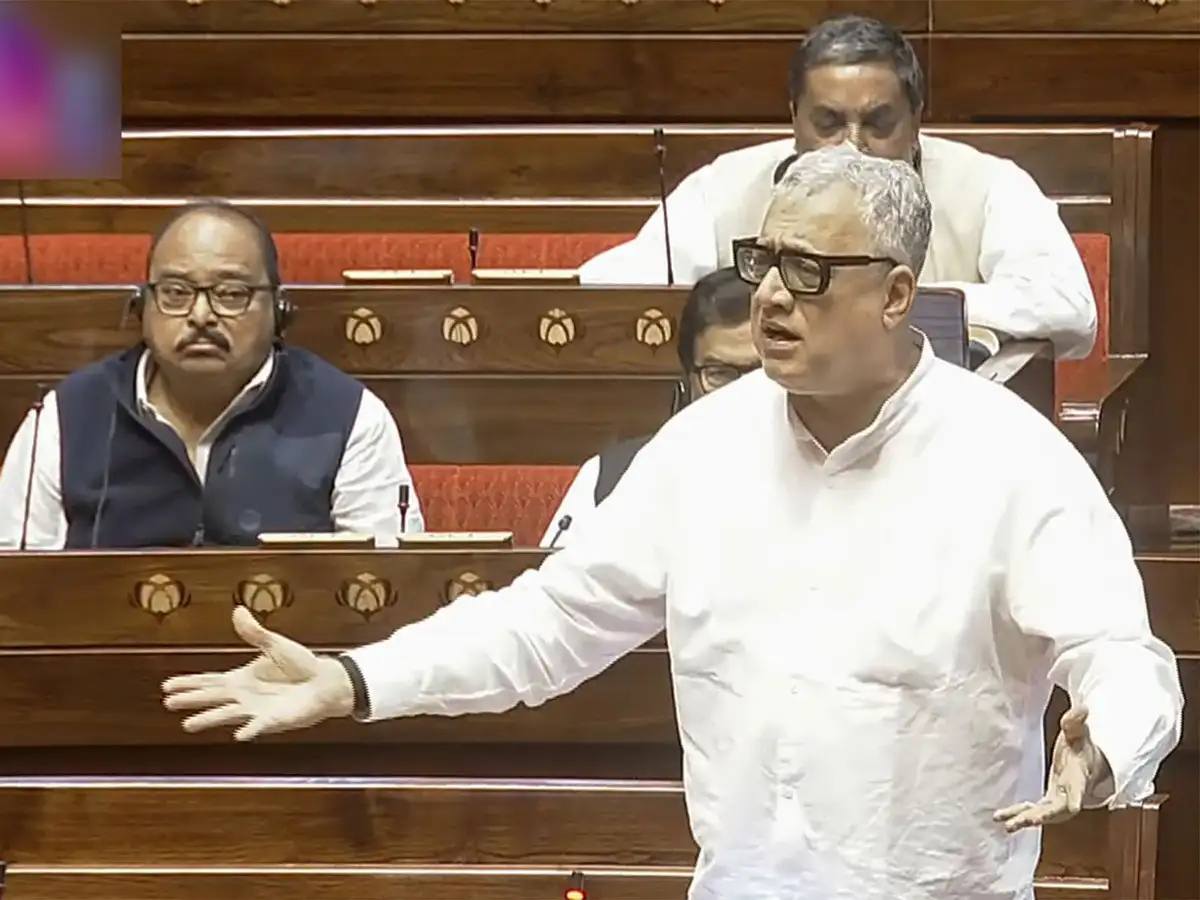
A fresh political confrontation has emerged in West Bengal after the Trinamool Congress (TMC) accused the Bharatiya Janata Party (BJP) of attempting to impose a vegetarian-centric cultural framework on the state. The allegations, raised by senior TMC leader Derek O’Brien, have reignited a broader national debate over food choices, regional identity, cultural diversity, and the role of governments in shaping personal lifestyles.
Speaking on the issue, O’Brien argued that Bengal’s food traditions are deeply rooted in its history, geography, and culture and that any effort to influence or standardize dietary habits would be viewed as an intrusion into the state’s social fabric. His remarks came amid ongoing political tensions between the ruling TMC in West Bengal and the BJP, which has sought to expand its political footprint in the state over the past several years.
Food Habits Become a Political Flashpoint
The controversy highlights how food choices have increasingly become a subject of political discussion in India. While dietary preferences vary significantly across regions, communities, and cultures, political parties have frequently clashed over policies and public messaging perceived to favor one set of practices over another.
According to the TMC leadership, attempts to promote vegetarianism as a preferred social norm risk undermining India’s cultural diversity. Party leaders contend that food is a personal matter shaped by local traditions and individual choice rather than political ideology.
West Bengal, known for its rich culinary heritage that prominently features fish, meat, and a variety of regional dishes, has often emphasized its distinct cultural identity. TMC leaders argue that preserving this diversity is essential and that no political entity should seek to redefine established traditions.
Bengal’s Cultural Identity at the Center of the Debate
The issue resonates strongly in West Bengal, where cuisine is closely linked to cultural expression. Fish, in particular, occupies a significant place in Bengali society, featuring prominently in household meals, festivals, and social gatherings.
Political observers note that discussions around food often extend beyond dietary preferences and become symbolic of larger debates concerning regional autonomy, cultural identity, and social values. In this context, the latest exchange between the TMC and BJP reflects deeper ideological differences over how cultural traditions should be represented in public life.
O’Brien emphasized that Bengal’s food culture is not merely a matter of consumption but an integral part of the state’s heritage. He suggested that efforts to influence eating habits could be interpreted as attempts to reshape cultural practices that have evolved over centuries. _(1).webp)
BJP Yet to Accept Allegations
The BJP has consistently rejected accusations that it seeks to dictate personal food choices. Party leaders have previously maintained that individuals are free to follow dietary practices of their choosing and that cultural diversity remains an important feature of Indian society.
However, opposition parties, including the TMC, have frequently accused the BJP of supporting policies or narratives that indirectly favor vegetarian traditions. These accusations have surfaced in various states over the years, often leading to heated political exchanges and public debates.
The latest remarks from the TMC are likely to add another dimension to the ongoing rivalry between the two parties, particularly as political competition intensifies ahead of future electoral contests.
Broader Questions About Diversity and Personal Freedom
The controversy has also revived wider discussions about personal freedom and cultural pluralism in India. Analysts point out that dietary practices across the country differ significantly based on geography, climate, religion, community customs, and economic factors.
As a result, debates surrounding food often carry implications that go beyond nutrition or lifestyle choices. They can touch upon issues of identity, social inclusion, and the balance between national narratives and regional traditions.
Supporters of cultural diversity argue that India’s strength lies in its ability to accommodate a wide range of customs and practices. They maintain that personal food choices should remain a matter of individual preference and local tradition rather than becoming subjects of political contestation.
Political Significance of the Row
The dispute underscores the continuing importance of cultural issues in contemporary Indian politics. While economic development, governance, and infrastructure remain central electoral concerns, questions related to identity and tradition frequently influence public discourse.
For the TMC, defending Bengal’s distinct cultural heritage remains a key political theme. For the BJP, countering such allegations while expanding its appeal in the state continues to be a strategic challenge.
As the debate unfolds, the controversy is expected to remain a talking point in political circles, reflecting broader national conversations about cultural diversity, regional autonomy, and the role of governments in matters of personal choice.
The latest exchange serves as a reminder that food, often viewed as a deeply personal aspect of daily life, can also become a powerful symbol in larger political and cultural debates.