
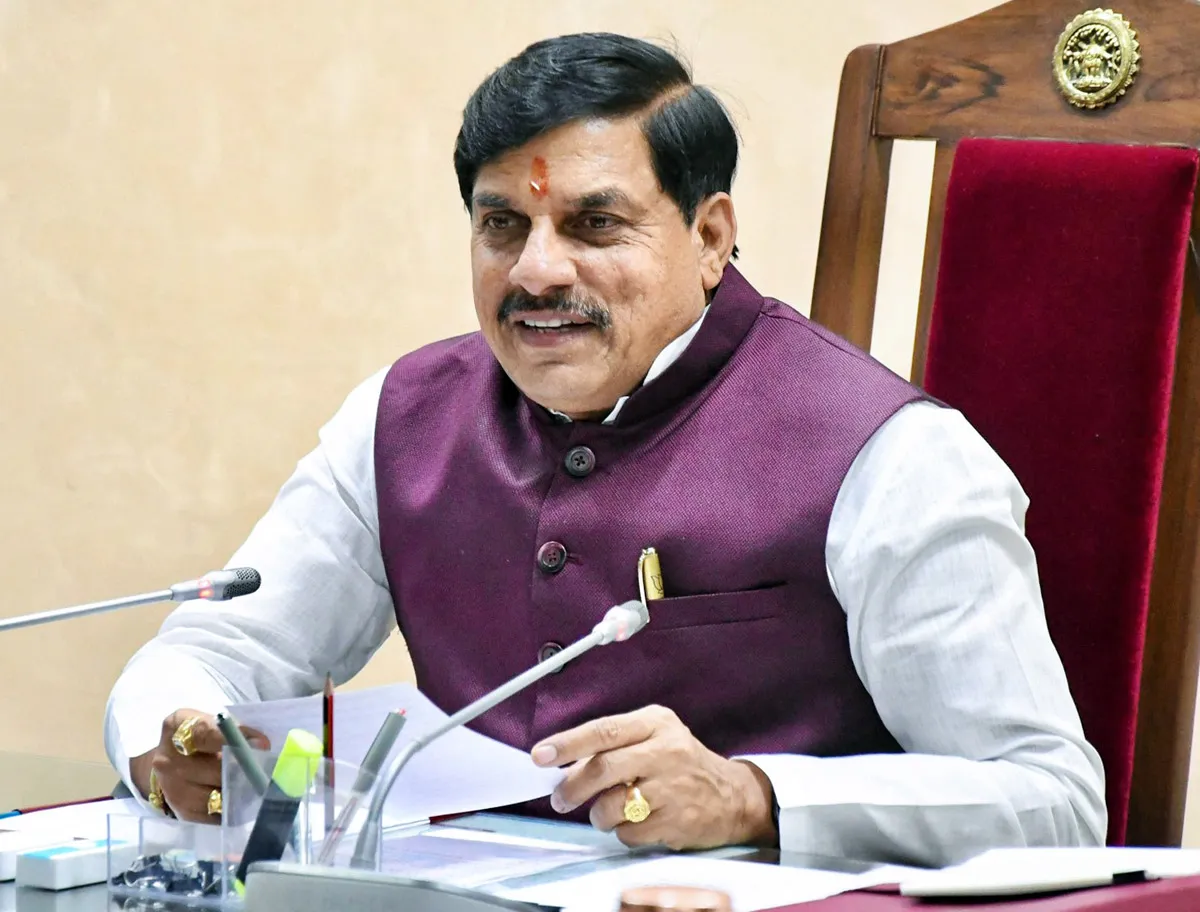
A fresh political controversy has emerged in Madhya Pradesh after the Congress party demanded a judicial investigation into a series of land transactions in Ujjain that it claims are connected to the family of Chief Minister Mohan Yadav. The opposition has alleged irregularities in the purchase and subsequent appreciation of land parcels situated in areas that later witnessed significant infrastructure development, raising questions about possible conflicts of interest and insider influence.
The allegations have intensified the political battle between the ruling Bharatiya Janata Party (BJP) and the Congress, with both sides exchanging accusations over transparency, governance, and the use of public office.
Congress Raises Questions Over Land Acquisitions
Congress leaders have claimed that land parcels associated with members of the chief minister’s family were acquired before major government-backed development projects transformed the surrounding region. According to the opposition, the value of these properties increased substantially following the announcement and implementation of infrastructure initiatives in and around Ujjain.
The party has argued that the circumstances surrounding the transactions warrant a detailed and impartial inquiry. Congress leaders have called for a judicial probe headed by a sitting or retired judge to determine whether any official influence, privileged information, or procedural irregularities played a role in the acquisitions.
The opposition maintains that public confidence in government institutions can only be preserved through a transparent investigation that independently examines all relevant records, approvals, and ownership details.
Demand for Transparency and Accountability
Congress representatives have stated that the issue goes beyond individual land purchases and concerns broader questions of governance and ethical conduct in public office. They contend that if elected officials or their relatives benefit from decisions related to urban planning, infrastructure expansion, or land-use changes, such matters deserve rigorous scrutiny.
The party has urged the state government to disclose comprehensive details regarding the transactions, including purchase dates, ownership structures, valuation records, and any subsequent changes in land status that may have contributed to appreciation in value.
According to Congress leaders, a judicial inquiry would help establish whether the transactions were routine private investments or whether they involved circumstances that merit further examination under the law. 
BJP Rejects Allegations
The ruling BJP has strongly rejected the accusations, describing them as politically motivated attempts to tarnish the image of the chief minister and his administration. Party leaders have asserted that the land purchases in question were lawful and conducted in accordance with existing regulations.
Supporters of the government argue that land values often rise naturally in developing urban centers due to infrastructure growth, investment activity, and expanding economic opportunities. They have accused the Congress of selectively targeting political opponents without presenting conclusive evidence of wrongdoing.
The BJP has maintained that the allegations are part of a broader strategy by the opposition to generate controversy ahead of future political contests and divert attention from developmental initiatives undertaken by the state government.
Political Significance of the Controversy
The controversy carries particular significance because Ujjain is one of Madhya Pradesh’s most prominent cities and a major religious and cultural center. In recent years, the city has witnessed substantial public investment aimed at improving infrastructure, tourism facilities, connectivity, and urban development.
As development projects continue to reshape the region, questions surrounding land ownership and property appreciation have become politically sensitive issues. Opposition parties often scrutinize transactions involving influential individuals to determine whether public projects may have indirectly benefited private interests.
The latest allegations have therefore added a new dimension to the ongoing political debate over transparency in land management and urban planning decisions.
Calls for Independent Verification
Political analysts note that allegations involving land transactions frequently become contentious because of the significant financial gains that can result from changes in infrastructure planning and government development priorities. Independent verification of records is often considered essential to distinguish between legitimate investments and potential misuse of information or influence.
Congress leaders insist that only a judicial inquiry can provide an authoritative assessment of the facts. They argue that an investigation conducted by an independent judicial authority would ensure credibility and prevent accusations of political interference.
Meanwhile, government representatives continue to defend the chief minister and his family, asserting that all claims should be evaluated on the basis of documented evidence rather than political rhetoric.
Awaiting Further Developments
As the controversy unfolds, pressure is mounting on the state government to respond to the opposition’s demand for a judicial probe. Whether the government agrees to an independent investigation or continues to dismiss the allegations as politically driven remains to be seen.
For now, the issue has become a major flashpoint in Madhya Pradesh politics, with both the ruling party and the opposition seeking to shape public opinion. The outcome of the dispute could have broader implications for discussions surrounding accountability, transparency, and public trust in governance across the state.
The debate is expected to continue as political parties, civil society groups, and citizens await further clarification regarding the land transactions and the possibility of an official inquiry.