
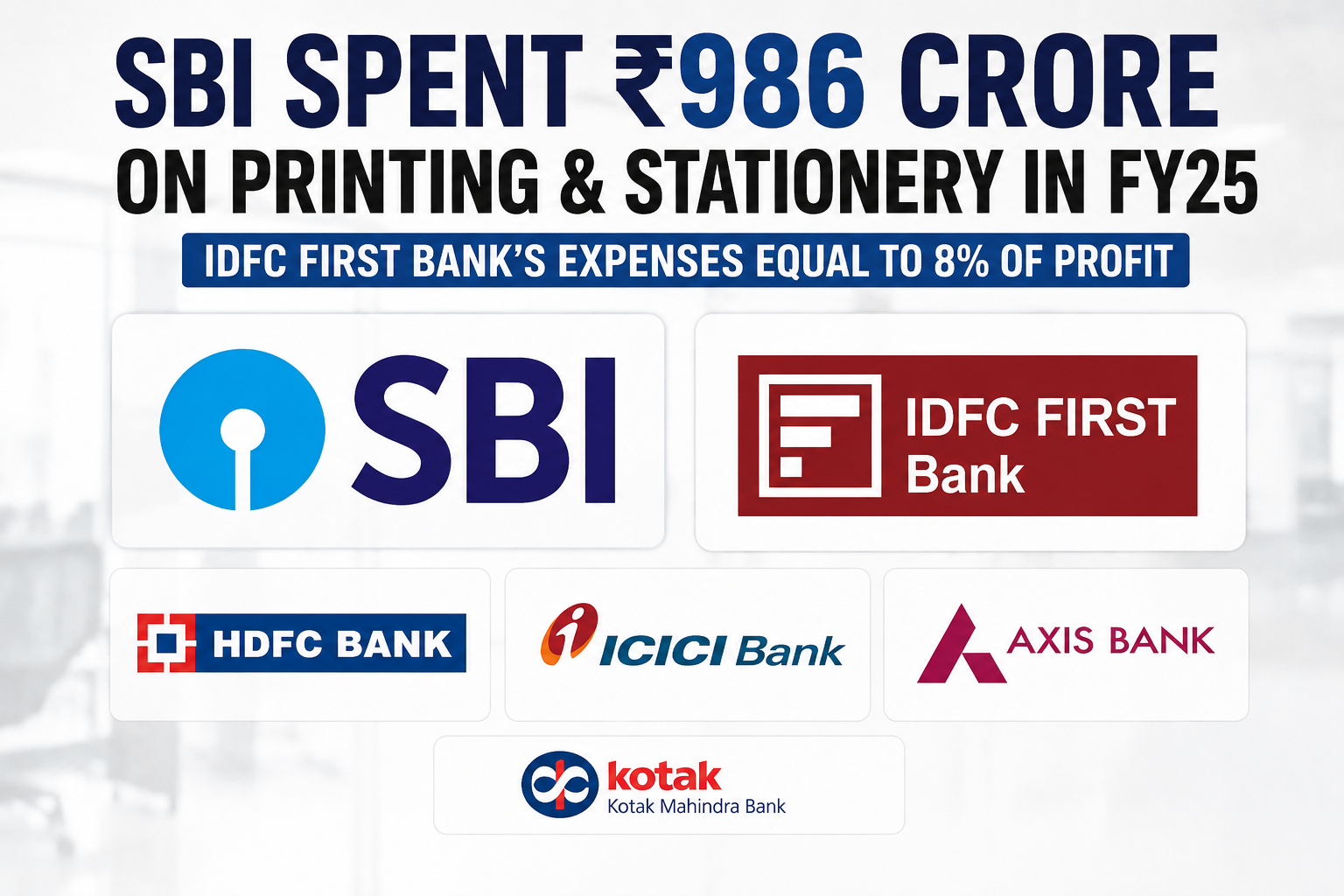
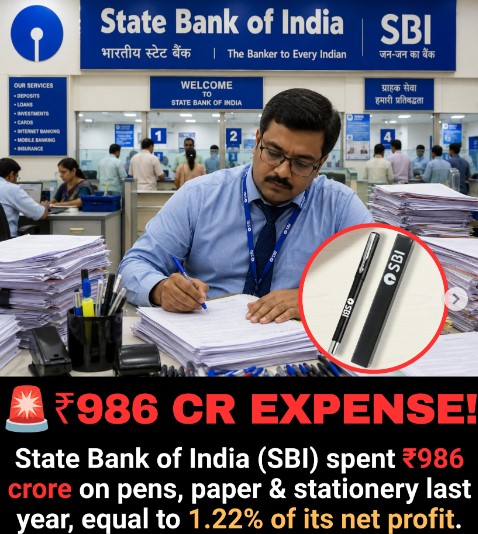
Even in the age of digital banking and paperless transactions, India’s largest lender continues to spend heavily on traditional operations. State Bank of India (SBI) emerged as the country’s biggest spender on printing and stationery during FY25, shelling out a staggering ₹986 crore, highlighting how physical banking services still command enormous costs.
The massive figure has sparked discussions across the banking industry, especially at a time when lenders are aggressively promoting digital transactions and reducing paperwork.
SBI Leads the Pack
As the country’s largest bank with thousands of branches and millions of customers, SBI’s spending reflects the sheer scale of its operations. From cheque books and passbooks to customer forms and official documents, the public sector giant continues to maintain a vast physical infrastructure alongside its digital ecosystem.
Industry observers say the expenditure is not surprising given SBI’s extensive reach, particularly in rural and semi-urban India where traditional banking services continue to dominate.
IDFC First Bank’s Numbers Trigger Debate
While SBI recorded the highest absolute spending, IDFC First Bank grabbed attention for a different reason.
According to financial disclosures, the private lender’s printing and stationery expenses accounted for nearly 8% of its FY25 net profit, making the cost burden significantly more visible when compared to earnings.
The development comes at a time when the bank’s profitability has faced pressure due to challenges in its microfinance portfolio, prompting analysts to closely examine operational costs.
Digital Push, But Paper Still Rules
Despite rapid digitisation across the banking sector, complete dependence on paper remains a distant goal.
Banks continue to spend heavily on:
- Passbooks and cheque books
- Account opening forms
- Customer statements and notices
- Debit and credit card communication
- Internal branch documentation
- Promotional and awareness material
Experts point out that regulatory requirements and customer preferences still make physical documentation unavoidable.
Why Big Banks Spend More
Analysts believe such figures should be viewed in the context of operational size. Factors such as branch network, customer base, geographical presence and business volume play a crucial role in determining expenditure.
For banks like SBI, which serve customers across every corner of the country, higher stationery costs are considered part of maintaining large-scale operations.
Hybrid Banking Model Continues
India’s banking sector is currently navigating a transition phase where digital services are growing rapidly, but traditional banking practices remain deeply embedded.
While mobile banking, UPI transactions and e-statements are becoming increasingly popular, millions of customers still rely on physical records and branch-based services.
As digital adoption expands further, experts expect these costs to gradually decline. However, for now, India’s banking giants continue to spend hundreds of crores to keep both worlds running simultaneously.
The Big Picture
The numbers underline a striking reality: despite the digital revolution, paper is far from disappearing from India’s banking ecosystem. And with SBI spending nearly ₹1,000 crore on printing alone, the cost of running traditional banking remains enormous.