
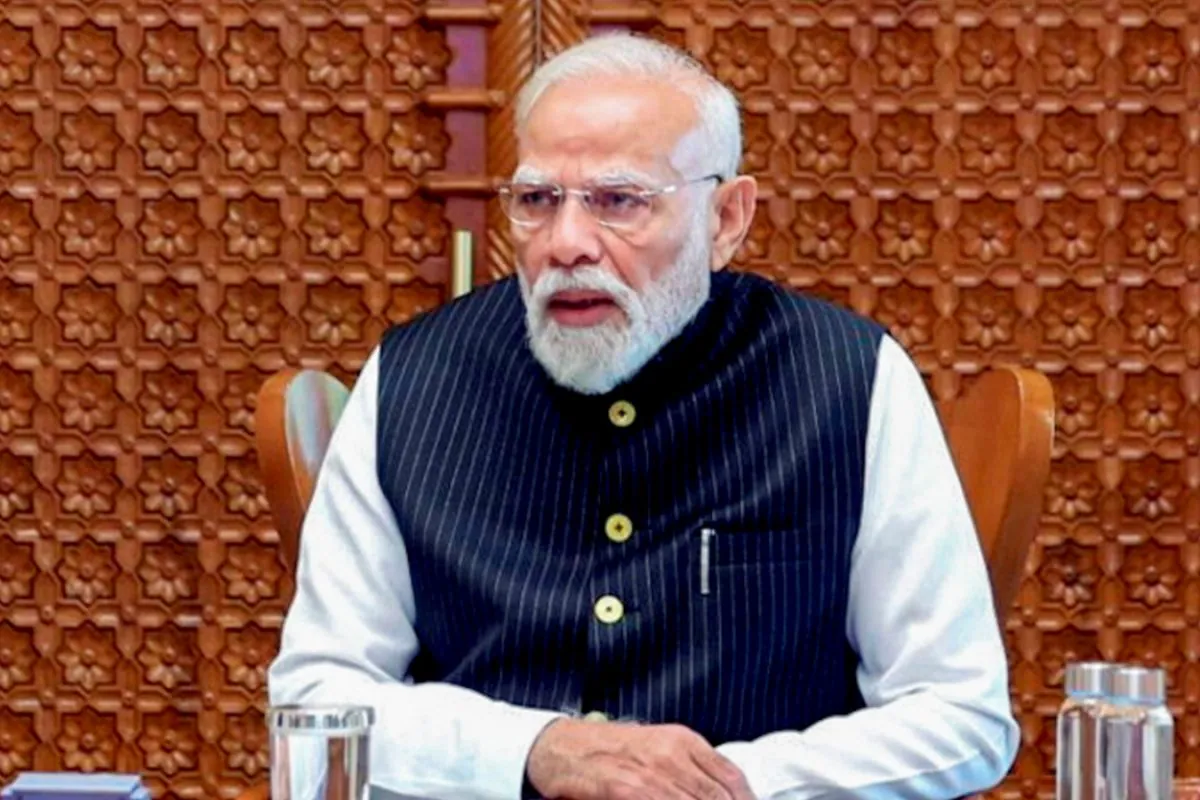
Prime Minister Narendra Modi on Saturday asserted that West Bengal is finally moving in the direction envisioned during the historic events surrounding India’s independence in 1947. Addressing a large gathering during Paschimbanga Divas celebrations, the Prime Minister linked the state’s present political and developmental trajectory to the aspirations of leaders who played a crucial role in shaping Bengal’s future at the time of Partition.
Speaking before party supporters and local residents, Modi described the current phase in West Bengal as a transformative period marked by development, improved governance, and renewed public confidence. He argued that the state had overcome decades of political stagnation and was now positioned for accelerated growth. According to the Prime Minister, Bengal’s progress reflects the realization of long-standing aspirations that sought to secure the state’s place within India while preserving its unique cultural and historical identity.
The Prime Minister used the occasion to revisit the events of 1947, emphasizing the significance of the movement that led to the formation of West Bengal as part of independent India. He paid tribute to Syama Prasad Mookerjee, whom he credited with playing a decisive role in ensuring that a significant portion of Bengal remained within the Indian Union during Partition. Modi said that the sacrifices and efforts made by leaders of that era laid the foundation for the state’s future and should be remembered by subsequent generations.
Highlighting what he described as a new chapter for the state, Modi claimed that Bengal has begun to free itself from the challenges that had hampered its development for decades. He pointed to improvements in governance, infrastructure, public welfare delivery, and economic prospects as indicators of positive change. According to him, the state’s future depends on sustained investment, efficient administration, and policies focused on long-term growth rather than short-term political considerations. 
The Prime Minister also stressed the importance of preserving Bengal’s rich cultural heritage while pursuing modernization. He noted that the state has historically played a leading role in India’s intellectual, cultural, and nationalist movements and argued that this legacy should serve as a foundation for future progress. He said that development and cultural pride can advance together, creating opportunities for economic growth while maintaining the state’s distinctive identity.
During his address, Modi criticized previous administrations, alleging that political interests had often taken precedence over public welfare and development. He argued that governance should be centered on transparency, accountability, and service delivery. According to the Prime Minister, citizens increasingly expect governments to focus on infrastructure, employment generation, education, healthcare, and security rather than divisive political narratives.
The speech also carried strong political significance, as Modi projected optimism about Bengal’s future and described the current period as an opportunity to reshape the state’s developmental trajectory. He maintained that greater cooperation between different levels of government could help accelerate infrastructure projects, attract investment, and improve public services across urban and rural areas.
Observers noted that the Prime Minister’s remarks blended historical reflection with contemporary political messaging. By invoking the events of 1947 and the legacy of leaders associated with Bengal’s place in independent India, Modi sought to connect the state’s past with its present ambitions. The emphasis on development, governance, and historical memory underscored the broader narrative that Bengal is entering a new phase of transformation and growth.
Concluding his address, the Prime Minister expressed confidence that West Bengal would emerge as a major contributor to India’s future growth story. He said the state’s people possess the talent, resilience, and cultural strength necessary to drive economic progress and social advancement. Framing the moment as both a tribute to history and a roadmap for the future, Modi reiterated that Bengal is now moving toward the vision that many had hoped to see realized at the dawn of independence.