
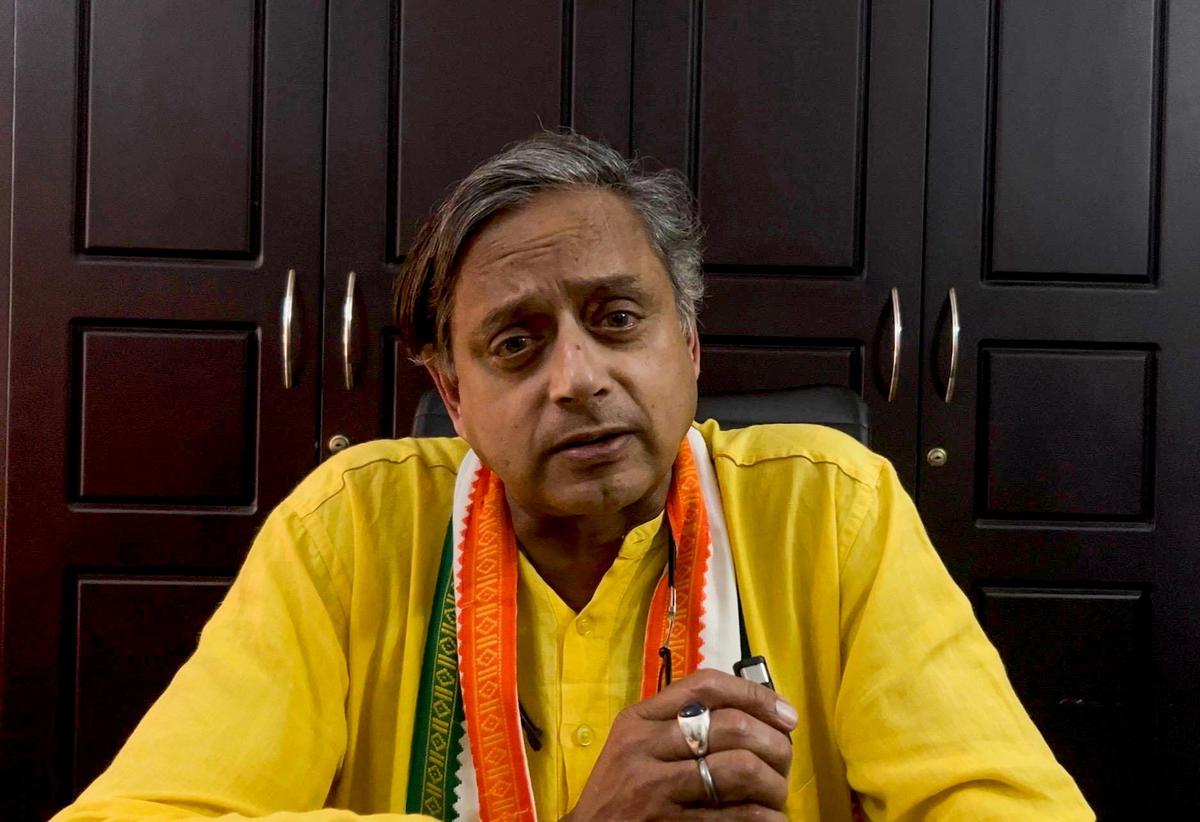
A fresh political controversy has emerged within the Congress party after senior leader Shashi Tharoor publicly commended Prime Minister Narendra Modi’s diplomatic efforts during the recent G7 Summit. His remarks, which highlighted Modi’s intervention regarding the deaths of Indian seafarers in the Gulf region, have reignited discussions about Tharoor’s increasingly independent political stance and his relationship with the party leadership.
The controversy unfolded after Tharoor acknowledged the significance of the Prime Minister raising concerns related to Indian citizens abroad during high-level international engagements. His comments came in the context of discussions surrounding a meeting involving Prime Minister Modi and former U.S. President Donald Trump on the sidelines of the G7 Summit.
Tharoor Commends Diplomatic Outreach
Shashi Tharoor emphasized that safeguarding the interests of Indian citizens overseas should remain a national priority irrespective of political affiliations. He noted that efforts to seek accountability and justice for Indian nationals who have suffered abroad deserve recognition when they contribute to protecting Indian interests.
The Congress leader specifically referred to the issue of Indian seafarers who reportedly lost their lives in the Gulf region under tragic circumstances. He suggested that raising the matter at influential international forums demonstrates the importance of diplomatic engagement and reflects the responsibility of national leadership toward Indian citizens working overseas.
His remarks were widely interpreted as a rare public endorsement of the Prime Minister’s diplomatic initiatives, drawing immediate attention across political circles.
Political Reactions Within Congress
The comments have reportedly generated unease within sections of the Congress party. Critics within the opposition camp argued that such praise could dilute the party’s broader criticism of the central government and its policies.
Over the past several months, Tharoor has repeatedly found himself at the center of internal debates within Congress due to positions that occasionally diverge from the party’s official narrative. While he has consistently maintained that national interest should take precedence over partisan considerations, some party members view his statements as creating mixed political messaging.
The latest episode has further highlighted existing differences within the opposition party regarding how national and international issues should be approached politically. 
A Pattern of Independent Views
Political observers note that this is not the first instance in which Tharoor has adopted a position that differs from the dominant sentiment within Congress. Known for his expertise in international affairs and diplomacy, the former diplomat has often evaluated government actions through the lens of national interest rather than strict party lines.
His supporters argue that acknowledging positive actions by political opponents demonstrates political maturity and strengthens democratic discourse. According to this view, recognizing effective governance or successful diplomatic initiatives should not automatically be seen as partisan support.
Critics, however, contend that repeated public praise for government actions can create confusion among party workers and voters, particularly during periods of intense political competition.
Focus on Indian Citizens Abroad
At the heart of the issue is the welfare of Indian citizens working overseas. The deaths of Indian seafarers in the Gulf have raised concerns about worker safety, legal protections, and the responsibilities of governments in ensuring justice for affected families.
The matter has attracted significant public attention, with calls for stronger diplomatic engagement and international cooperation to address such incidents. By highlighting the issue during discussions at the G7 Summit, Indian officials sought to bring greater visibility to the concerns surrounding the tragedy.
Experts believe that the protection of overseas Indians remains a critical component of India’s foreign policy, given the large number of citizens employed across the Gulf region and other parts of the world.
Wider Political Implications
The latest controversy underscores the challenges facing opposition parties as they balance criticism of government policies with recognition of actions perceived as beneficial to national interests. Tharoor’s remarks have once again brought attention to the broader debate over whether political leaders should acknowledge achievements across party lines.
The episode also reflects the growing importance of foreign policy and international diplomacy in domestic political discussions. As India continues to expand its global influence, actions taken on international platforms increasingly become subjects of political debate at home.
For Congress, the controversy may further intensify discussions about internal cohesion and messaging strategy ahead of future political contests. For Tharoor, it reinforces his image as a leader willing to express views that may not always align perfectly with party expectations.
Conclusion
Shashi Tharoor’s endorsement of Prime Minister Narendra Modi’s diplomatic intervention at the G7 Summit has sparked fresh political debate and renewed scrutiny of his role within Congress. While supporters view his comments as a principled acknowledgment of efforts made in the national interest, critics see them as another example of growing divergence from the party’s official stance. The controversy highlights the complex intersection of diplomacy, national interest, and partisan politics in contemporary India.