
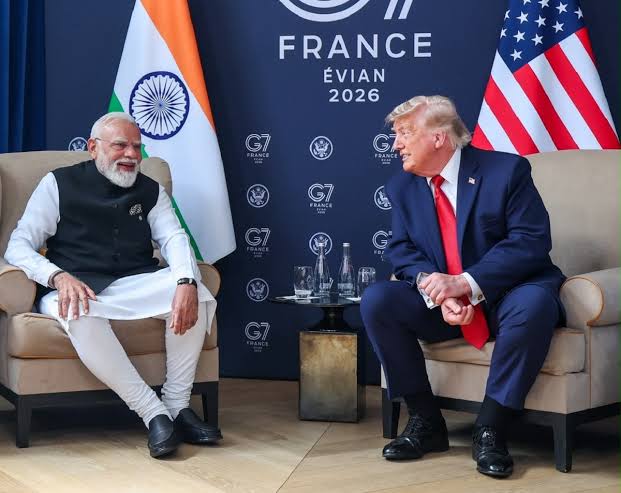
A fresh political confrontation has emerged following Prime Minister Narendra Modi’s interaction with former United States President Donald Trump on the sidelines of the G7 Summit, with the Congress party alleging that the Indian leader failed to adequately protect and assert India’s national interests during the high-profile engagement.
The criticism has reignited debates over India’s diplomatic posture, foreign policy priorities, and the government’s approach to sensitive international issues involving major global powers.
Congress Launches Sharp Attack on Government
Senior leaders from the Congress party questioned the outcomes of the meeting between Modi and Trump, arguing that India missed an opportunity to strongly articulate its position on several critical matters of national importance.
According to opposition leaders, the government should have used the meeting to address issues directly affecting India’s strategic and economic interests. They contended that New Delhi must maintain a firm and independent diplomatic stance, particularly when engaging with influential international figures and major global stakeholders.
The opposition’s criticism centered on what it described as a lack of visible gains from the interaction and an apparent failure to publicly counter statements or positions that could potentially affect India’s standing on the international stage.
Debate Over India’s Foreign Policy Approach
The controversy has once again highlighted differing political perspectives on India’s foreign policy strategy.
Congress leaders argued that diplomacy should not merely focus on maintaining cordial relations with global leaders but should also ensure that India’s core interests are clearly protected and advanced. They maintained that every high-level international engagement presents an opportunity to reinforce India’s positions on key geopolitical, economic, and security issues.
The opposition suggested that strong diplomatic engagement requires both cooperation and the willingness to assert national priorities when necessary. 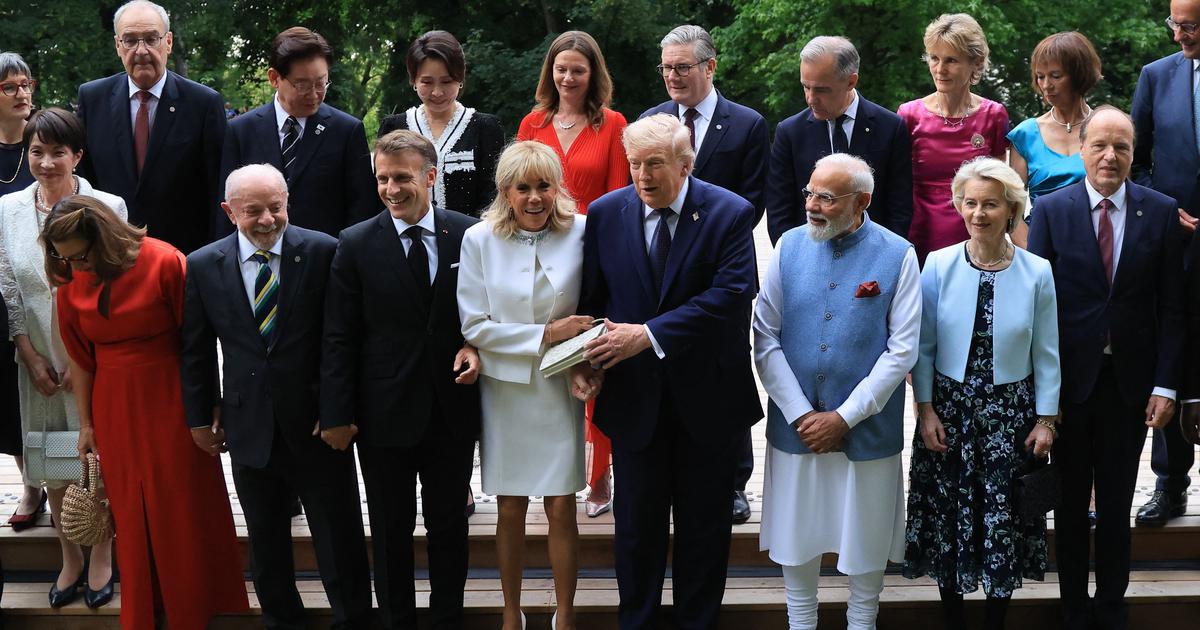
Government Defends Diplomatic Engagement
Supporters of the government, however, rejected the criticism and defended Prime Minister Modi’s approach. They emphasized that international diplomacy often involves complex discussions that may not always be publicly disclosed in detail.
Government supporters argued that India continues to maintain robust relations with major global powers while preserving its strategic autonomy. They pointed to India’s growing international influence and expanding diplomatic partnerships as evidence of the government’s successful foreign policy framework.
Officials and ruling party representatives have repeatedly stated that India’s foreign relations are guided by national interests and long-term strategic objectives rather than short-term political considerations.
Significance of the G7 Summit
The G7 Summit remains one of the world’s most influential forums for discussing global economic, political, and security challenges. Although India is not a permanent member of the group, it has frequently been invited to participate in summit discussions due to its growing economic and geopolitical importance.
The gathering provides opportunities for bilateral meetings between world leaders and serves as a platform for discussions on trade, technology, climate change, energy security, global conflicts, and international cooperation.
Prime Minister Modi’s participation in the summit was viewed as an important opportunity to strengthen India’s engagement with leading global economies and reinforce its role in shaping international policy discussions.
Trump’s Continued Relevance in Global Politics
Donald Trump remains a highly influential figure in international politics, particularly given his continuing prominence in American political discourse. Any interaction between Trump and major world leaders tends to attract significant attention due to the potential implications for future international relations.
Analysts note that meetings involving Trump often generate political debate because of his strong views on trade, security, immigration, and geopolitical alliances. Consequently, discussions involving India and Trump are closely scrutinized by political observers and opposition parties alike. 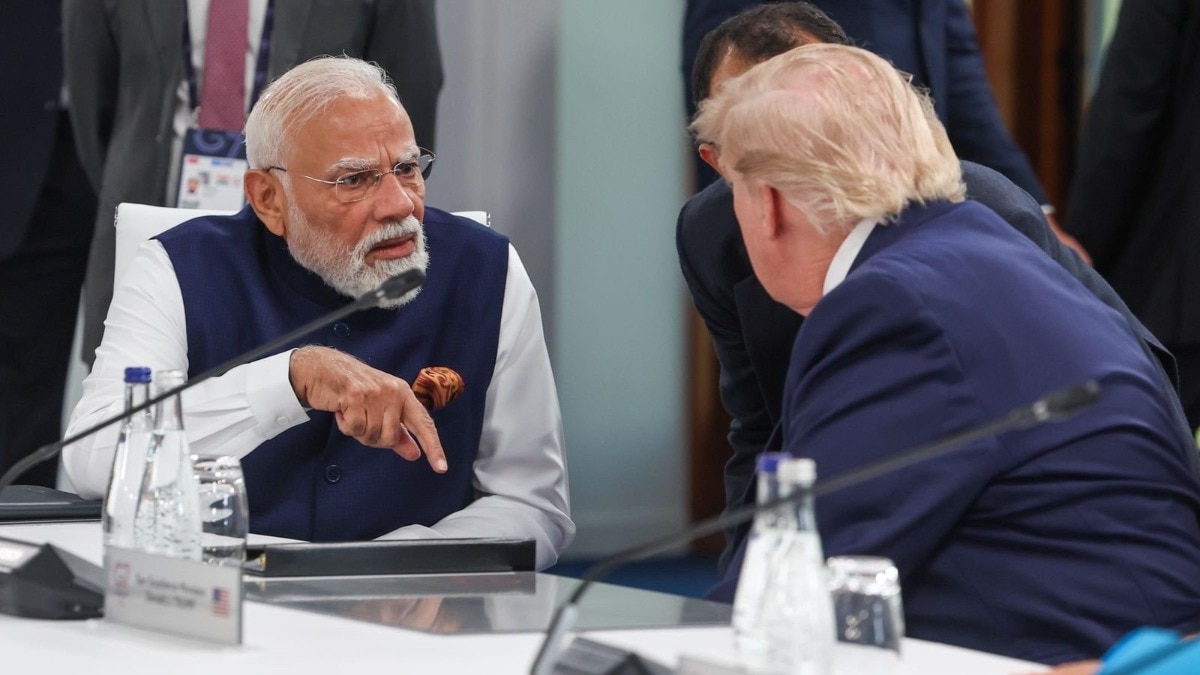
Political Implications at Home
The controversy surrounding the Modi-Trump interaction has also become part of the broader domestic political contest between the ruling Bharatiya Janata Party (BJP) and the Congress party.
With foreign policy increasingly becoming a subject of domestic political debate, opposition parties are seeking greater accountability regarding the outcomes of international engagements. At the same time, the government continues to highlight India’s growing global stature and expanding diplomatic influence.
Political analysts believe that such debates are likely to continue as India’s role on the world stage expands and international diplomacy becomes more closely linked to domestic political narratives.
Broader Discussion on National Interests
Beyond partisan politics, the discussion has raised broader questions about how India should balance strategic partnerships with the need to firmly defend national interests in an increasingly complex global environment.
Experts suggest that successful diplomacy requires a combination of constructive engagement, strategic flexibility, and clear communication of national priorities. As India strengthens its position as a major global power, expectations regarding the outcomes of high-level diplomatic meetings are also increasing.
The controversy surrounding the Modi-Trump meeting reflects these evolving expectations and underscores the growing public interest in India’s foreign policy decisions and international engagements.
Conclusion
The Congress party’s criticism of Prime Minister Narendra Modi’s interaction with Donald Trump at the G7 Summit has sparked a wider debate about India’s diplomatic strategy and the protection of national interests. While the opposition argues that stronger assertions were needed during the meeting, the government maintains that its foreign policy remains firmly aligned with India’s long-term strategic goals. The episode has once again demonstrated how international diplomacy increasingly influences domestic political discourse in India.