
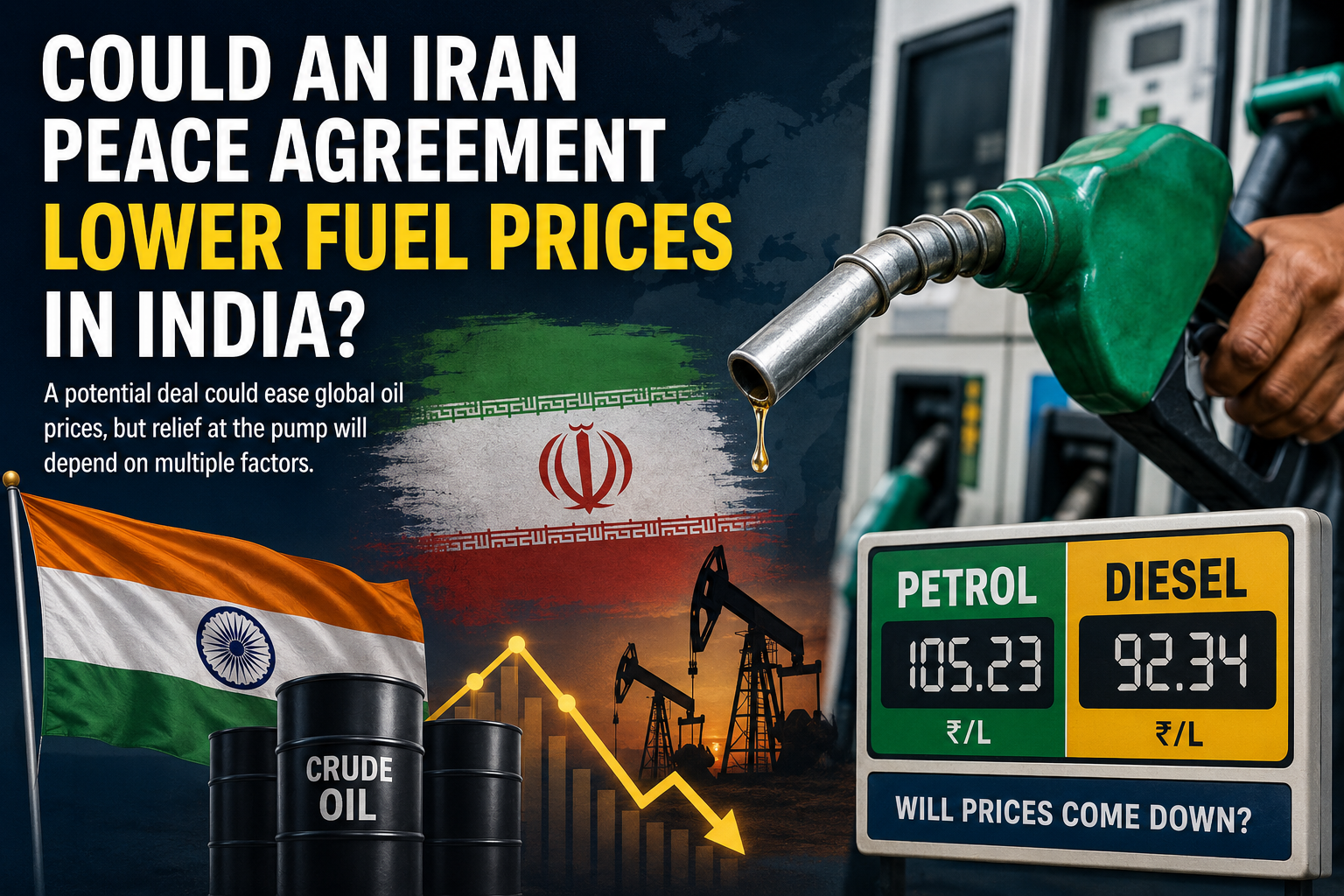
As discussions surrounding a possible peace agreement involving Iran gain international attention, Indian consumers are closely watching whether such a development could eventually lead to lower petrol and diesel prices at home.
India, one of the world’s largest importers of crude oil, remains highly sensitive to changes in global energy markets. Any major geopolitical event in the Middle East has a direct impact on crude oil prices, which in turn influences fuel costs and inflation in the country.
With hopes of reduced tensions in the region, analysts believe global oil markets could experience greater stability. However, whether Indian consumers will see immediate relief at fuel stations depends on multiple economic and policy-related factors.
Why Iran Matters to Global Oil Markets
Iran possesses some of the world’s largest oil reserves and has historically played a significant role in international energy supplies. Geopolitical tensions, sanctions, and conflicts involving the country have frequently disrupted oil markets and contributed to price volatility.
A peace arrangement or easing of tensions could improve market sentiment and potentially increase oil availability. Greater supply generally helps moderate crude prices, reducing fears of shortages and stabilizing international markets.
Experts note that even expectations of peace can influence trading activity, leading to lower risk premiums that are often added to oil prices during periods of uncertainty.
Impact on India’s Energy Imports
India imports a substantial portion of its crude oil requirements from overseas markets. Consequently, fluctuations in international crude prices significantly affect the country’s import bill.
If peace in the Middle East leads to a sustained decline in crude oil prices, India could benefit through:
- Reduced expenditure on oil imports.
- Lower pressure on inflation.
- Improved trade balance.
- Potential savings for industries dependent on fuel.
- Greater economic stability.
A decline in crude prices may also provide additional flexibility to policymakers and oil marketing companies while determining domestic fuel prices.
Will Petrol and Diesel Become Cheaper Immediately?
Despite the possibility of lower global crude prices, consumers may not witness an instant reduction in petrol and diesel rates.
Domestic fuel prices in India are influenced by several factors, including:
Taxes and Duties
Central and state taxes constitute a significant portion of retail fuel prices. Even if crude prices decline, tax structures can limit the extent of any reduction passed on to consumers.
Currency Exchange Rates
Since crude oil purchases are conducted in US dollars, fluctuations in the value of the Indian rupee against the dollar can affect import costs.
Refining and Transportation Expenses
Costs associated with refining, logistics, and distribution also play an important role in determining final fuel prices.
Decisions by Oil Marketing Companies
Public sector oil companies periodically review fuel prices based on international benchmarks and market conditions. Any price revision generally depends on broader economic considerations rather than a single geopolitical development.

Broader Economic Benefits Beyond Fuel Prices
Even if retail fuel prices do not decline sharply, lower crude oil prices could still benefit the Indian economy in several ways.
Reduced energy costs can ease inflationary pressures, support manufacturing sectors, lower transportation expenses, and improve overall economic growth. Industries such as aviation, logistics, agriculture, and manufacturing may particularly benefit from softer energy prices.
Consumers could indirectly experience these advantages through more stable prices of goods and services.
Market Stability Remains Key
Energy experts caution that oil markets are influenced by a complex mix of geopolitical developments, production decisions by major oil-producing countries, global demand trends, and economic conditions.
Therefore, while a peace agreement involving Iran may create a positive environment for oil prices, sustained stability would be necessary before any long-term impact on India’s fuel rates becomes visible.
Outlook for Indian Consumers
For millions of Indian households and businesses, the prospect of lower fuel costs remains an important issue. A reduction in geopolitical tensions in the Middle East could certainly help moderate crude prices, but the final impact on petrol and diesel rates in India will depend on a combination of global market movements, domestic taxation policies, currency trends, and decisions taken by oil companies.
Until then, consumers are likely to continue monitoring international developments closely, as events thousands of kilometers away can significantly influence everyday expenses across India.