
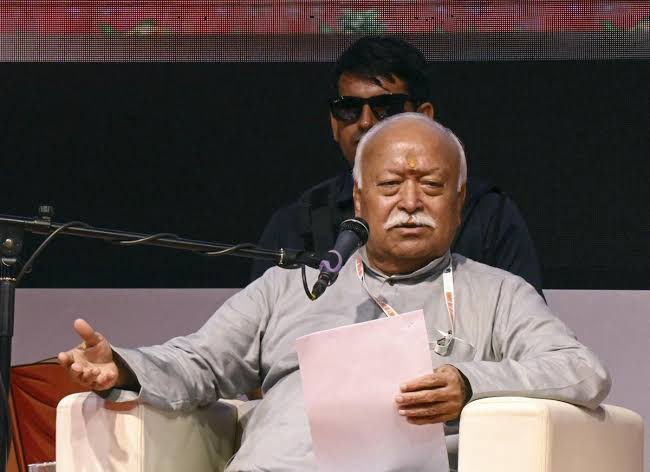
A fresh debate over religion, identity, and constitutional interpretation has emerged after Rashtriya Swayamsevak Sangh (RSS) chief Mohan Bhagwat responded to an open letter written by Karnataka minister Priyank Kharge. Addressing the issue, Bhagwat asserted that Hindu Dharma is not an entity that can be formally registered, regulated, or confined within a legal framework, emphasizing its broader civilizational and philosophical nature.
The exchange has sparked discussions across political and social circles, with both leaders presenting contrasting perspectives on religion, governance, and cultural identity in contemporary India.
Bhagwat’s Stand on Hindu Dharma
Speaking on the subject, Mohan Bhagwat stated that Hindu Dharma is not a registered institution, organization, or structured body that can be categorized under conventional administrative definitions. According to him, Hindu Dharma represents an ancient and evolving way of life that has existed across centuries and cannot be reduced to a legal identity or formal registration process.
Bhagwat argued that Hindu Dharma encompasses a broad spectrum of beliefs, traditions, philosophies, and practices that have developed organically over time. He maintained that its essence lies in its inclusiveness and adaptability rather than in rigid institutional structures.
The RSS chief emphasized that Hindu Dharma should be understood as a civilizational concept rather than a legally registered entity. He suggested that attempts to define it through narrow bureaucratic or political lenses fail to capture its historical depth and cultural significance.
Background of the Controversy
The remarks came in response to an open letter written by Karnataka minister Priyank Kharge. The letter raised questions related to the characterization of Hinduism, its representation in public discourse, and the role of organizations that claim to speak on behalf of the faith.
Kharge’s intervention added a political dimension to an already sensitive subject, prompting reactions from various ideological groups and commentators. His observations sought to initiate a broader conversation about religion’s place within constitutional democracy and modern governance.
The exchange reflects the ongoing national debate over how religious traditions should be interpreted in contemporary India and who holds the authority to define their meaning in public life. 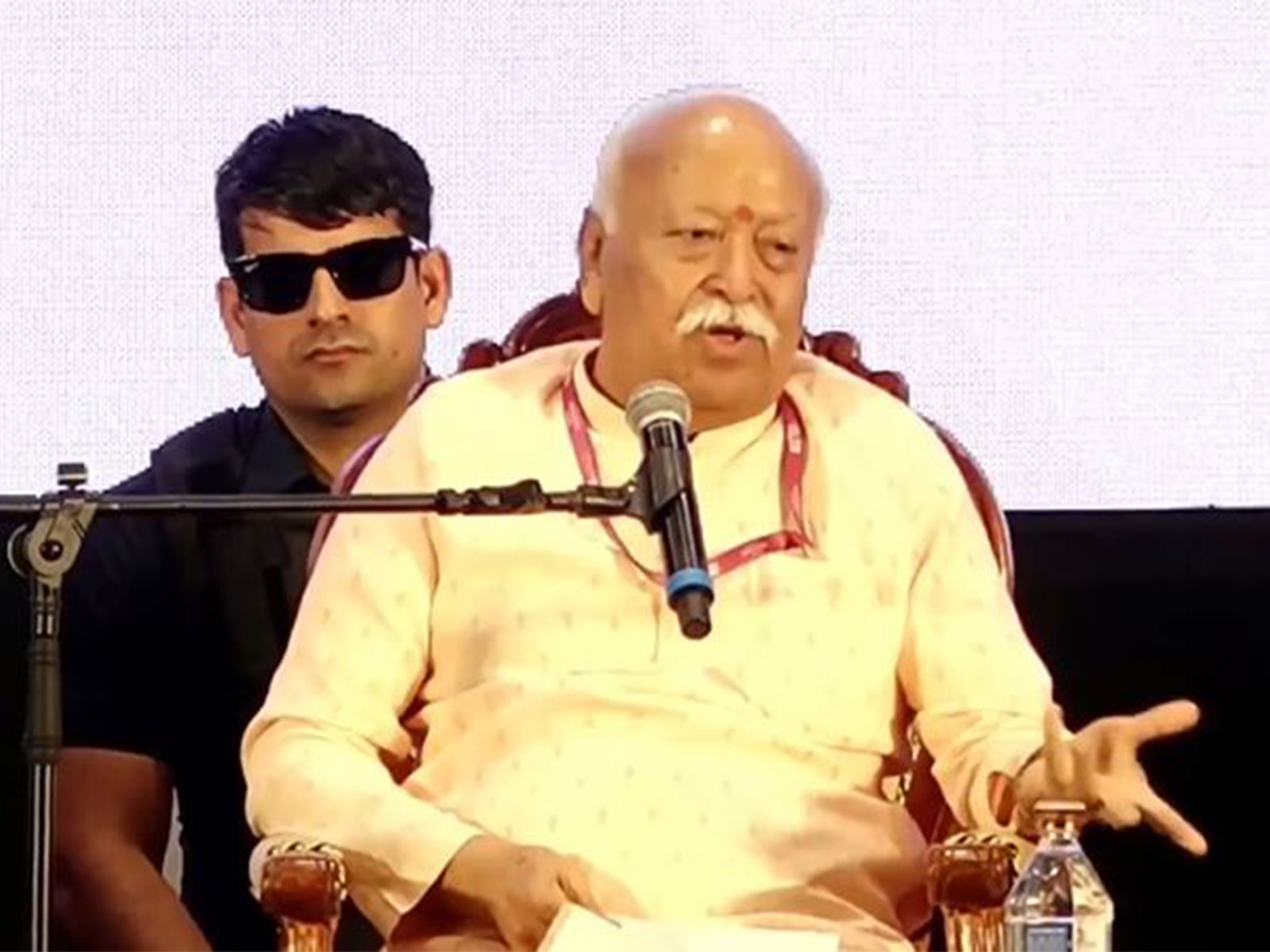
Hindu Dharma as a Civilizational Tradition
Bhagwat reiterated a position frequently articulated by cultural and religious scholars who describe Hindu Dharma as a civilization-wide tradition rather than a single organized religion. He argued that the concept extends beyond worship practices and includes ethical principles, social values, philosophical inquiry, and ways of living.
According to this viewpoint, Hindu Dharma has historically accommodated diverse schools of thought, ranging from devotional traditions to philosophical systems and reform movements. Bhagwat suggested that this diversity makes it fundamentally different from institutions that operate under a centralized administrative framework.
Supporters of this perspective often argue that Hindu Dharma’s strength lies in its ability to evolve while preserving core cultural values. Critics, however, contend that such interpretations can be subjective and may invite differing political and social understandings.
Political and Public Reactions
The exchange between Bhagwat and Kharge has generated significant political attention. Leaders and commentators from various ideological backgrounds have weighed in, interpreting the remarks through the lenses of religion, culture, and governance.
Supporters of Bhagwat’s position argue that Hindu Dharma is a living civilizational tradition that cannot be confined to legal or institutional definitions. They maintain that its historical continuity and cultural influence distinguish it from formally structured organizations.
On the other hand, critics believe that discussions concerning religion in public life should remain grounded in constitutional principles and democratic accountability. They argue that questions regarding representation and authority within religious discourse deserve open examination.
The differing responses underscore the complex relationship between faith, identity, and politics in India’s democratic framework.
Broader Implications
The debate highlights larger questions about how ancient traditions are understood in a modern nation-state. It also raises issues concerning cultural heritage, religious freedom, public representation, and constitutional interpretation.
Experts note that discussions surrounding Hindu Dharma often extend beyond theology and touch upon national identity, social cohesion, and historical consciousness. As a result, statements made by influential political and social leaders frequently attract widespread attention and public scrutiny.
The exchange between Mohan Bhagwat and Priyank Kharge is therefore likely to remain part of a broader national conversation about the role of religion and cultural traditions in shaping India’s contemporary social and political landscape.
Conclusion
Mohan Bhagwat’s response to Priyank Kharge’s open letter has reignited debate over the nature and identity of Hindu Dharma. By asserting that Hindu Dharma cannot be formally registered or confined within administrative definitions, Bhagwat emphasized its character as a timeless and evolving civilizational tradition. As discussions continue, the episode highlights the enduring significance of religion, culture, and identity in India’s public discourse and democratic debate.