
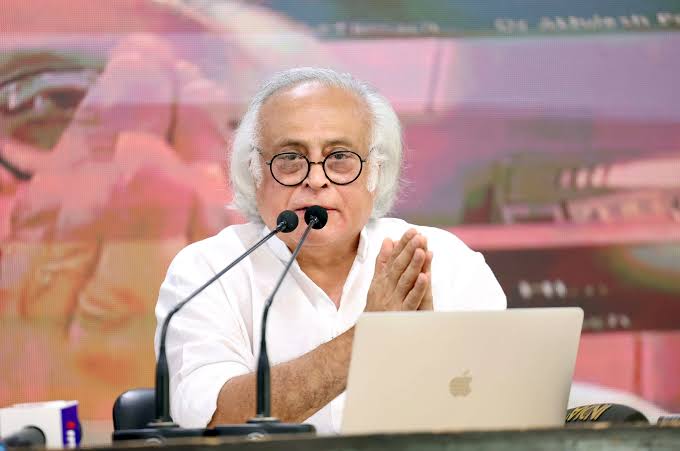
Senior Congress leader Jairam Ramesh has renewed his criticism of the government’s E20 petrol initiative, stating that ministers have been unable to convince citizens about the safety and effectiveness of ethanol-blended fuel. His comments have reignited the political debate over India’s move towards petrol containing 20 per cent ethanol.
Ramesh questioned the government’s repeated defence of E20 fuel and argued that public concerns regarding vehicle performance, mileage reduction and long-term effects have not been adequately addressed. He claimed that despite multiple statements from ministers explaining the advantages of ethanol blending, doubts among consumers continue to exist.
The E20 programme has been promoted by the government as a major step towards reducing India’s dependence on imported crude oil, lowering carbon emissions and supporting farmers involved in ethanol production. However, critics have raised concerns about the impact of higher ethanol content on vehicles, particularly older models that were not designed for such fuel mixtures.
Opposition Raises Concerns Over E20 Implementation
Jairam Ramesh alleged that the government’s approach has focused more on defending the policy rather than providing detailed answers to questions raised by citizens. According to him, assurances from ministers have not been sufficient to remove uncertainty among vehicle owners.
The Congress leader highlighted concerns related to fuel efficiency, maintenance costs and compatibility issues. Many automobile users have questioned whether vehicles manufactured before the widespread adoption of E20 standards could experience problems after using higher ethanol-blended petrol for extended periods.
The opposition has argued that consumers should receive clear information about the advantages and possible limitations of E20 fuel before its implementation becomes widespread across the country.
Government Highlights Benefits of Ethanol Blending
The central government has strongly defended the E20 fuel programme, describing it as an important part of India’s clean energy transition. Officials have maintained that ethanol blending has been introduced after technical studies and consultations with relevant stakeholders.
According to the government, increasing ethanol usage will help reduce crude oil imports, strengthen energy security and provide additional opportunities for farmers by creating greater demand for ethanol-producing crops.
Ministers supporting the policy have also pointed out that ethanol-blended petrol is already used in several countries and that India’s transition towards cleaner fuels is aligned with global efforts to reduce dependence on fossil fuels. 
Concerns Over Mileage and Vehicle Compatibility Continue
A major point of discussion around E20 petrol has been its possible effect on vehicle mileage. Since ethanol contains less energy compared to petrol, some experts and consumers have raised concerns that vehicles may deliver slightly lower fuel efficiency after shifting to higher ethanol blends.
The government has acknowledged that minor changes in mileage may occur in some cases but has argued that the environmental and economic benefits of ethanol blending are more significant.
Automobile manufacturers have also been working towards producing vehicles compatible with E20 fuel standards. However, owners of older vehicles continue to seek clarity regarding possible maintenance requirements and long-term impact.
E20 Debate Turns Into a Political Issue
The controversy surrounding E20 fuel has gradually developed into a broader political debate over energy policy and public communication. While the government presents ethanol blending as a reform aimed at sustainability and economic growth, opposition leaders have questioned whether adequate measures have been taken to address consumer concerns.
Jairam Ramesh’s remarks reflect the Congress party’s larger criticism of the government’s policy decisions and implementation strategies. He has argued that public confidence can only be achieved through transparency, scientific explanations and clear communication.
As India continues its transition towards alternative energy sources, the debate over E20 petrol is likely to remain a key issue involving environmental goals, fuel technology, consumer interests and national energy security.