
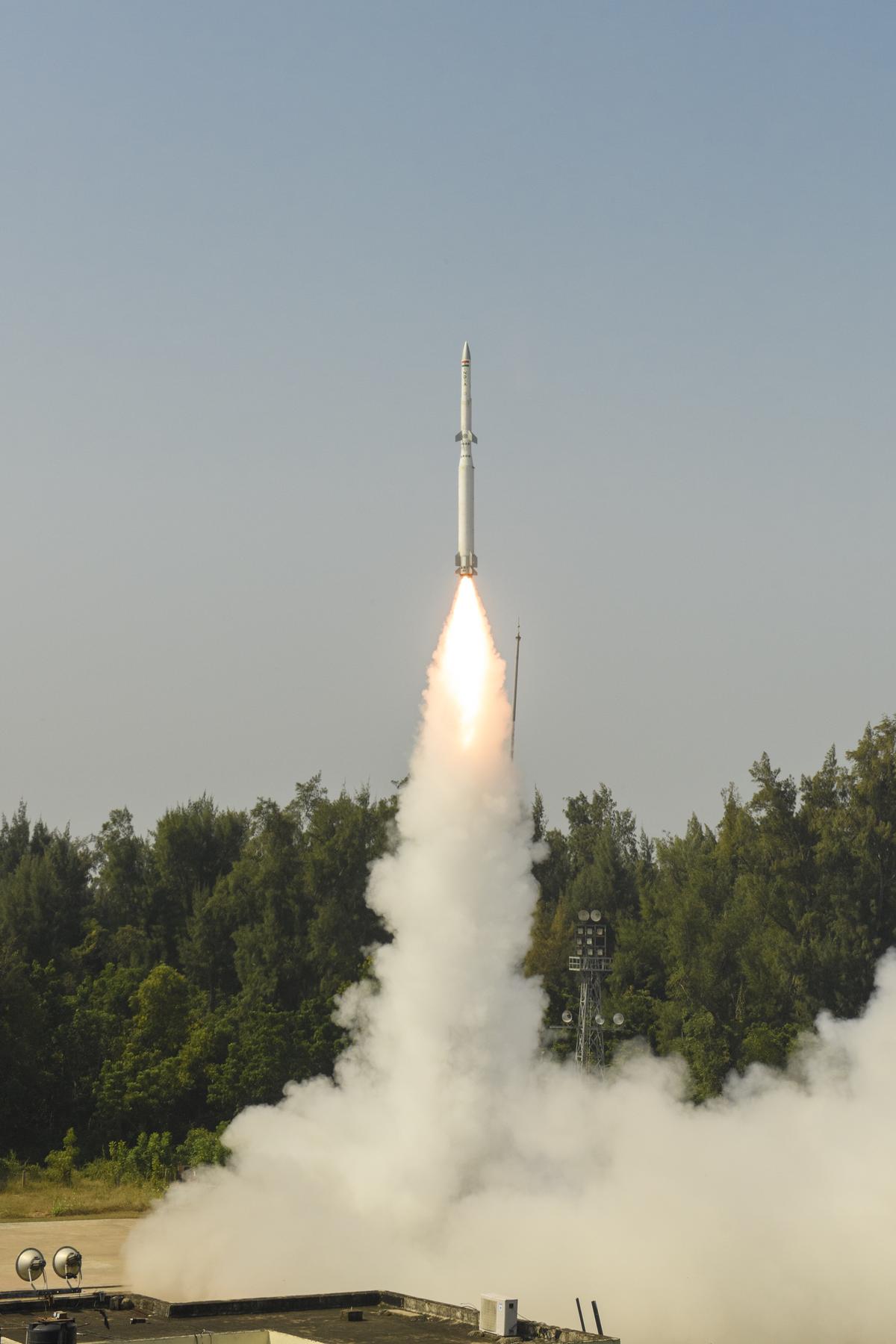
India has achieved a significant breakthrough in its defence preparedness after successfully conducting three ballistic missile defence (BMD) interceptor tests within a span of two days. The accomplishment marks a major advancement in the country’s indigenous missile defence architecture and reinforces its position among a select group of nations possessing sophisticated missile interception capabilities.
The successful trials demonstrate the growing maturity of India’s multi-layered air and missile defence system, which is designed to detect, track, and destroy hostile ballistic missiles before they can reach their intended targets. Defence experts view the achievement as a crucial step toward strengthening the nation’s strategic deterrence and enhancing protection against emerging missile threats.
Three Interceptor Tests Showcase Growing Technological Maturity
The series of tests involved advanced interceptor missiles developed as part of India’s long-term ballistic missile defence programme. These systems are engineered to engage incoming ballistic missiles at various altitudes and stages of flight, providing multiple opportunities to neutralize potential threats.
The successful back-to-back trials underline the reliability and operational readiness of the indigenous technology developed by Indian defence scientists and engineers. Conducting multiple successful tests in a short period demonstrates confidence in the system’s capabilities and validates years of research, development, and technological refinement.
The achievement is particularly notable because ballistic missile interception is considered one of the most complex challenges in modern defence technology. The process requires advanced radar networks, real-time data processing, precision tracking systems, and highly maneuverable interceptor missiles capable of hitting fast-moving targets in the atmosphere and beyond.
Understanding India’s Ballistic Missile Defence Programme
India’s ballistic missile defence initiative was launched to create a protective shield against hostile missile attacks. The programme incorporates a layered defence strategy capable of intercepting enemy missiles at different stages of their trajectory.
The system relies on a network of long-range tracking radars, command-and-control infrastructure, communication systems, and interceptor missiles working in coordination. Once a hostile missile is detected, the system rapidly calculates its trajectory and launches an interceptor designed to destroy the threat through direct impact or proximity engagement.
The layered approach significantly improves the probability of successful interception by providing multiple opportunities to engage incoming missiles before they reach populated areas, military installations, or strategic assets. 443D.jpeg)
Joining an Elite Global Defence Club
The latest success further strengthens India’s standing among a limited number of countries that have developed and demonstrated advanced ballistic missile defence capabilities. Only a handful of nations possess operational or near-operational systems capable of intercepting ballistic missiles with high accuracy.
Developing such technology requires substantial investments in scientific research, aerospace engineering, radar systems, guidance technology, propulsion mechanisms, and command-and-control networks. India’s progress reflects decades of sustained efforts aimed at achieving greater self-reliance in critical defence technologies.
The achievement also aligns with the country’s broader goal of strengthening indigenous defence manufacturing and reducing dependence on foreign military systems.
Strategic Significance for National Security
The successful interceptor tests come at a time when missile threats are increasingly becoming a key element of modern warfare and regional security dynamics. Ballistic missiles can travel at extremely high speeds and carry conventional or strategic payloads, making effective defence systems essential for national security.
A robust missile defence shield enhances deterrence by reducing the effectiveness of potential missile attacks. It also provides military planners with additional defensive options during periods of heightened tension or conflict.
Security analysts believe that the continued advancement of India’s missile defence programme will play a crucial role in protecting critical infrastructure, urban centers, military bases, and strategic assets from future threats.
Indigenous Innovation Driving Defence Advancement
The recent tests highlight the growing capabilities of India’s domestic defence research ecosystem. Indigenous development not only strengthens national security but also fosters technological innovation across multiple sectors, including aerospace engineering, electronics, advanced materials, artificial intelligence, and sensor technologies.
The successful demonstrations underscore the effectiveness of collaborative efforts between scientists, engineers, military planners, and defence institutions working toward common strategic objectives.
As the programme continues to evolve, future enhancements are expected to improve interception ranges, tracking accuracy, response times, and integration with other air defence platforms.
Looking Ahead
The successful completion of three ballistic missile defence tests within two days represents a landmark achievement for India’s defence establishment. Beyond the immediate technological success, the accomplishment signals the country’s growing capability to develop and deploy complex strategic systems independently.
With continued investment in advanced defence technologies and ongoing refinement of its missile defence architecture, India is steadily strengthening its position as a technologically capable military power equipped to address evolving security challenges in the decades ahead.
The achievement not only enhances national defence preparedness but also serves as a testament to the country’s expanding expertise in cutting-edge aerospace and missile technologies.