
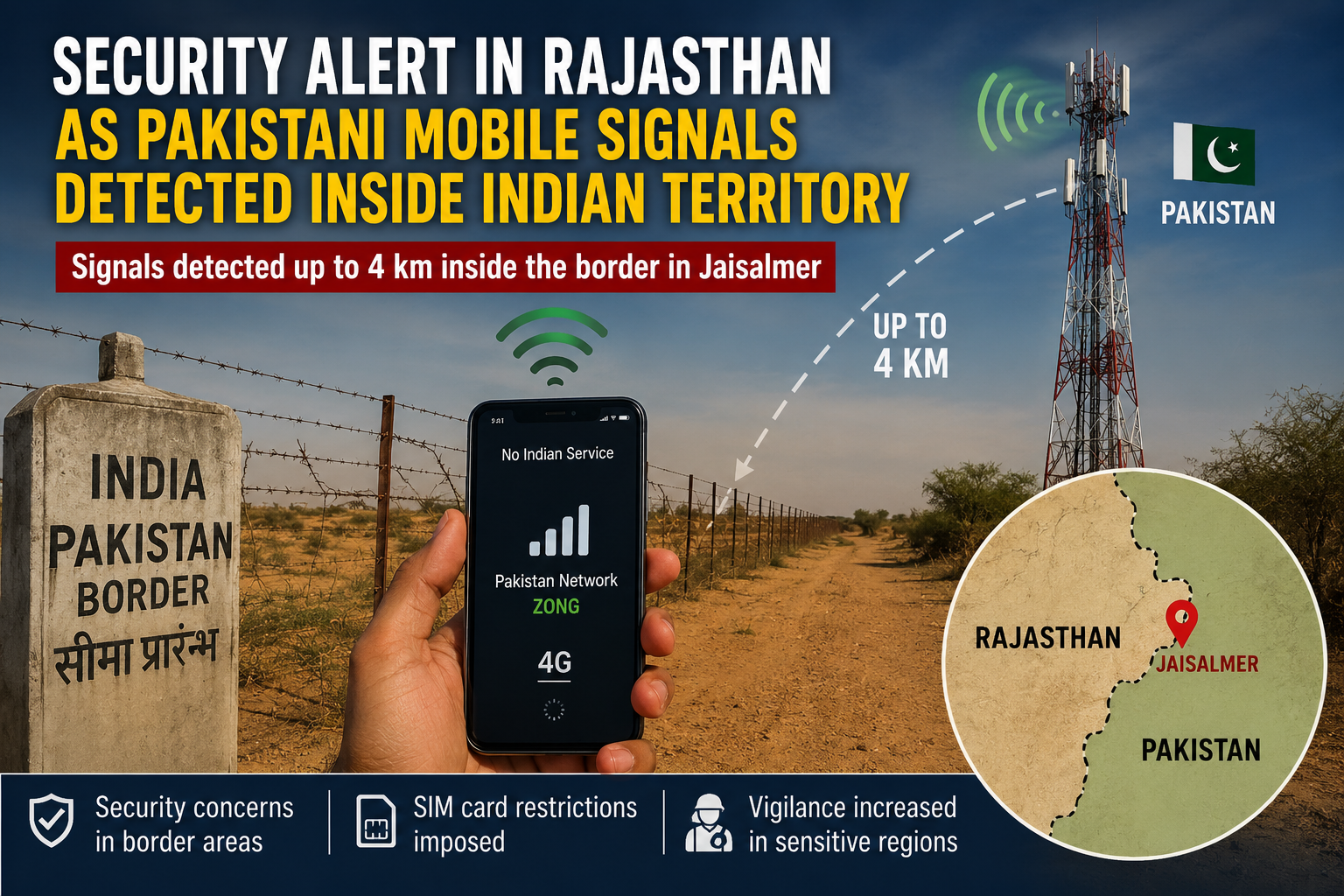
Authorities in Rajasthan have intensified security measures after reports indicated that mobile network signals originating from Pakistan were being received several kilometres inside Indian territory. The development has raised concerns among security agencies, particularly in sensitive border regions where communication networks can have strategic implications.
According to officials, Pakistani telecom signals have been detected in areas extending nearly four kilometres inside the Indian side of the international border in Rajasthan. The issue has been observed in several villages located close to the frontier, especially in the Jaisalmer district, which shares a long and sensitive border with Pakistan.
Authorities Take Preventive Measures
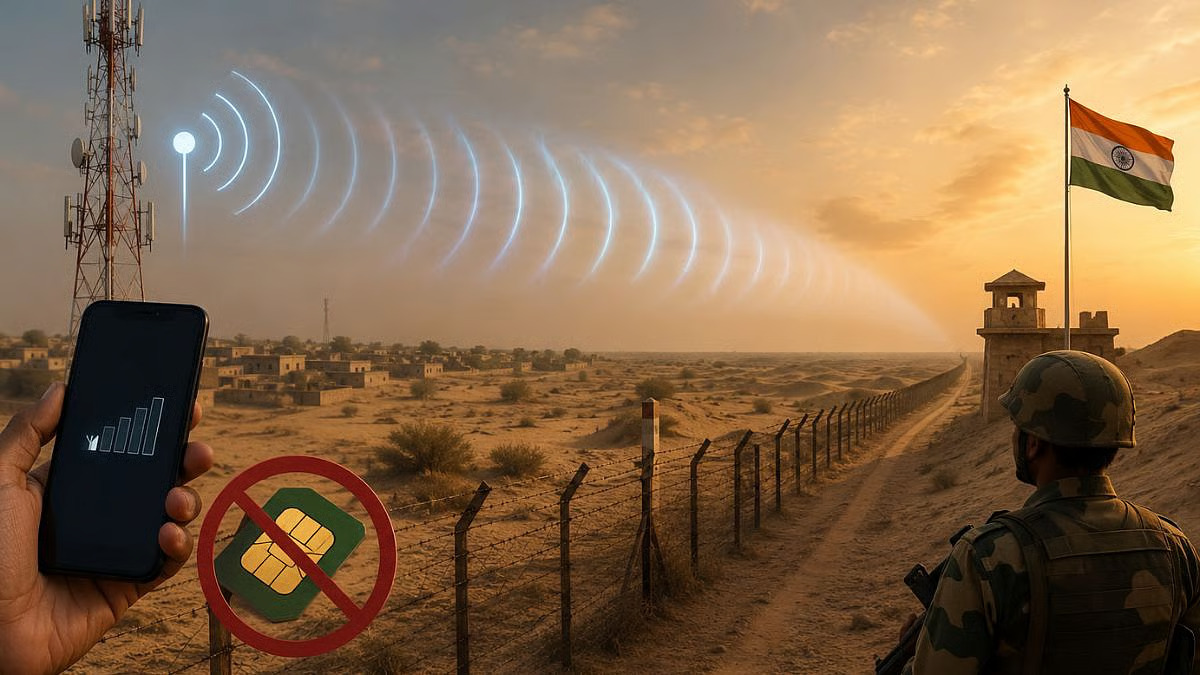
In response to the situation, district authorities and security agencies have implemented precautionary measures aimed at preventing any misuse of cross-border communication networks. Restrictions have reportedly been imposed on the use and distribution of certain SIM cards in vulnerable border locations.
Officials believe that unrestricted access to foreign mobile networks could pose risks to national security. Such networks may potentially be exploited for unauthorized communication, intelligence gathering, or other activities that could compromise security arrangements in border regions.
The administration has been working closely with security agencies to monitor the situation and ensure that communication infrastructure within Indian territory remains secure and under proper surveillance.
Why Foreign Signals Reach Indian Territory
Telecommunication experts explain that mobile signals do not recognize political boundaries and can often travel beyond borders, particularly in open desert regions where there are fewer physical obstacles. In western Rajasthan, the vast and sparsely populated landscape allows signals from powerful towers located across the border to penetrate into Indian areas.
Residents living in villages near the international border have reportedly experienced instances where their mobile devices automatically connect to foreign networks when domestic coverage weakens. Such situations can sometimes lead to unexpected roaming charges and communication complications.
Strategic Importance of Border Districts
Jaisalmer is considered one of India’s most strategically significant districts due to its proximity to Pakistan. The region hosts important military installations and remains under constant surveillance by security forces.
Given the sensitive nature of the area, authorities regularly review communication systems and infrastructure to prevent any vulnerabilities. Border districts often witness heightened security protocols, particularly during periods of increased regional tension.
Increased Vigilance by Security Agencies
Security personnel have reportedly intensified monitoring activities across border villages. Awareness campaigns are also being conducted to educate residents about the importance of using authorized Indian telecom networks and reporting any unusual communication-related incidents.
Officials emphasized that maintaining secure communication channels is an essential component of border management and national security. The latest measures are intended to strengthen vigilance and ensure that no external network interference affects sensitive areas.
Focus on Strengthening Domestic Connectivity
Experts suggest that improving mobile infrastructure in remote border regions could help minimize dependence on foreign signals. Enhanced domestic coverage would ensure uninterrupted communication for residents while reducing the possibility of devices connecting to networks originating from across the border.
As authorities continue to assess the issue, security agencies remain on alert to safeguard the country’s border areas and maintain strict oversight over communication systems operating near the international frontier.