
Indian benchmark equity indices witnessed a significant decline on Friday as escalating geopolitical tensions between Iran and Israel sparked widespread risk aversion among global investors. The sell-off dragged key market indices to their lowest levels in nearly two months, reflecting growing concerns over potential disruptions to global trade, energy markets, and economic stability.
The sharp downturn mirrored weakness across international markets, where investors shifted away from riskier assets amid fears that the Middle East conflict could intensify and impact global supply chains. The uncertainty led to broad-based selling across sectors, with banking, information technology, auto, and financial stocks bearing the brunt of the decline.
Sensex and Nifty Register Steep Losses
The benchmark Sensex suffered a substantial loss of more than 700 points during the trading session, while the Nifty slipped below crucial support levels to touch its lowest point in approximately two months. Market participants remained cautious throughout the day as geopolitical developments overshadowed domestic economic fundamentals.
Analysts noted that investors preferred to reduce exposure to equities and move toward safer investment avenues, a trend commonly observed during periods of heightened geopolitical risk.
Global Factors Drive Market Sentiment
The latest decline was largely influenced by international developments rather than domestic economic concerns. Investors closely monitored the evolving situation in the Middle East, fearing that any further escalation could disrupt global energy supplies and increase transportation costs.
Crude oil prices remained a key area of concern. Rising energy costs can potentially fuel inflationary pressures, affect corporate profitability, and increase economic uncertainty worldwide. For emerging markets like India, sustained increases in oil prices often have broader implications for fiscal balances and inflation management.
The geopolitical situation also prompted concerns about global trade flows, particularly if tensions lead to disruptions in critical shipping routes or broader regional instability.

Broad-Based Selling Across Sectors
The market downturn was not confined to a single segment. Major sectors witnessed significant selling pressure as investors adopted a defensive stance.
Banking and Financial Stocks
Banking and financial services companies experienced notable declines amid broader market weakness. Investors often reduce exposure to financial stocks during periods of uncertainty because economic disruptions can affect lending activity, investment flows, and overall business confidence.
Information Technology Shares
Technology stocks also faced pressure as concerns over global economic growth weighed on investor sentiment. Since many IT companies depend heavily on international demand, fears of slower economic activity in major markets contributed to selling in the sector.
Automobile and Consumer Stocks
Automobile manufacturers and consumer-focused companies recorded losses as market participants reassessed growth expectations. Increased volatility and inflation concerns can impact consumer spending patterns, leading investors to adopt a cautious outlook toward consumption-driven sectors. 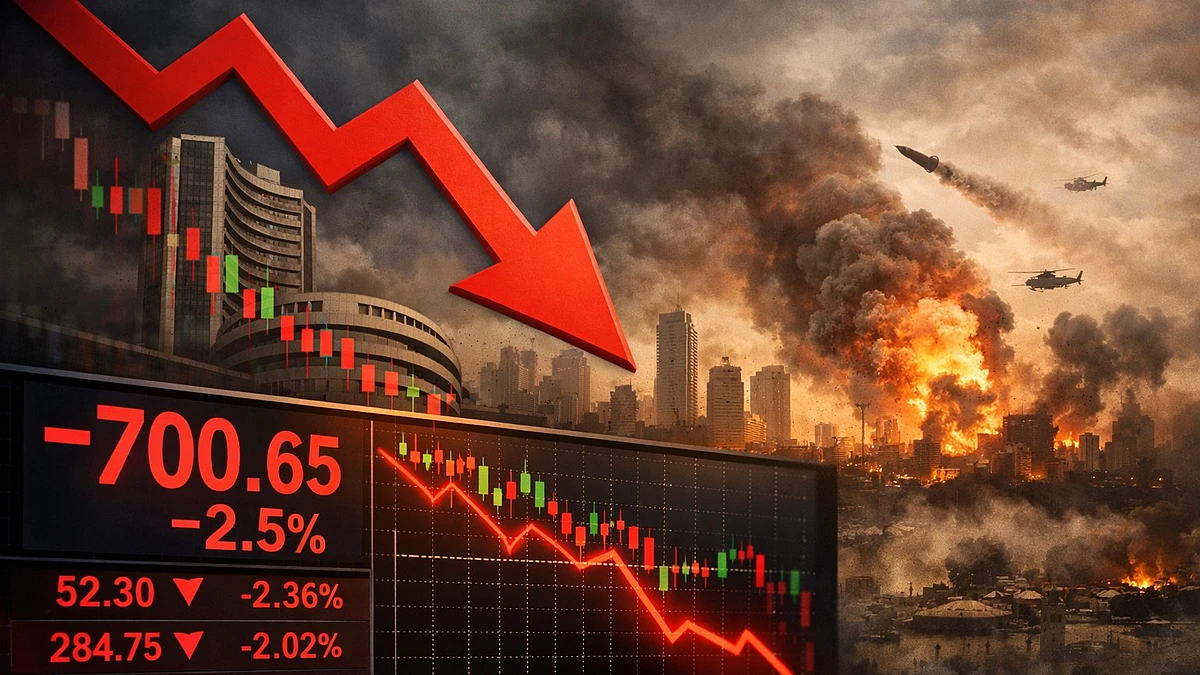
Foreign Investor Activity Under Scrutiny
Market participants are closely watching foreign institutional investor (FII) activity as geopolitical developments continue to unfold. Global funds often rebalance portfolios during periods of uncertainty, shifting capital toward traditionally safer assets such as government bonds, gold, and defensive investment instruments.
Any sustained outflow of foreign capital could add further pressure on domestic equities in the near term.
Volatility Expected to Persist
Financial experts believe market volatility may remain elevated until there is greater clarity regarding geopolitical developments. Investors are expected to closely monitor international diplomatic efforts, crude oil price movements, and broader global market trends.
Despite the sharp correction, analysts emphasized that long-term investors should focus on fundamentals rather than short-term market fluctuations. They noted that temporary geopolitical shocks often create periods of volatility but do not necessarily alter long-term economic growth prospects.
Investor Outlook
The recent decline highlights the sensitivity of financial markets to global geopolitical events. While domestic economic indicators remain relatively stable, international developments continue to influence investor behavior and market direction.
Going forward, traders and institutional investors are expected to remain cautious as they assess the potential economic consequences of the Iran-Israel situation. Market direction in the coming sessions will likely depend on geopolitical developments, commodity price trends, and global investor sentiment.
As uncertainty persists, investors may continue to favor defensive strategies while awaiting clearer signals regarding the trajectory of the conflict and its broader impact on the global economy.