
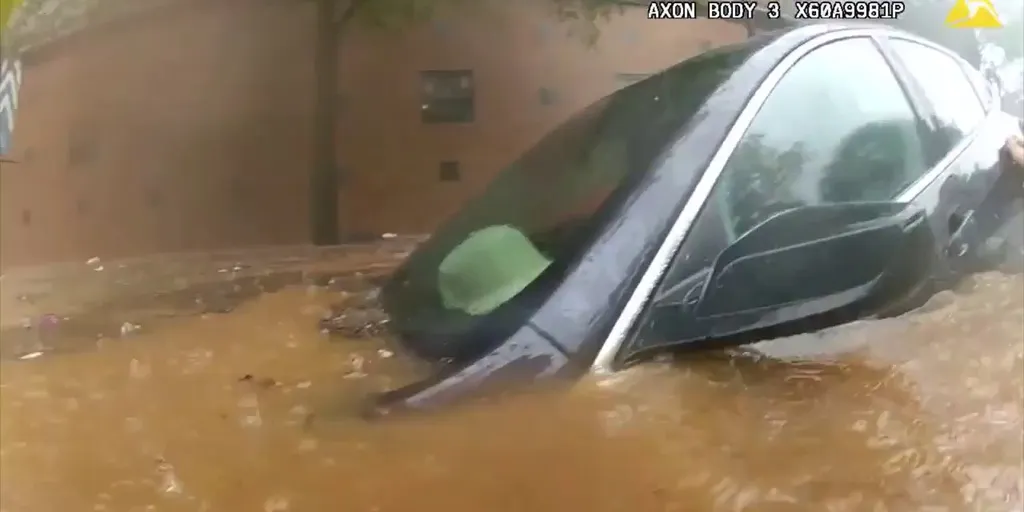
Large parts of Atlanta and surrounding regions in Georgia were placed under a flash flood warning after relentless rainfall caused roads to flood rapidly, leaving several vehicles stranded and disrupting normal movement across major highways. Authorities urged residents to avoid unnecessary travel as dangerous water levels continued to rise in multiple areas.
The severe weather conditions unfolded after heavy downpours swept through the city, overwhelming drainage systems and creating life-threatening situations for motorists caught on flooded roads. Videos shared widely on social media captured dramatic scenes of vehicles partially submerged in water while emergency crews worked to assist stranded drivers.
Officials warned that flash floods can escalate within minutes, particularly in urban areas where water accumulation happens quickly due to concrete surfaces and overloaded drainage infrastructure. Emergency alerts were issued across several counties as forecasters predicted continued rainfall in parts of the region.
Vehicles Stranded on Flooded Highways
Several highways and local roads in Atlanta experienced severe waterlogging during the storm. In some locations, floodwaters rose high enough to immobilize vehicles, forcing drivers to abandon cars and seek safer ground. Traffic movement slowed significantly as emergency responders attempted to manage road closures and rescue operations.
Eyewitness accounts described rapidly rising water levels that trapped motorists unexpectedly. Some drivers reportedly became stuck in traffic as floodwaters spread across lanes within a short period of time. Emergency teams were deployed to monitor vulnerable zones and assist those stranded in flooded vehicles.
Authorities repeatedly warned residents not to attempt driving through flooded roads, emphasizing that even shallow moving water can sweep away vehicles. Public safety officials stressed that visibility and road conditions remained dangerous throughout the storm event. 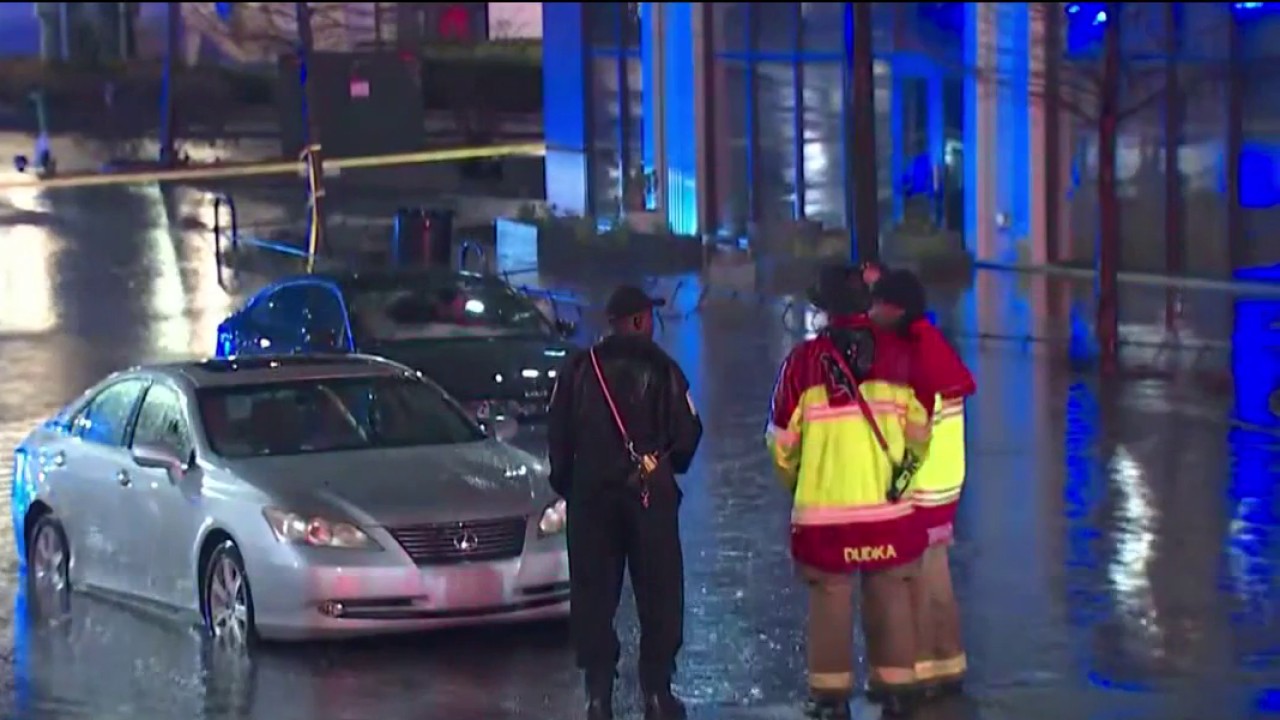
Emergency Services on High Alert
Local emergency management agencies remained on high alert as the weather system continued moving across the region. Rescue teams and public works departments coordinated efforts to clear blocked drainage systems, monitor flood-prone areas, and respond to distress calls.
Meteorologists indicated that the combination of intense rainfall and saturated ground conditions significantly increased the risk of urban flooding. Low-lying areas, underpasses, and highways became particularly vulnerable as water accumulated faster than drainage systems could process it.
Residents living near creeks and flood-prone neighborhoods were advised to remain vigilant and prepare for possible evacuation warnings if conditions worsened. Authorities also encouraged people to monitor official weather alerts and avoid travel unless absolutely necessary.
Severe Weather Raises Concerns Across Georgia
The flooding incident renewed concerns over extreme weather events affecting major US cities. Experts noted that sudden high-intensity rainfall events have become increasingly disruptive, especially in densely populated urban centers with aging infrastructure.
In Atlanta, repeated flooding incidents during heavy storms have highlighted the challenges posed by rapid urban expansion and stormwater management limitations. Transportation disruptions, property damage, and emergency rescues have become recurring issues during severe weather outbreaks.
Weather officials cautioned that additional rainfall could continue to create hazardous conditions in some parts of Georgia, particularly where water levels remain elevated. Residents were advised to stay indoors, avoid flooded streets, and follow emergency instructions issued by local authorities.
Authorities Urge Public Safety Precautions
Officials reminded the public to prioritize safety during flash flood emergencies. Drivers were instructed never to ignore road barricades or attempt to cross flooded areas, while residents were encouraged to keep emergency supplies ready and remain updated through local weather advisories.
Emergency agencies also warned that floodwaters may conceal hazards such as debris, damaged roads, or open drainage channels. Power outages and transportation delays were reported in certain areas as crews continued monitoring the developing weather situation.
As cleanup and emergency response operations continued, authorities emphasized that conditions could change rapidly depending on rainfall intensity and drainage capacity. Public safety teams remained deployed across affected zones to ensure quick response to any further emergencies.