
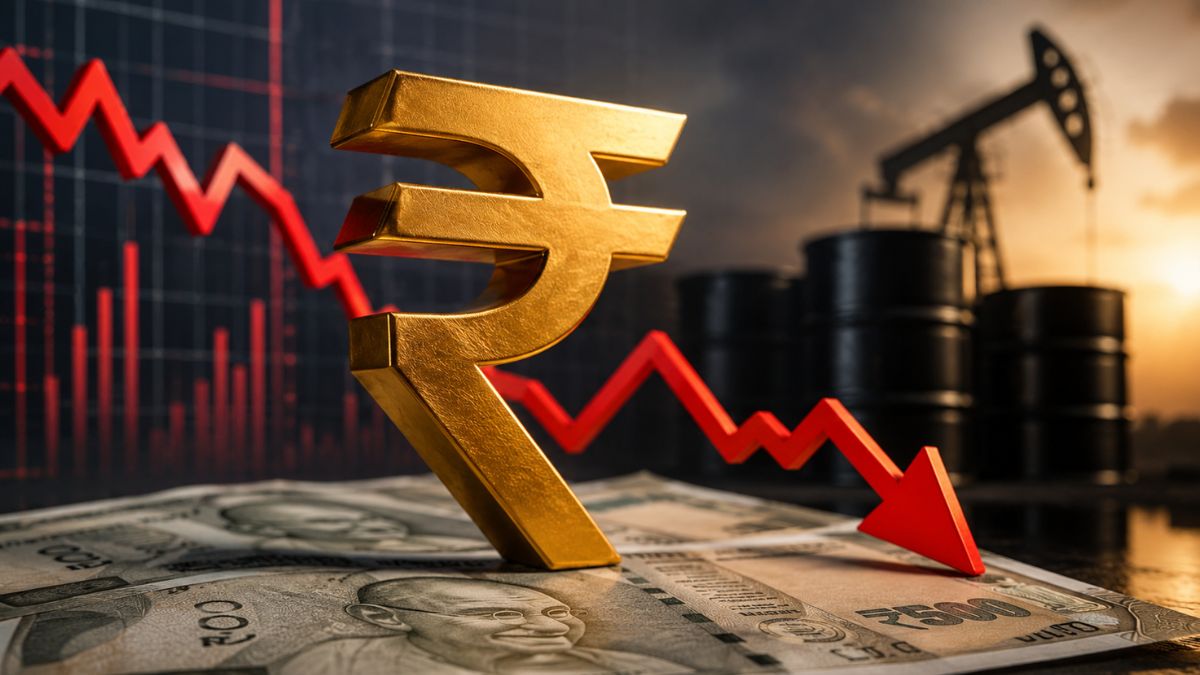
The Indian rupee plunged to a historic low against the US dollar, breaching the psychologically significant 96 mark amid surging crude oil prices, mounting geopolitical tensions, and persistent pressure on emerging market currencies. The sharp depreciation has intensified concerns over inflation, import costs, and broader economic stability in India as global financial markets react nervously to escalating uncertainty in West Asia.
Currency traders reported that the rupee weakened sharply during intraday trading as investors moved toward safer assets, particularly the US dollar, following rising fears surrounding energy supply disruptions and global inflation risks. The decline marks one of the steepest phases of depreciation for the Indian currency in recent years and reflects the growing strain on import-dependent economies.
Analysts pointed to soaring crude oil prices as the primary trigger behind the rupee’s fall. Brent crude prices have remained elevated near the $110-per-barrel range due to ongoing geopolitical tensions and concerns over disruptions in major oil shipping routes. Since India imports more than 85 percent of its crude oil requirements, higher oil prices directly increase the country’s import bill and place heavy pressure on the domestic currency.
The weakening rupee is expected to raise the cost of imports across several sectors, including fuel, electronics, industrial machinery, and consumer goods. Economists warn that the depreciation could add fresh inflationary pressure at a time when households are already dealing with elevated living costs. Rising fuel prices may also impact transportation, logistics, and manufacturing expenses, potentially leading to higher prices across the economy.
Market participants also highlighted foreign investor outflows as another major factor weighing on the rupee. Global investors have increasingly shifted capital toward US assets due to higher American bond yields and expectations that US interest rates may remain elevated for longer than anticipated. The stronger dollar environment has triggered weakness across several Asian currencies, with the rupee emerging among the worst-performing regional currencies this year. 
Financial experts noted that persistent uncertainty surrounding global economic growth and geopolitical conflicts has further reduced investor appetite for riskier emerging market assets. This has resulted in continued pressure on Indian equity and debt markets, contributing to broader concerns regarding capital inflows and balance-of-payments stability.
The Reserve Bank of India is believed to have intervened in the currency market by selling dollars to limit excessive volatility and slow the pace of the rupee’s decline. However, analysts suggest that sustained pressure from high oil prices and global market uncertainty may continue to challenge the central bank’s efforts to stabilize the currency.
Economists also warned that a prolonged period of rupee weakness could widen India’s trade deficit and complicate inflation management efforts. A weaker currency makes imports significantly more expensive while also increasing the government’s burden in sectors linked to energy subsidies and infrastructure spending.
Despite the challenges, some export-oriented sectors could benefit from the depreciation. Industries such as information technology, pharmaceuticals, and other businesses earning substantial revenue in US dollars may experience stronger earnings realization due to favorable currency conversion rates. Experts believe these sectors could partially offset the broader economic impact of the rupee’s weakness.
Market observers expect volatility in the currency market to remain elevated in the coming weeks as investors closely monitor crude oil prices, developments in West Asia, foreign fund flows, and potential policy responses from the Reserve Bank of India. Any further escalation in geopolitical tensions or sustained rise in energy prices could place additional downward pressure on the rupee and intensify concerns over inflation and economic growth.