
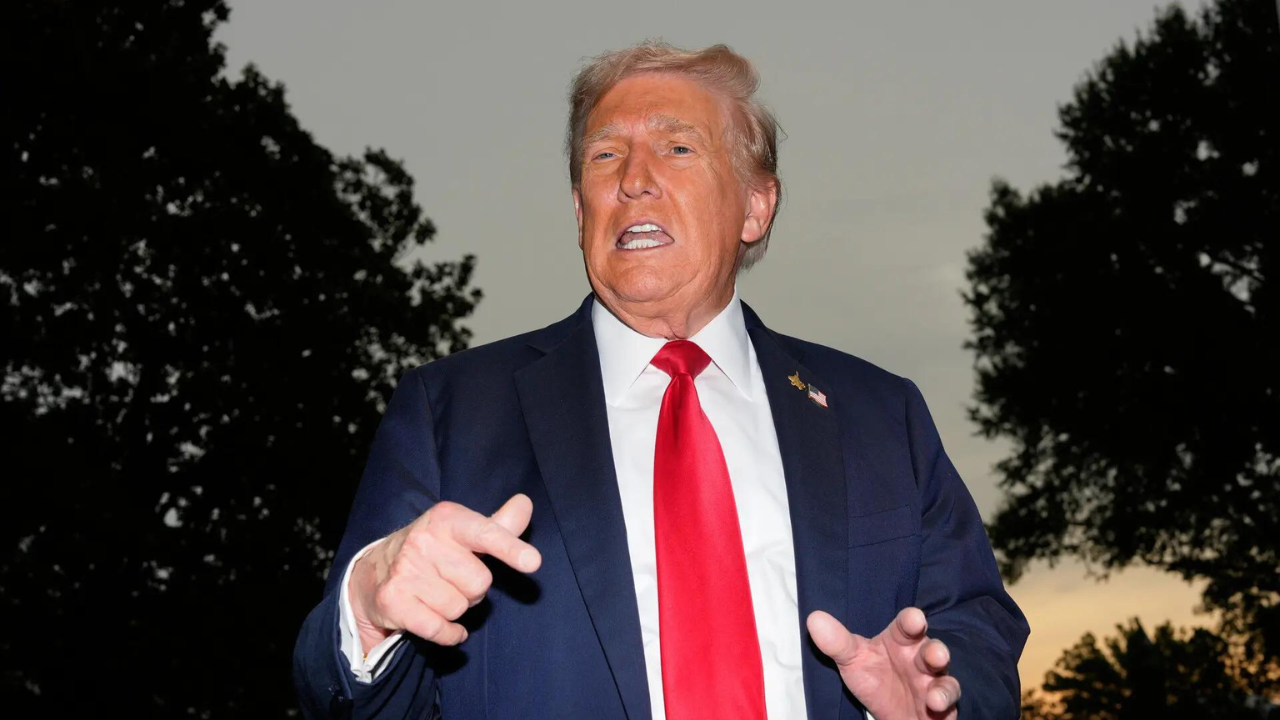
U.S. President Donald Trump has delivered a stern warning to Hamas, urging the militant group to accept the proposed Gaza peace deal or face what he described as “all hell.” The statement marks one of Trump’s most forceful interventions in Middle Eastern affairs since leaving office, sparking global debate on the viability of a long-term peace framework in the war-torn region.
Trump’s Hardline Stance
Trump emphasized that the peace deal represents what he believes to be the final opportunity for Hamas to secure a path toward political legitimacy and humanitarian relief for the people of Gaza. In his ultimatum, Trump stated that rejection of the agreement would result in unprecedented retaliation and isolation.
According to political analysts, Trump’s choice of words signals a revival of his “maximum pressure” approach, similar to the strategy he employed during his presidency toward adversaries such as Iran and North Korea. His declaration has not only intensified discussions around the Gaza conflict but has also reignited debates about America’s future role in Middle East diplomacy.

The Gaza Peace Deal
The proposed Gaza peace deal, details of which remain partially confidential, is believed to include a ceasefire agreement, reconstruction assistance for Gaza, and conditional political recognition for Palestinian factions. In return, Hamas would be required to halt militant activities, recognize Israel’s right to exist, and agree to international monitoring mechanisms.
While some regional observers view the deal as a potential breakthrough, others argue that it places disproportionate pressure on Hamas while not adequately addressing broader Palestinian statehood demands.
Reactions from the Region
Hamas has so far remained cautious, with senior leaders neither confirming nor rejecting the ultimatum. Early indications suggest that Hamas leadership is weighing the potential benefits of international aid and reconstruction against the political cost of concessions demanded by Trump and his allies.
In Israel, government officials welcomed Trump’s strong message, framing it as a necessary push to end cycles of violence and instability. Meanwhile, Arab states in the region expressed mixed views—some backing the call for peace, while others questioned whether the deal fairly represents Palestinian interests.
Global Diplomatic Impact
Trump’s intervention comes at a time when the international community has been pushing for de-escalation in Gaza following a prolonged period of conflict. The United Nations and European Union have repeatedly stressed the need for dialogue, humanitarian access, and long-term political solutions.
Observers note that Trump’s ultimatum could either force Hamas into negotiations or deepen the stalemate if the group refuses. The outcome is expected to significantly influence not only the security situation in Gaza but also broader U.S. diplomatic relations in the Middle East.
What Lies Ahead
Whether Hamas accepts or rejects the ultimatum will likely shape the next phase of the Gaza conflict. Acceptance could pave the way for much-needed reconstruction, reduced hostilities, and potential regional cooperation. Rejection, however, may trigger harsher sanctions, military escalations, and further humanitarian crises.
As tensions mount, the world watches closely, with the fate of millions of civilians in Gaza hanging in the balance. Trump’s hardline warning underscores the fragile nature of Middle Eastern peace efforts, where every decision carries far-reaching consequences.
Leave a Reply