
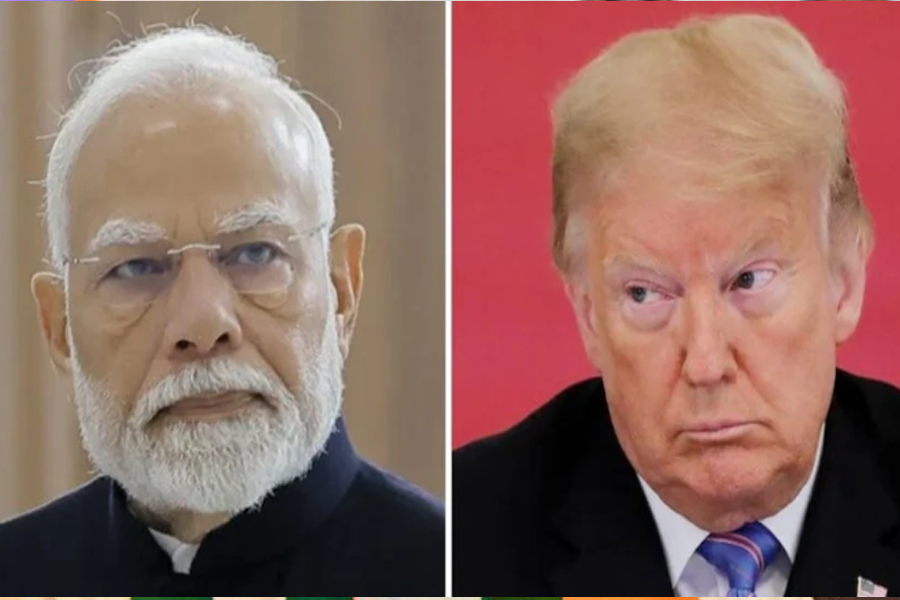
In a move that escalates trade tensions between Washington and New Delhi, U.S. President Donald Trump on Wednesday signed an Executive Order imposing an additional 25% tariff on Indian exports, raising the total levy to 50%. This drastic step follows U.S. concerns over India’s continued purchases of Russian crude oil, despite repeated warnings from Washington.
According to the White House, the nine-section order signed by Trump outlines the background, scope of duties, stacking provisions, and specific tariff implications for various Indian goods entering the U.S. market. The announcement came just a day after Trump warned that the United States would impose “very substantial” tariffs on India within 24 hours if it failed to curtail its Russian oil imports.
U.S. Justification: Targeting Russian Oil Funding
Trump’s administration has consistently accused India of indirectly supporting Russia’s war efforts by buying crude oil at discounted prices and refining it into products sold on global markets. “Countries financing Russia’s war machine will face consequences,” Trump said while signing the order.
The U.S. has also hinted at the possibility of secondary sanctions and further economic penalties if India continues its energy ties with Moscow. This aggressive stance is part of Washington’s broader effort to isolate Russia economically amid the ongoing Ukraine conflict.
India’s Response: Defiance and Economic Concerns
India has strongly rejected the U.S. move, calling it “unwarranted and unjustified.” The Indian government maintains that its crude oil imports are guided by national interest and energy security, not external pressure. Prime Minister Narendra Modi has reiterated India’s commitment to independent policymaking, stating that “India will continue to protect its economic and energy interests.”
Economic Implications: Trade and Growth Under Pressure
Economists warn that the additional tariff could have a significant impact on key Indian export sectors, including textiles, pharmaceuticals, gems and jewelry, and electronics, many of which rely heavily on U.S. markets. If the tariffs remain in place for an extended period, analysts predict a slowdown in India’s GDP growth and a potential drop in investor confidence.
Despite this, many U.S. companies with operations in India are expected to continue their investments, seeing India as a long-term strategic partner. However, the immediate effects on trade flows and market sentiment are expected to be severe, with Indian exporters already voicing concerns over rising costs and declining competitiveness in the U.S. market.