
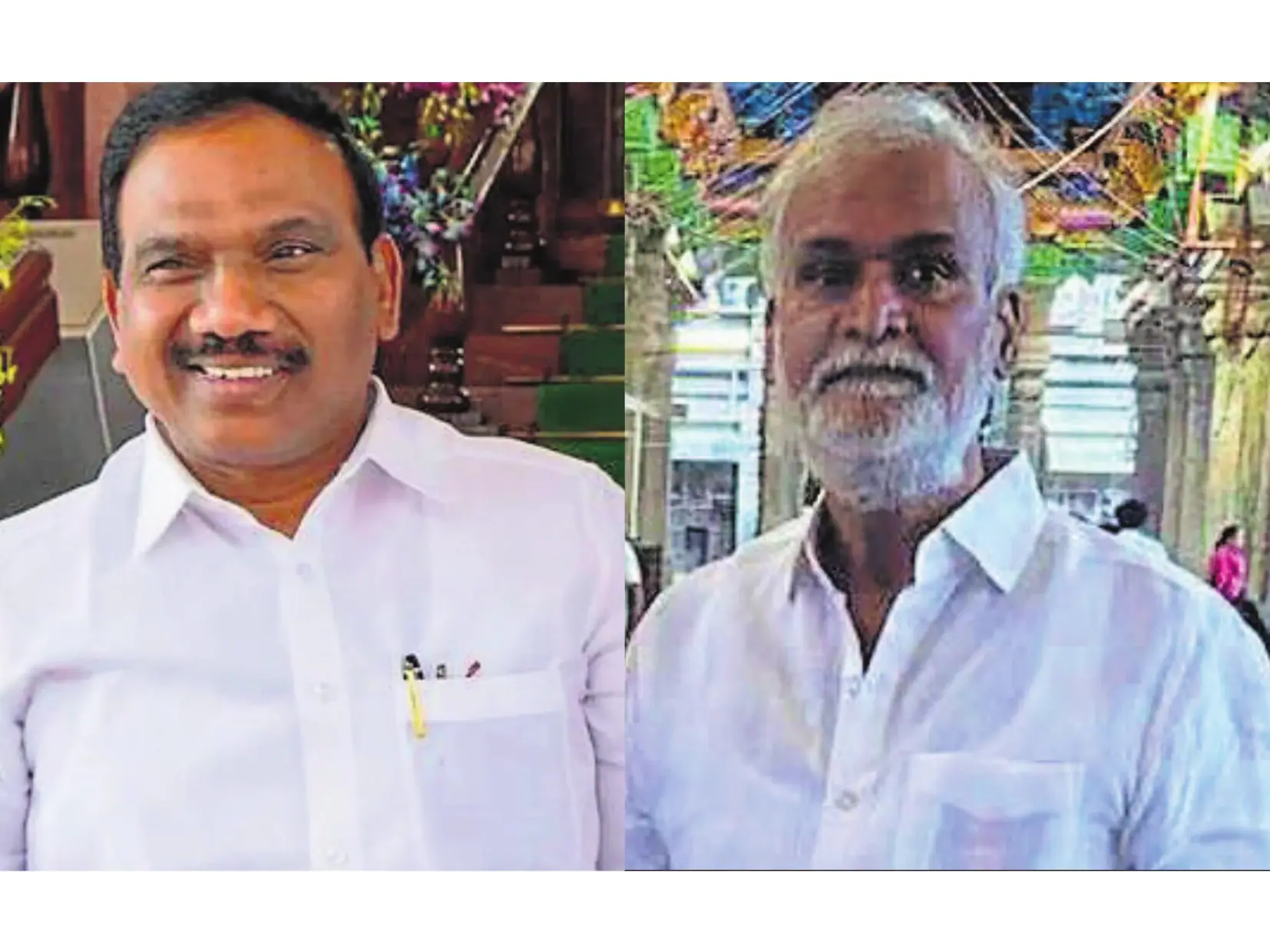
Tamil Nadu Police have registered cases against senior Dravida Munnetra Kazhagam (DMK) leaders A Raja and P K Sekar Babu over alleged derogatory remarks made against Chief Minister C Joseph Vijay and state minister C T R Nirmal Kumar during a party protest on September 12.
A separate case has also been registered against DMK MLA Vasantham Karthikeyan in Kallakurichi in connection with remarks allegedly made against the chief minister during the same period. The police action comes amid a growing political confrontation between the ruling Tamilaga Vettri Kazhagam (TVK) and the DMK.
Cases registered after DMK protests
The DMK organised protests across Tamil Nadu on September 12 following comments made by Vijay in the state Assembly. During the demonstrations, several party leaders addressed supporters and criticised the chief minister and his government.
Police subsequently registered cases against Raja, Sekar Babu and Karthikeyan, alleging that certain statements made during the protests were objectionable and violated provisions of the law.
According to police, speeches made by the leaders were also circulated on social media. The circulation of the videos and statements brought increased attention to the remarks and was followed by complaints and the registration of cases.
The filing of an FIR begins a legal investigation and does not by itself establish that the allegations against the accused are proven.
Multiple legal provisions cited
The case involving A Raja includes provisions of the Bharatiya Nyaya Sanhita relating to alleged defamatory statements, public order, obscene language and conduct that could potentially promote hostility between groups.
A police officer confirmed that a case had been registered against the former Union minister, although further details of the investigation were not immediately disclosed.
A separate FIR was registered against P K Sekar Babu. Police invoked provisions concerning allegedly obscene expressions in public, intentional insult, promotion of enmity, circulation of allegedly false information and threats involving a person’s body, reputation or property.
The precise legal outcome will depend on the investigation and any subsequent proceedings before the appropriate authorities or courts.
A Raja reacts to the case
A Raja, reacting to the police action, said that he would face the legal proceedings if a case had indeed been registered against him.
The development comes at a time when exchanges between the DMK and the ruling TVK have become increasingly contentious. Political speeches, Assembly statements and public protests have all contributed to the escalation of the dispute.
The controversy has also gained visibility through social media, where portions of speeches and political statements have been widely circulated.
DMK questions police action
DMK spokesperson TKS Elangovan defended the party’s right to criticise the government and its policies.
He alleged that the government was using police cases against opposition leaders rather than addressing issues raised by the DMK. Elangovan referred to concerns raised by Leader of Opposition Udhayanidhi Stalin relating to crime, custodial deaths and crimes against women.
According to the DMK’s position, opposition parties should be able to question the government and raise public-interest issues without facing what it considers unnecessary legal action.
These allegations represent the DMK’s political response to the police cases and are not independent findings regarding the conduct of the government.
Political dispute follows Assembly remarks
The latest cases are connected to a broader political dispute that emerged following comments made by Chief Minister Vijay during an Assembly session.
Vijay’s remarks concerning the previous DMK administration and former chief minister M K Stalin prompted criticism from the opposition party. The DMK subsequently organised protests in different parts of Tamil Nadu.
The speeches made during those demonstrations have now become the subject of police complaints, adding a legal dimension to an already intense political disagreement.
The episode reflects the changing political environment in Tamil Nadu, where the TVK government and the DMK are engaged in competing narratives over governance, opposition criticism and public accountability.
Investigation likely to determine next steps
The cases against the DMK leaders are expected to proceed through the regular legal process. Investigators may examine the speeches, video recordings, complaints and other available material as part of the inquiry.
The registration of cases does not amount to a conviction, and the allegations will have to be established through the legal process.
For the DMK, the issue has become part of its wider criticism of the TVK administration. For the government and police, the cases concern alleged violations arising from statements made during public political activities.
The dispute is therefore being closely watched both politically and legally, particularly as exchanges between the ruling party and the opposition continue to intensify.